
Technical7 min read
3 Layer vs 2 Layer Mesh Bee Suit: Is the Extra Layer Worth It?
The middle layer of a three-layer suit is not padding. It is a spring that holds the outer mesh out of sting range, and it is also the part that quietly wears out.
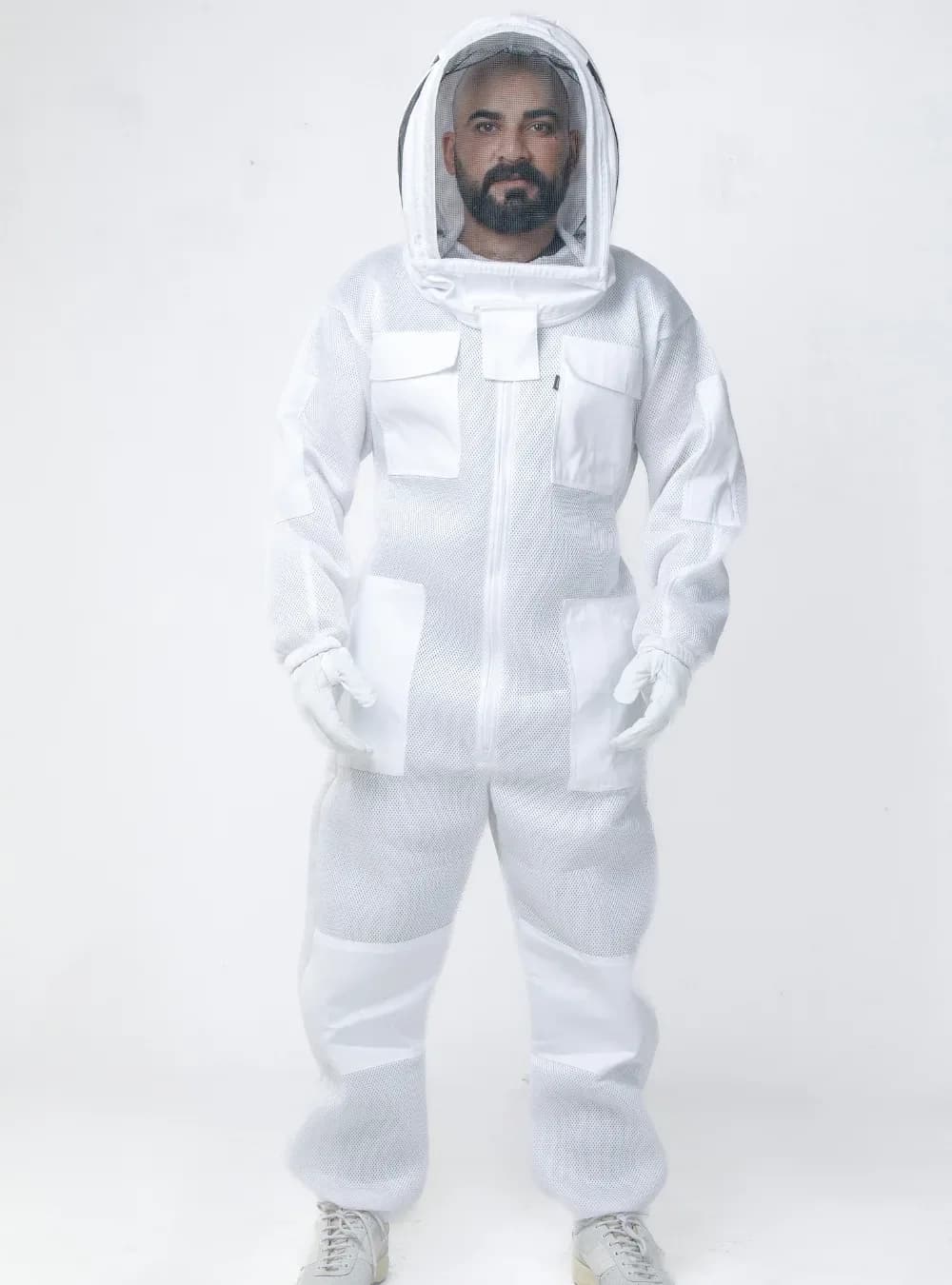
The 3 layer vs 2 layer mesh bee suit question is really a question about one component: the spacer. A three-layer suit has a springy middle layer that holds the outer mesh a fixed distance from your skin, and that gap is what stops a sting. A two-layer suit has no spacer, so it relies on a thinner standoff and on you not leaning on anything. For full-suit beekeeping, buy three layers.
Key Takeaways
- The middle layer is the protection. It is not padding and it is not insulation. It is a spring that keeps the outer surface out of sting range.
- Two-layer mesh is not unsafe — it is less forgiving. It protects until the fabric is pressed against you, and then it does not.
- Three layers are cooler, not hotter. The spacer opens an air channel against your skin. More layers, more airflow.
- The spacer is the part that wears out. Once it crushes, the suit looks perfectly fine and protects badly. This is the failure nobody warns you about.
- Two layers earn their place in jackets and in cool climates, where bulk and cost matter more than the last margin of standoff.
How a mesh suit actually protects you
A woven cotton suit stops a sting by being thick. A mesh suit does something different, and the difference is the whole point.
A honey bee's sting is a fixed length. It cannot reach further than that, no matter how determined the bee. If the outer surface of your suit is held further from your skin than the sting can travel, the sting lands in air. You can see daylight through the fabric and still be untouchable.
That is why mesh suits are not a compromise on safety. They are a different answer to the same problem — and it is a more reliable answer than thickness, because it does not depend on fabric weight.
The catch is simple. The protection is the gap. Anything that closes the gap removes the protection.
What each construction is
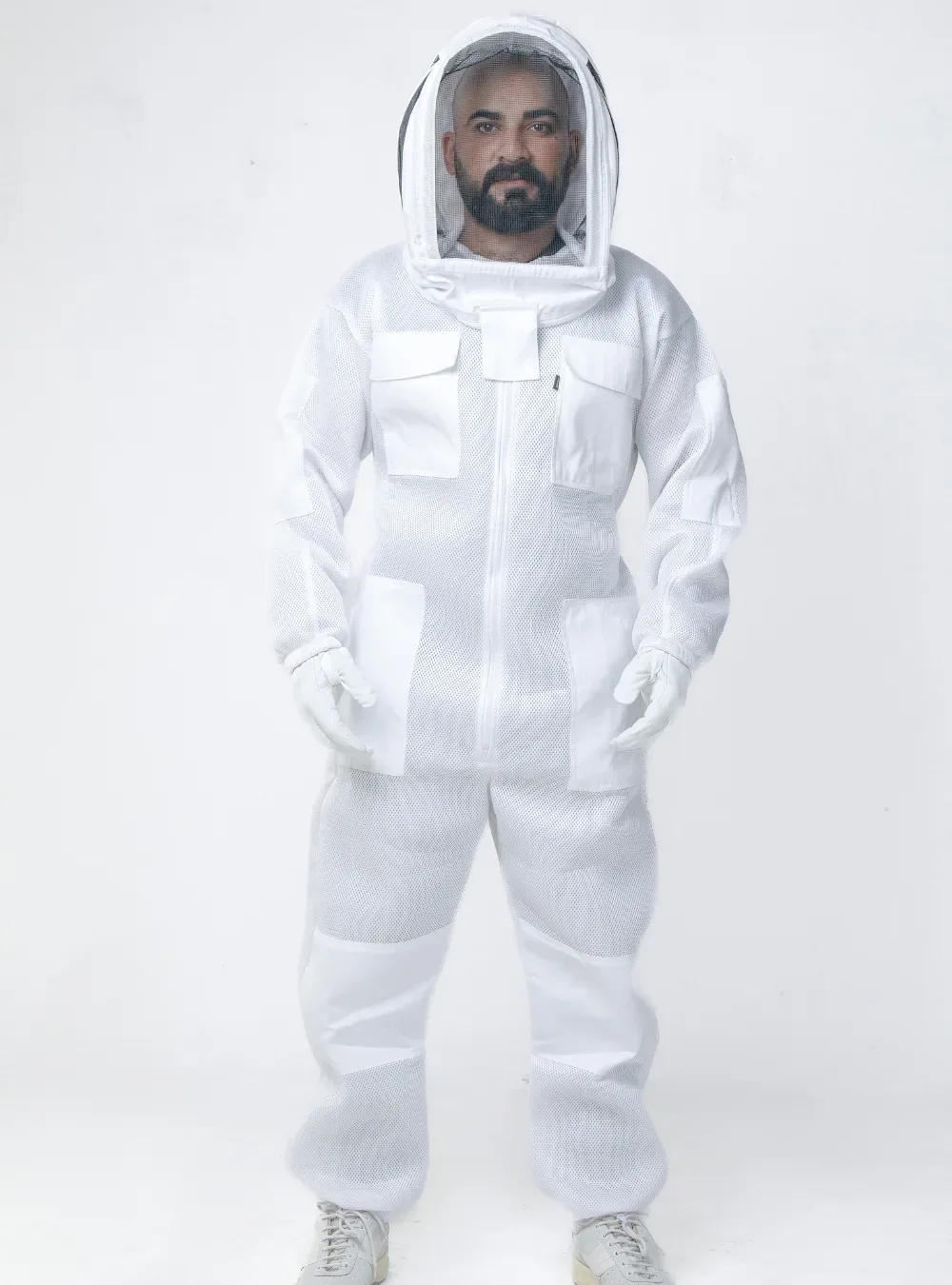
Three-layer mesh is three distinct fabrics bonded together:
- Outer mesh — the tough, open layer that takes abrasion and keeps bees out.
- Spacer — a lofted filament layer, a few millimetres thick, that springs back when squeezed. This holds the standoff.
- Inner mesh — a fine, soft layer against your clothing.
Two-layer mesh drops the spacer. You get an outer mesh and an inner lining, bonded or lightly separated. The standoff comes from the outer fabric's own stiffness rather than from a dedicated spring, so it is thinner and it collapses more easily.
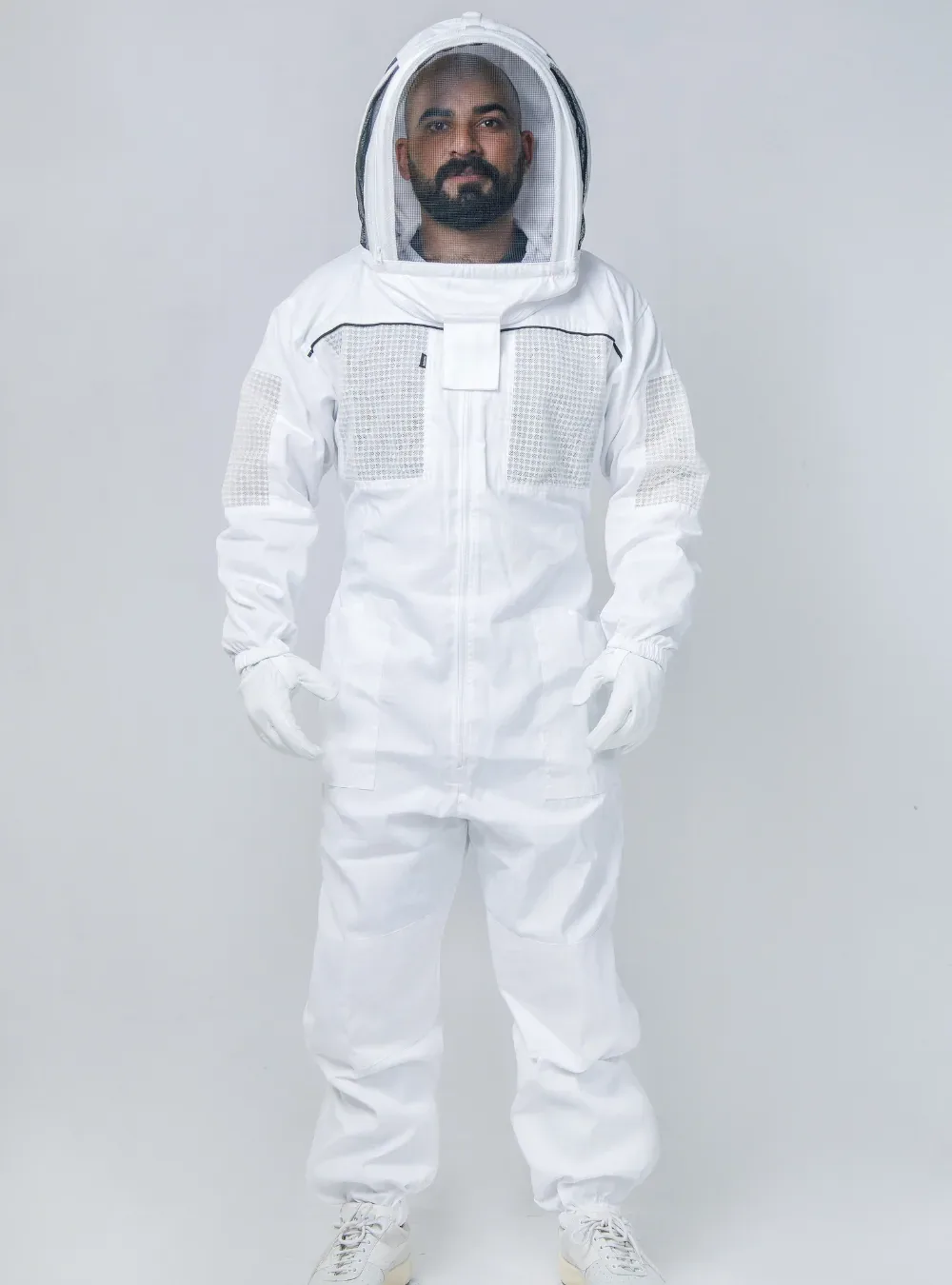
Some suits described as "semi-vented" are two-layer mesh panels set into a woven suit — mesh on the back and under the arms, cotton or polycotton elsewhere.
3 layer vs 2 layer mesh bee suit, side by side
| Three-layer | Two-layer | |
|---|---|---|
| Standoff from skin | Held by a dedicated spacer | Relies on fabric stiffness |
| Behavior under pressure | Springs back | Flattens |
| Airflow against skin | Higher — the spacer is an air channel | Lower |
| Bulk | Noticeably thicker | Slimmer, packs smaller |
| Weight | Heavier | Lighter |
| Typical use | Full suits, hot climates, long inspections | Jackets, cool climates, occasional use |
| Main failure mode | Spacer crushes with age | Lining separates or thins |
| Cost | Higher | Lower |
Where three layers win
Under pressure. This is the real argument. Kneel on a hive stand, lean across a super, carry a box against your chest, sit down in the truck — every one of those presses fabric flat. A spacer springs back. A two-layer suit stays flat while you are leaning, and that is exactly when a bee finds you.
In heat. Counter-intuitive, but true. The spacer holds an open channel between the outer mesh and your body, so air moves along your skin rather than sitting still against it. A three-layer ventilated suit is the coolest thing you can wear at an open hive.
Over defensive colonies. When bees are working the suit rather than landing on it, the margin matters.
Over years. A good spacer outlasts a thin lining, provided you do not crush it in the wash.
Our three-layer mesh suits start at $100 for a full suit; the three-layer jacket is $75.
Where two layers are enough
Two-layer construction is not a cheap imitation. It is the right choice in three situations.
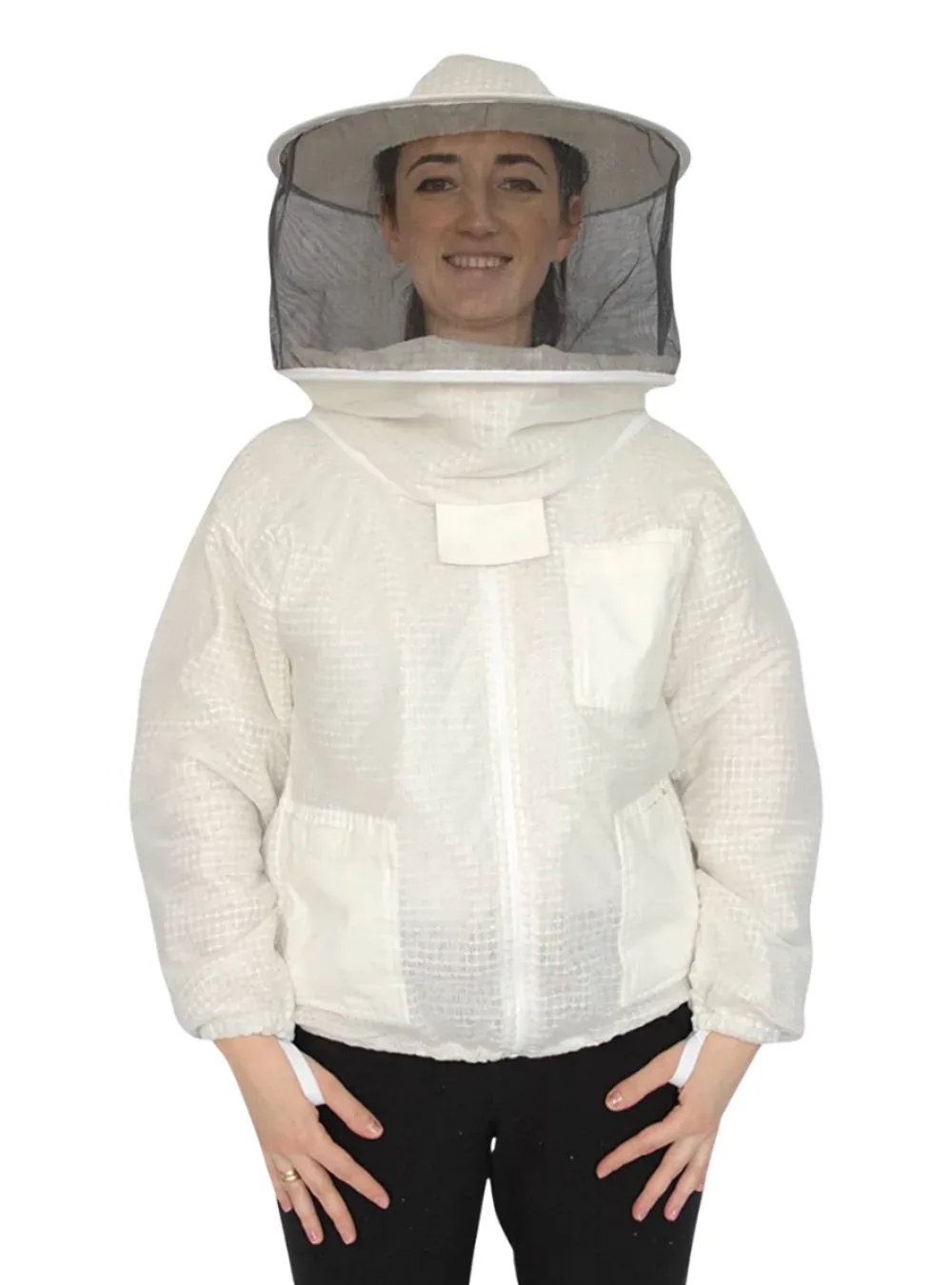
Jackets for quick jobs. Ten minutes at a hive, a swarm collection, a demonstration — a two-layer beekeeping jacket is lighter, packs smaller and is faster to pull on.
Cool climates. If your season never gets properly hot, the spacer's airflow advantage is wasted and its bulk is not.
Second suits. For visitors, family or an apprentice, a two-layer garment is sensible spending.
Semi-vented suits deserve a mention of their own. Mesh panels where you sweat, woven fabric where you snag — our semi-vented suit is a genuine middle path between a cotton suit and full mesh.
The failure nobody warns you about
Here is the thing we wish more sellers said out loud.
A three-layer suit does not fail by tearing. It fails when the spacer stops springing back. Crushed flat, the loft gone, the standoff gone with it — and from the outside the suit looks exactly as it did when it was new. You will find out at the hive.
What crushes a spacer:
- Tumble drying. Heat and mechanical beating together. The single fastest way to ruin a mesh suit.
- Hot washes. Same reason.
- Storing it compressed. Folded flat under heavy boxes all winter.
- Sitting on it. Repeatedly, in the same place.
The test is simple: pinch a section of the suit between finger and thumb, squeeze, and let go. Healthy spacer springs back immediately. If a patch stays flat, that patch has stopped protecting you.
Wash cool, air dry, hang it up. A mesh suit treated that way lasts years.
What to check before you buy
Most mesh suits photograph identically. These are the things that separate a good one from a cheap one, and you can check all four in under a minute.
Squeeze the fabric. Take a fold between finger and thumb and press. You should feel a distinct springiness and a thickness that resists. If it compresses to nothing, there is no real spacer in there regardless of what the listing calls it.
Look at the edges. Where the mesh is cut and bound — cuffs, hems, the veil opening — a well-made suit binds all three layers together. A cheap one bonds the outer and inner and leaves the spacer to fray.
Check where the mesh stops. Many suits use mesh on the body and a cheaper woven fabric on the arms and legs. That is a legitimate design, but it should be a choice you make knowingly, not one you discover in August.
Ask about the standoff. A manufacturer can tell you roughly how thick the spacer is. A reseller usually cannot.
Two things people get wrong about mesh
"You can see through it, so bees can get through it." No. The openings in beekeeping mesh are far smaller than a bee. What you see through is the weave, and bees cannot walk through a weave they do not fit through.
"More layers means hotter." The opposite, as covered above. Texas A&M AgriLife Extension describes vented fabric as layers of netting that allow air to flow and cool the body — the layers are the cooling, not an obstacle to it. This myth costs people real comfort, because it pushes them towards thin suits that are both hotter and less protective.
Size it so the gap survives
One more thing worth saying, because it undoes everything above when people get it wrong. A mesh suit bought snug has no standoff left once you move. The same extension guidance gives a test you can do in the fitting room: you should be able to touch your toes without the suit pulling tight across your back or pressing the veil to your face. Buy the size that passes that test, not the one that looks neatest.
Which should you buy
Buy three-layer if you are buying a full suit, if your inspections run long, if you keep bees anywhere hot, or if you want the construction that is most forgiving of the way people actually move around a hive. For most beekeepers buying one good suit, this is the answer.
Buy two-layer if you want a jacket for short jobs, keep bees somewhere cool, or need a spare garment for visitors.
Buy semi-vented if you want mesh where you sweat and tough woven fabric everywhere else.
If you are still deciding between mesh and woven altogether, start with our guide to ventilated vs cotton bee suits, then compare fabrics in polycotton vs cotton.
Common questions
Is a 3 layer mesh bee suit safer than a 2 layer one?
It is more forgiving. Both hold the outer surface away from your skin, but a three-layer suit has a dedicated spacer that springs back when you kneel or lean on something. A two-layer suit stays flat under pressure, and that is when a sting reaches you.
Is a 3 layer bee suit hotter than a 2 layer?
No, it is cooler. The spacer holds an open channel between the outer mesh and your body, so air moves along your skin instead of sitting against it. More layers give more airflow, not less, which surprises most people.
How do I know if my mesh suit has worn out?
Pinch a section between finger and thumb, squeeze it and let go. A healthy spacer springs back immediately. Any patch that stays flat has lost its standoff and is no longer protecting you there, even though the suit looks perfectly normal.
Can you tumble dry a mesh bee suit?
No. Heat and mechanical beating together crush the spacer, which is the layer doing the protecting. Wash cool, air dry and hang the suit rather than folding it under anything heavy.
What is a semi-vented bee suit?
A woven suit with mesh panels set into the areas where you sweat most, usually the back and under the arms. It is a middle path: cooler than a full cotton suit, tougher against snags than full mesh.
Do I need three layers for a beekeeping jacket?
Not necessarily. Jackets are usually worn for short jobs, and a two-layer jacket is lighter and packs smaller. Three layers make most sense in a full suit worn for long inspections in heat.
Written by Alex, Bee suit maker, BEESUITWEAR · United States.
Writes about protective clothing from the workshop where the suits are made.