
What do beekeepers wear?
A pale suit or jacket, a veil, gloves and boots — and one thin layer underneath. What each part is for, and which of it you can skip.
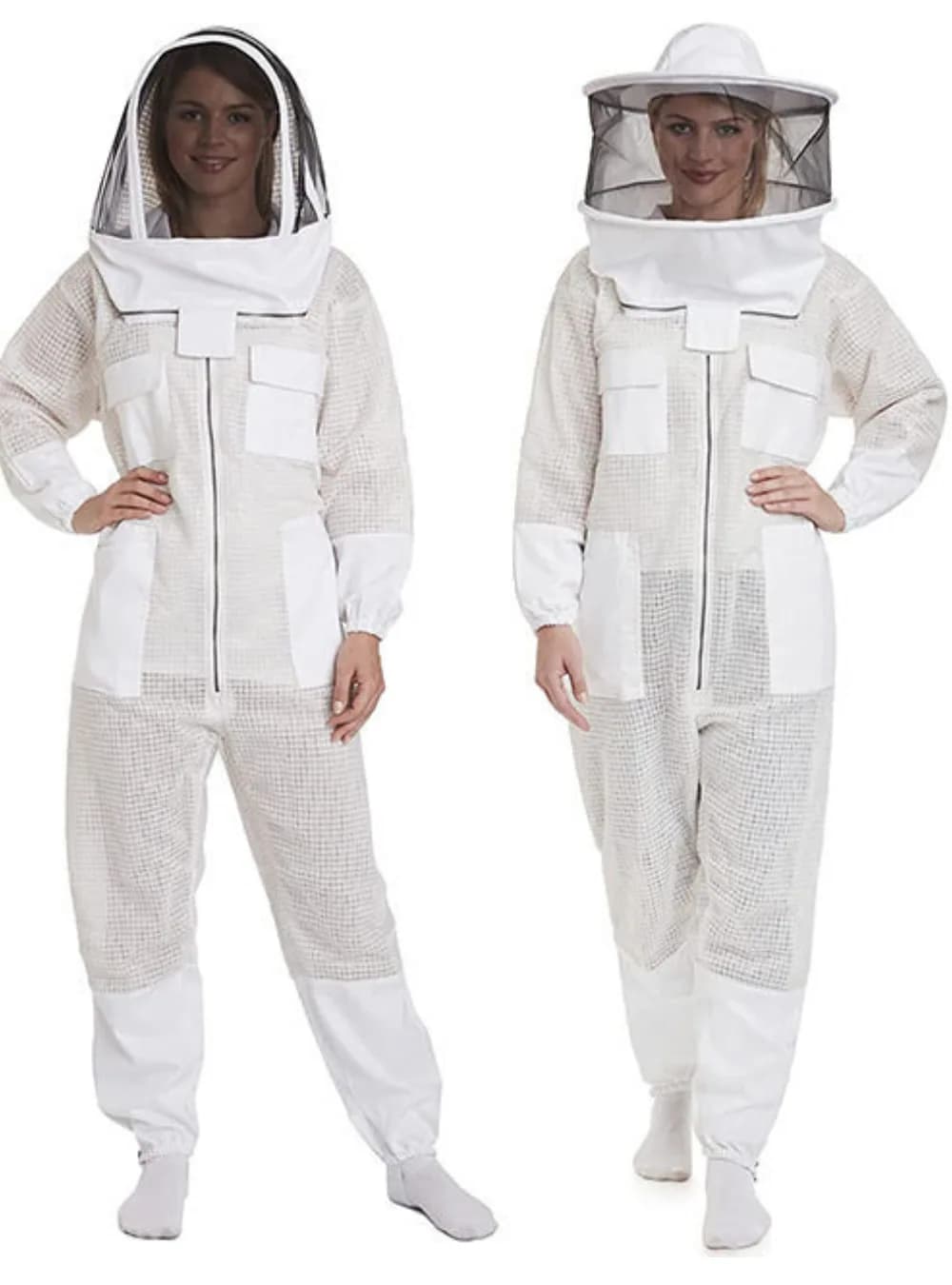
What beekeepers wear is a pale suit or a jacket, a veil over the face, gloves, boots that cover the ankle, and one thin layer underneath. The veil is the only part that is never optional. Everything else is a judgement about how much protection you want against how hot you are willing to be.
What beekeepers wear, part by part
| Item | What it does | Optional? |
|---|---|---|
| Veil | Keeps stings off the face, eyes and throat | Never |
| Suit or jacket | Holds fabric away from skin so a sting cannot reach | A jacket can replace a suit |
| Gloves | Protects the hands, which are in the hive | Yes, and experienced beekeepers often do |
| Boots | Gives the ankle elastic something to grip over | No, but any ankle boot works |
| Base layer | Spreads sweat, and adds millimetres where fabric touches | No — and it is the part most often skipped |
| Cap under the veil | Holds mesh off the forehead, cuts glare | Technically, but it costs almost nothing |
Why it is pale
Bees respond to dark colours and to fast movement, which is why beekeeping clothing has been white, cream or khaki for as long as it has existed. What matters is pale rather than specifically white — pastels sit in the same bracket, and why bee suits are white covers where the convention comes from.
The veil is the deliberate exception. Its mesh is dark at the face because dark threads absorb light instead of reflecting it into your eye, so you see the hive rather than the weave — the optics are the whole reason.
Suit or jacket?
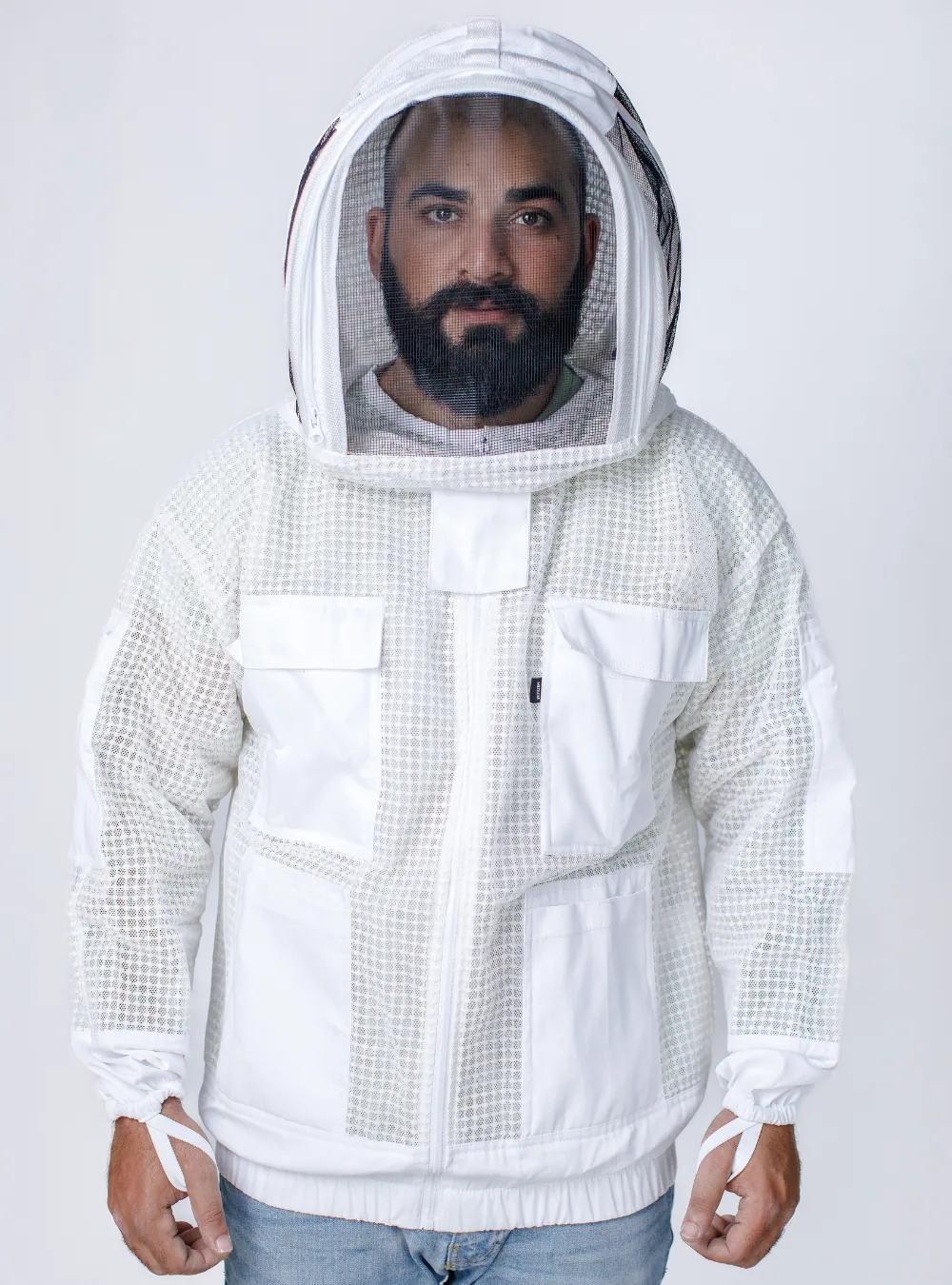
A full coverall covers everything and is hotter. A jacket covers the top half and leaves your legs to your own trousers — how to choose one is its own checklist — which is cheaper, cooler and faster to get into.
Most hobby beekeepers in mild weather wear a jacket. Full suits make sense if you kneel, work over rough ground, do removals, or are kitting out a child who will sit down without noticing. Bee suit versus bee jacket is the decision in full, and beekeeping trousers covers the third arrangement.
Do beekeepers wear gloves?
Often, and plenty do not. Gloves cost you dexterity, and dexterity is what stops you crushing bees — a crushed bee releases alarm scent and makes the whole colony harder to work.
So experienced beekeepers with calm colonies sometimes work bare-handed deliberately, accepting the occasional sting in exchange for better handling. That is a reasonable trade for somebody who has made it knowingly, and a bad idea for a beginner, for anyone who reacts badly to stings, and for children.
If you wear them, fit matters more than material: an oversized glove makes you clumsy, which causes the thing it was meant to prevent. Gloves sizing covers measuring properly.
What beekeepers wear underneath
One thin long-sleeved layer in a natural fibre, full-length trousers, and long socks. The instinct on a hot day is to wear less, and it is the wrong one: bare skin under a suit sweats without cooling you, and gives a sting nothing to cross before it reaches you.
What to wear under a bee suit covers it properly, including the cap, which is the cheapest useful thing on this page.
What to buy first
If you are starting, the order matters more than the total.
- A veil, or a jacket with one. The only part that is never optional.
- Boots that cover the ankle. You probably own some.
- Gloves that fit your hand. Not the cheapest pair in the largest size.
- Everything else, later. A full coverall, a second veil, spare gloves - after a season, when you know how you work.
Borrow before you buy if you can. Most associations will lend kit for a first visit, and an afternoon in somebody else’s jacket tells you more about what you want than any description does - including ours.
What beekeepers wear as the season changes
The kit does not change much; how much of it you wear does.
Early spring inspections are short and cold, and a jacket over a fleece is often enough. High summer is when ventilated construction earns its cost. Late summer is when colonies are largest and most defensive, and it is the time to be wearing all of it properly - most stings happen then, not in May.
Layer underneath rather than buying a heavier suit for the cold: a suit sized for a fleece is a suit that is too big in July.
What beekeepers do not wear
- Scent. Perfume, aftershave, heavily scented deodorant. Bees navigate by smell and this is the commonest reason somebody gets more attention than they expected.
- Dark or fuzzy clothing. Both read as a threat. Wool is worse than cotton for this.
- Shorts, sandals, trainers. The ankle is the second most common place beekeepers get stung, almost always because of footwear.
- Loose jewellery and watches. They catch on cuffs and stop them seating.
- Anything they cannot get out of quickly. Including a veil whose zip they cannot work in gloves.
Cotton or ventilated?
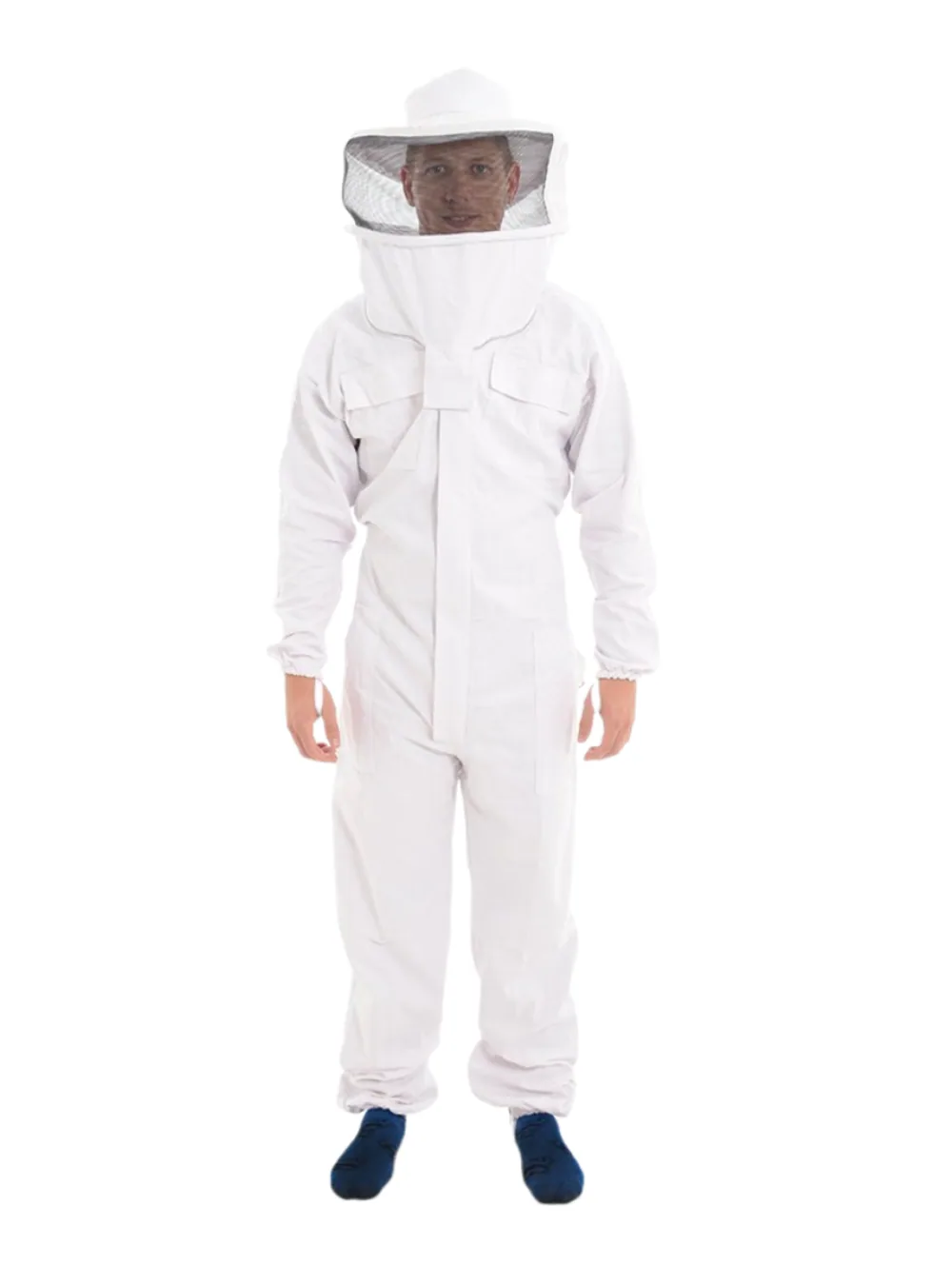
Most beekeepers wear one or the other and few regret ventilated. Cotton is cheaper, traditional, and protects by being loose. Ventilated construction holds a gap open between bonded layers, which both stops a sting under pressure and lets air through — it is the better answer anywhere warm, and the difference is large rather than marginal.
Ventilated versus cotton is the decision that changes your afternoon more than any other on this page.
The minimum, honestly
A first-season kit is smaller than this list suggests. If you are visiting a hive once and borrowing kit: a veil and a jacket, over your own long trousers and boots, with a thin top underneath. That is enough for a calm colony and a short visit, and it is what most association apiaries will hand you.
If you are keeping bees yourself, add gloves that fit and decide between a jacket and a coverall on how you work. Whether a measured suit is worth it is the next question, and it is usually a second-season one.
For a protective-kit list from somewhere with nothing to sell you, Penn State's beekeeping basics and the University of Georgia Bee Program both set out what a kit has to cover. Our ventilated suits, jackets, veils and gloves are grouped by what each part does.