
Beekeeping clothing for humid climates
Humidity breaks the mechanism that keeps you cool. Sweat cannot evaporate, so airflow matters more than shade, and the usual hot-weather advice only half works.
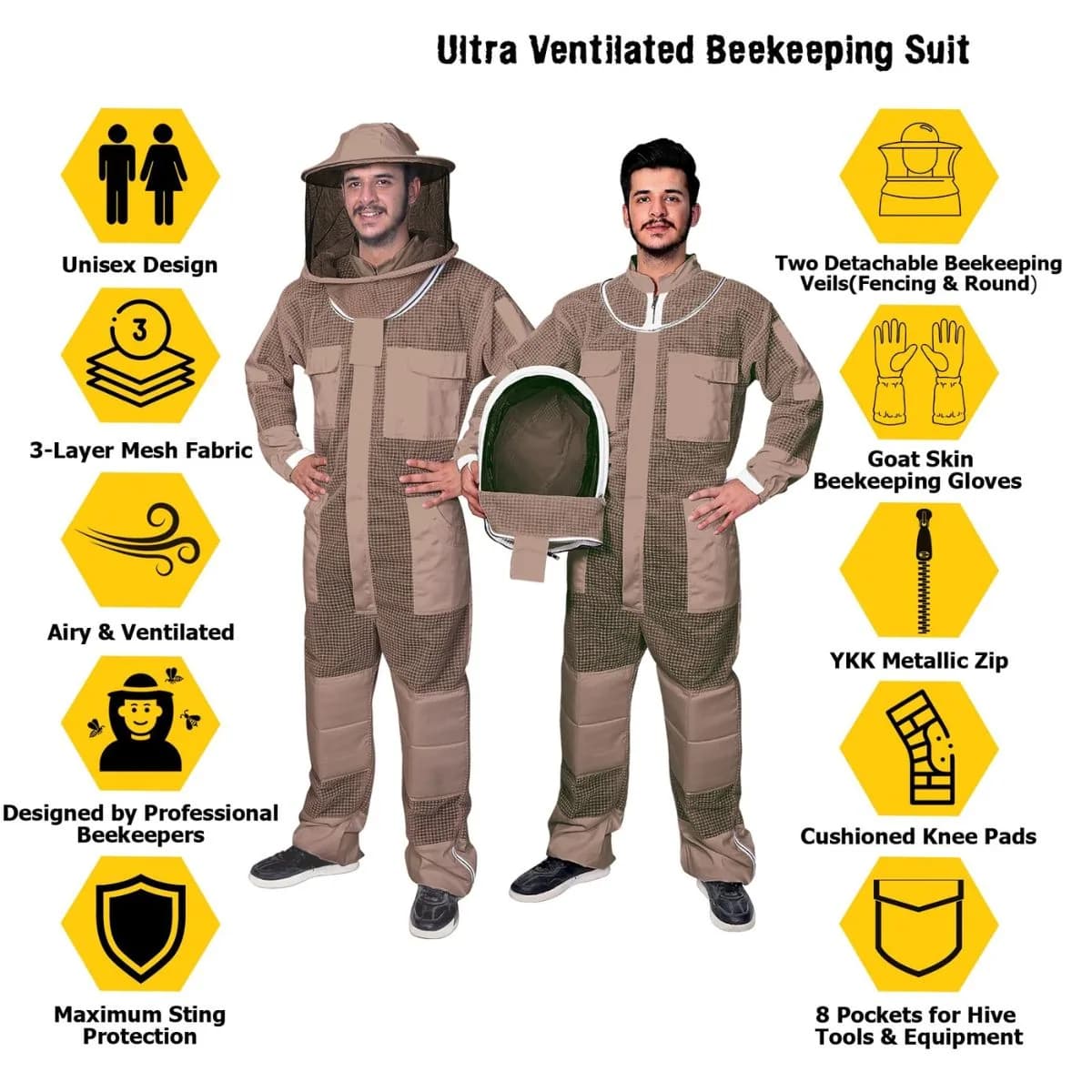
In humid climates the thing that cools you stops working. Sweat cools by evaporating, and air that is already near-saturated cannot take much more water — so a suit that is merely shaded or pale does almost nothing, and airflow becomes the only lever you have left. That changes what to buy and how to work.
Why humid heat is a different problem
In dry heat your body manages well. Sweat evaporates readily, each gram of it taking real heat with it, and loose pale clothing keeps the sun off while that happens.
Raise the humidity and that mechanism stalls. The sweat is still produced; it simply sits on your skin and runs instead of evaporating. You get wetter without getting cooler, and the clothing that was keeping sun off is now keeping moisture in.
So the usual hot-weather advice — pale colours, work early, drink water — is still right and does less. Colour in hot climates explains how little colour does even in dry heat; in humid climates it does less again.
What actually helps
| Choice | Effect in humid climates |
|---|---|
| Ventilated construction with real airflow | Large. The only thing that moves saturated air off your skin |
| Short sessions with breaks in the shade | Large, and free |
| Working at first light | Large — humidity is high but temperature is not |
| A thin natural-fibre layer underneath | Moderate. Spreads sweat over a wider area |
| A jacket rather than a coverall | Moderate. Fewer sealed square metres |
| Pale rather than dark | Small |
| A heavier "cooler-looking" cotton suit | Negative. Sealed and slow to dry |
Why ventilated construction matters more in humid climates
A bonded mesh suit holds a gap between its outer face and your clothing, and air moves through that gap whenever you do. In dry heat that is a comfort advantage. In humid climates it is the whole strategy, because moving air is the only way to get saturated air away from your skin and replace it.
It is also what stops a sting, which means the same structure is doing both jobs — the gap is the protection. Ventilated versus cotton is the decision, and in humid conditions it is not close.
What to wear underneath
This is where humid climates change the usual answer most.
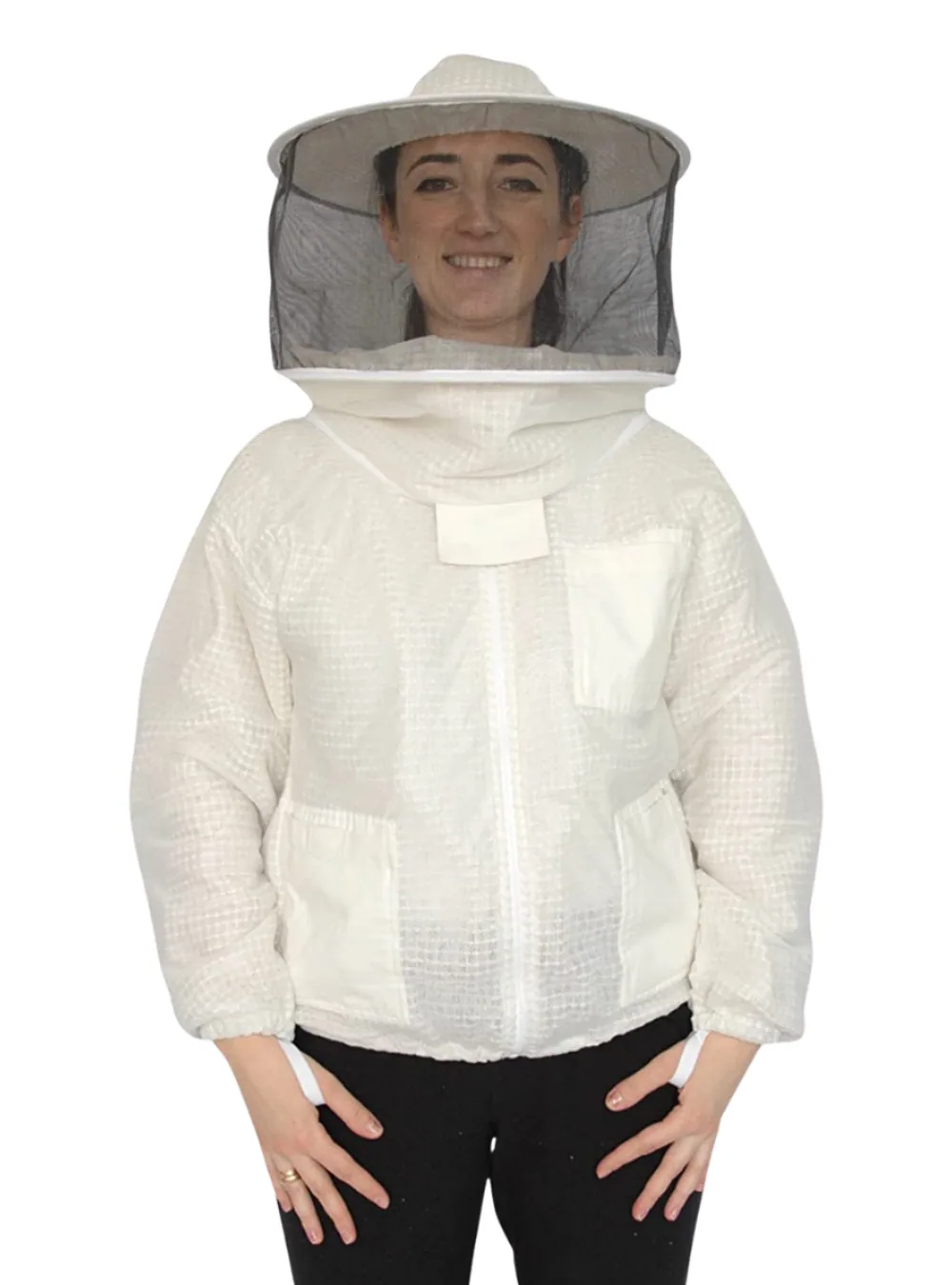
The instinct is to wear nothing under the suit. It is wrong for the same reason it is wrong in dry heat — bare skin against fabric pools sweat rather than spreading it — and it is wrong more strongly here, because you have more sweat and less evaporation to deal with it.
Thin cotton or merino, long-sleeved, pale. Avoid polyester sports base layers: they are designed to move moisture to an outer surface where air takes it away, and inside a suit in humid air there is no such surface. They go clammy and stay clammy. What to wear under a bee suit covers the rest.
Jacket or coverall in humid climates
A jacket, where the work allows it, and the margin is larger here than in dry heat.
A coverall seals roughly twice the surface area. In dry conditions that costs you comfort; in humid climates it costs you the only cooling mechanism you have left, because every sealed square metre is one where saturated air sits against skin.
A jacket over your own loose trousers leaves the legs ventilated by ordinary clothing, which in humid air is better than a sealed mesh leg. Beekeeping trousers covers the third arrangement, and in humid climates the waist join is a feature rather than a weakness — it is another place air moves.
The exception is kneeling work and anywhere with rough ground, where a coverall is still the right garment and you manage the heat by shortening the visit instead.
Working differently
- Shorter visits, more of them. Two twenty-minute inspections beat one of fifty.
- Take the veil off between hives. Walk clear, open up, let air at your face. This does more than any garment choice.
- First light rather than evening. Both are cooler; morning air is usually moving and evening air often is not.
- Drink before you start. You will lose more fluid than you notice, because it is running rather than evaporating.
- Plan where the shade is before you open anything.
What humidity does to the kit itself
Two things worth knowing, because they shorten a suit's life rather than your afternoon.
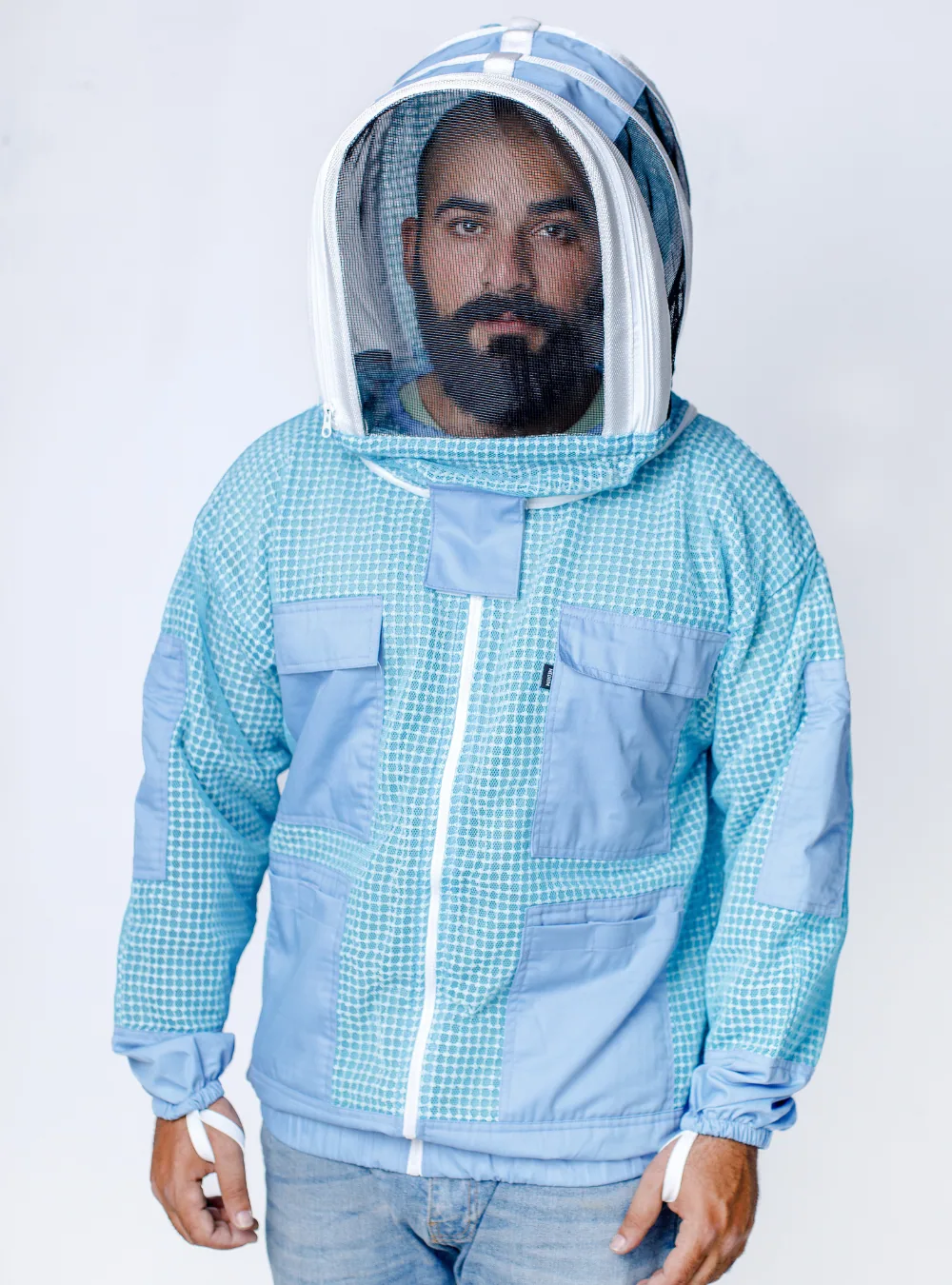
Nothing dries properly. A suit hung in a humid shed stays damp, and a suit that is permanently slightly damp grows mould in the seams — which stains, weakens thread and does not wash out. Bring it indoors, and give it longer than you think. Storing a suit covers the principle; in humid climates it applies all year rather than just over winter.
Leather gloves suffer. They stay wet, stiffen as they dry, and go mouldy if stored damp. Nitrile is the easier answer in a humid climate for that reason alone — cleaning gloves matters more here than anywhere.
What to buy for humid climates
Ventilated construction, in a jacket if your work allows it, in any pale colour. One thin natural-fibre layer underneath. Boots you can get in and out of quickly, because you will want to.
And a second suit sooner than you otherwise would, so one can dry properly while the other is worn. That is a genuine humid-climate expense rather than a luxury.
Regional guidance is worth more than general advice here: the University of Georgia Bee Program works in exactly these conditions, and Penn State Extension's beekeeping resources cover seasonal management more broadly. Our ventilated jackets and three-layer suits are the constructions this page is about.