
Bee suit for cold weather inspections
Layer underneath rather than buying a heavier suit. A suit sized for a fleece is a suit that is too big in July, and too big is its own problem.

For cold weather inspections, layer underneath rather than buying a heavier suit. A suit sized to fit over a fleece is a suit that swims on you in July, and a suit that is too big gapes at the cuffs and collar — which is where stings get in. One garment, more underneath, is the right answer almost every time.
What cold weather inspections actually change
Less than you would think about the suit, and more than you would think about the visit.
The garment's job is unchanged: hold its outer surface away from your skin. Cold does not alter that, and cold colonies are usually calmer, so the sting load is lower than in August.
What changes is you. Cold hands are clumsy, clumsy hands crush bees, and a crushed bee in a tight cluster is worth more trouble than it would be in June. And a cold inspection should be short, which means everything has to be ready before you open anything.
Layer, do not upsize
The temptation is a bigger suit with room for a jumper. Three reasons not to.
- The openings stop working. Slack across the chest is protection; slack at the cuffs, ankles and collar is a gap. A suit bought two sizes up is loose in exactly the wrong places — the same mistake people make buying for children.
- You own one suit for the whole year. Whatever fits in April has to work in July.
- Bulk is not warmth, and nor is a heavier cloth — GSM measures weight rather than insulation.
- Bulk under a suit is not warmth. A thin wool layer beats a thick fleece under a fitted garment, because the fleece is compressed and compressed insulation does nothing.
Buy the suit that fits over one thin layer, and add thin layers for cold weather inspections rather than one thick one. What to wear underneath covers the principle; cold is the case where it earns most.
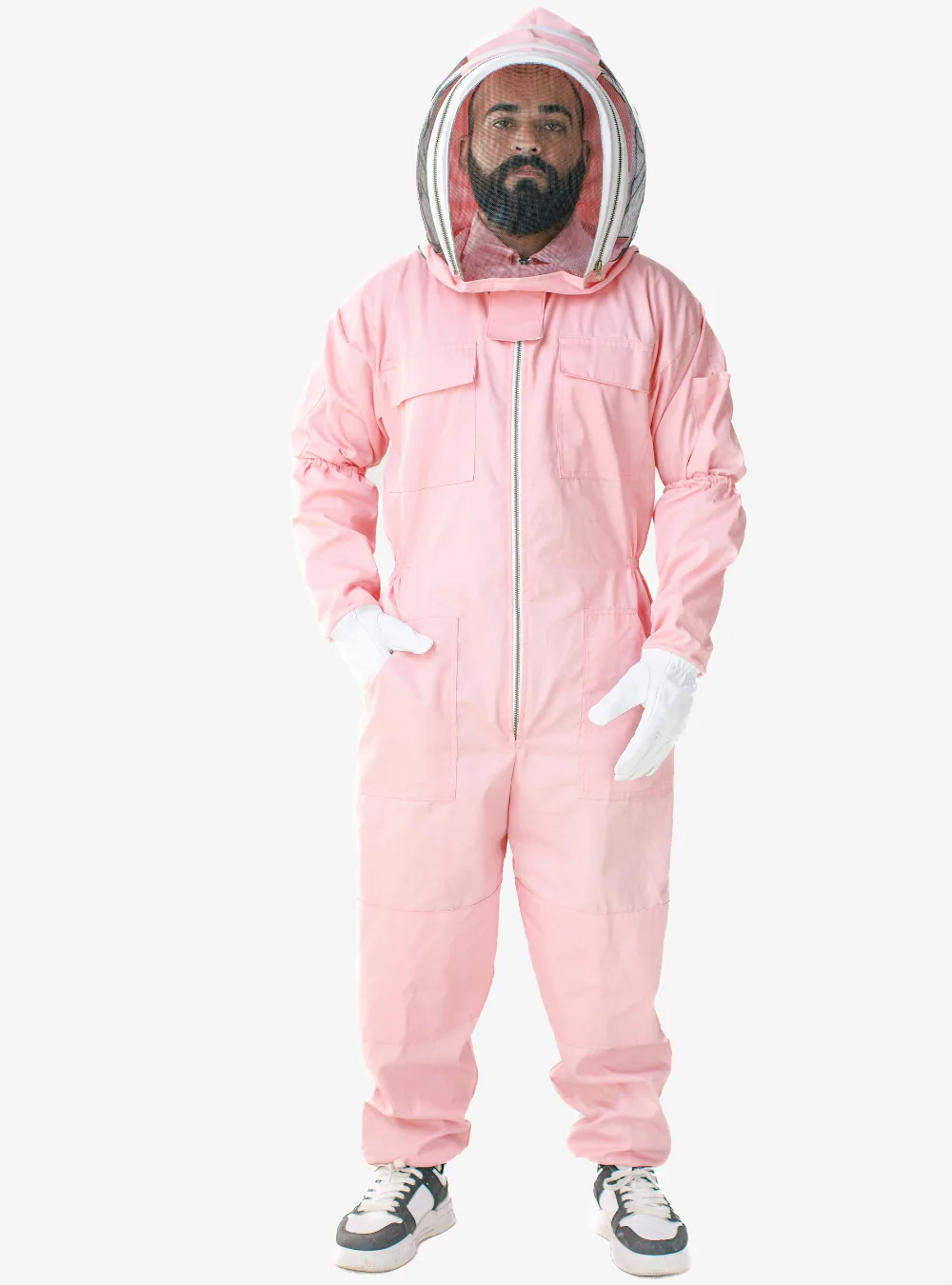
Cotton or ventilated for cold weather inspections?
This is the one place woven cloth wins outright. A poly-cotton suit is a sealed garment, which is miserable in July and exactly what you want at eight degrees in a wind.
A ventilated suit in cold weather is cold — air moves through the gap whether you want it to or not. It is workable with layers underneath, and if you only own one suit it is still the right one to own for the year as a whole. But if you have both, early-season inspections are what the cotton one is for. Ventilated versus cotton covers the rest of the year.
Hands are the real problem
Everything above is about comfort. Gloves in the cold are about competence.
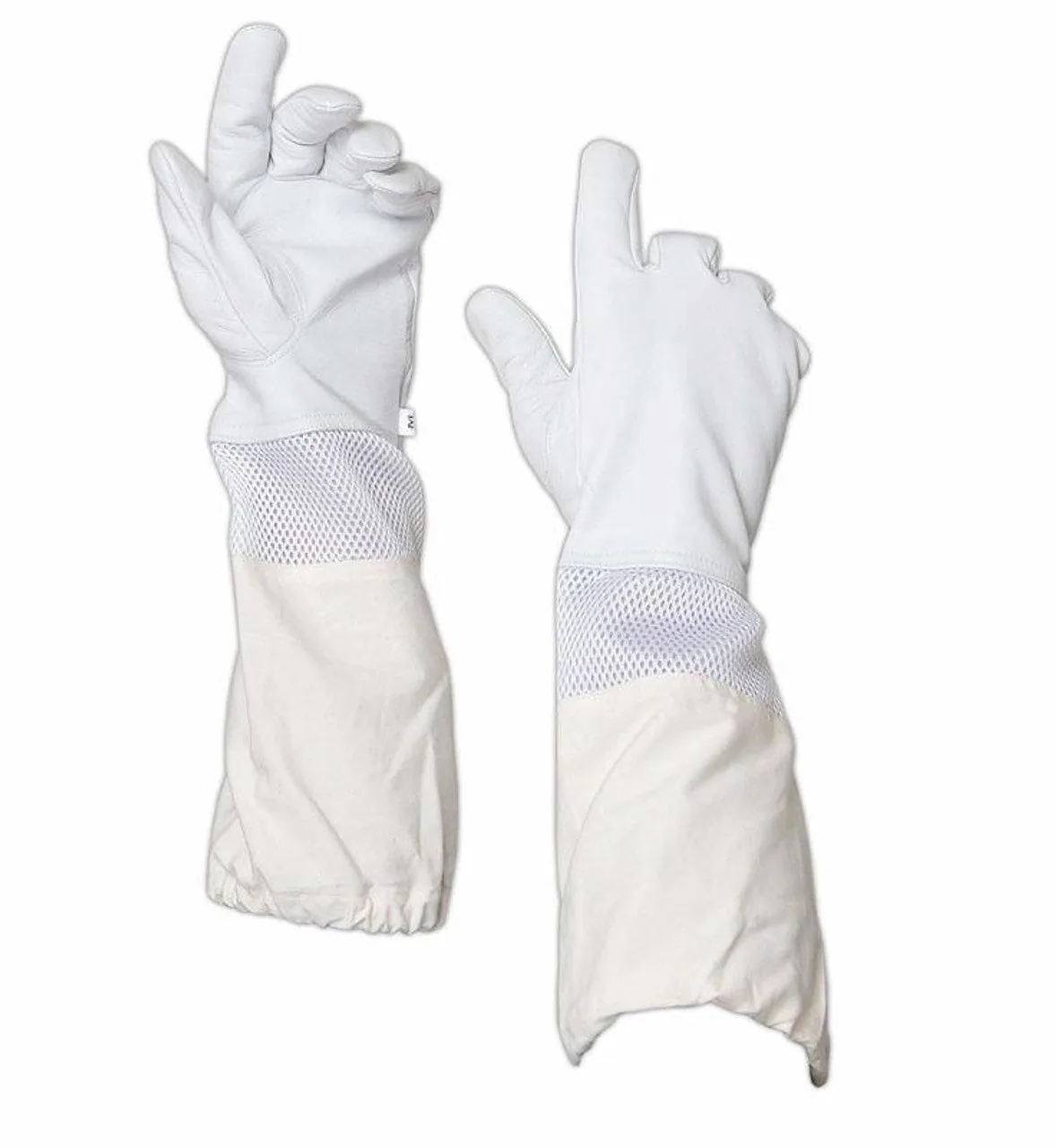
Spring versus summer turns on this. Thin nitrile is near-useless below about ten degrees — your hands go numb, you lose the feel that stops you crushing bees, and numb fingers fumble a frame. Leather is warmer and already the better cold-weather choice; goatskin stays supple in a way stiffer leather does not.
Two things that help more than the glove does. Warm your hands before you start rather than expecting the gloves to do it. And keep the inspection short enough that they do not have time to go numb — a glove that fits cannot fix a hand that has been cold for twenty minutes.
A routine for cold weather inspections
- Decide what you are looking for before you open anything. Stores, a queen, a dead-out — one question, answered quickly.
- Have everything to hand. Tool, spare box, whatever you are adding. Nothing fetched mid-inspection.
- Pick the warmest, stillest part of the day, rather than first light as you would in summer.
- Open, look, close. Minutes rather than the half hour a summer inspection takes.
- Do the kit checks before you go out, not at the hive — the pre-inspection checklist takes thirty seconds indoors and is miserable in a cold apiary.
The veil in cold weather
Two changes, and one of them catches people out.
Mesh fogs less in the cold than you would expect, because the air moves through it. What does fog is glasses, and badly — a cold lens behind mesh with warm breath on it is the worst combination there is. A veil for glasses wearers covers the fixes, and a thin cap helps most.
The other is stiffness. A veil stored cold can hold its folds rather than springing back into shape, which means the standoff you are relying on is not there. Bring it indoors the night before cold weather inspections and let it recover.
Spring versus summer, in one table
| Early spring | High summer | |
|---|---|---|
| Suit | Woven cloth if you have it | Ventilated, clearly |
| Underneath | Two thin layers | One thin layer |
| Gloves | Leather or goatskin | Whatever you prefer |
| Visit length | Minutes | As long as you can stand |
| Time of day | Warmest part | First light |
| Colony mood | Usually calm | Defensive by August |
The row that catches people is the last one. Beekeepers who were barely stung all spring are often surprised in late summer — most stings happen then, not in April.
What cold weather inspections do to the kit
Three things, all of them about storage rather than wear.
Elastic stiffens. It recovers as it warms, so a cuff that feels dead in a cold shed may be fine indoors. Test cuffs at room temperature rather than in the apiary, or you will replace elastic that was working.
Leather hardens. Gloves left in a cold outbuilding come out stiff and stay stiff for the first part of a visit, which is exactly when your hands need to work. Keep them indoors.
Nothing dries. A suit worn in cold damp air and hung in an unheated space may never fully dry between visits, and a permanently damp suit grows mould in the seams. Bring it in even if the rest of the kit stays out.
What not to do
Do not inspect because the calendar says so. Opening a cluster on a cold day costs the colony heat it has to replace. When and whether to inspect in cold weather is a colony-management question rather than a clothing one, and Penn State Extension's beekeeping resources and the University of Georgia Bee Program are better guidance on it than a supplier can give.
Do not wear the suit indoors to warm up. Condensation forms in the fabric, and a suit put away damp grows mould in the seams.
Do not skip the veil because it is cold and the bees are quiet. A cluster disturbed in cold weather can be sharper than you expect, and it is the one item that is never optional.
Our cotton and poly-cotton suits are the warmer construction, gloves are listed by hand size, and what beekeepers wear is the year-round kit list.