
Do bee suits work for wasps and hornets?
Partly. The mechanism still holds, but the margin is narrower — and wasps sting repeatedly where a honey bee does not.
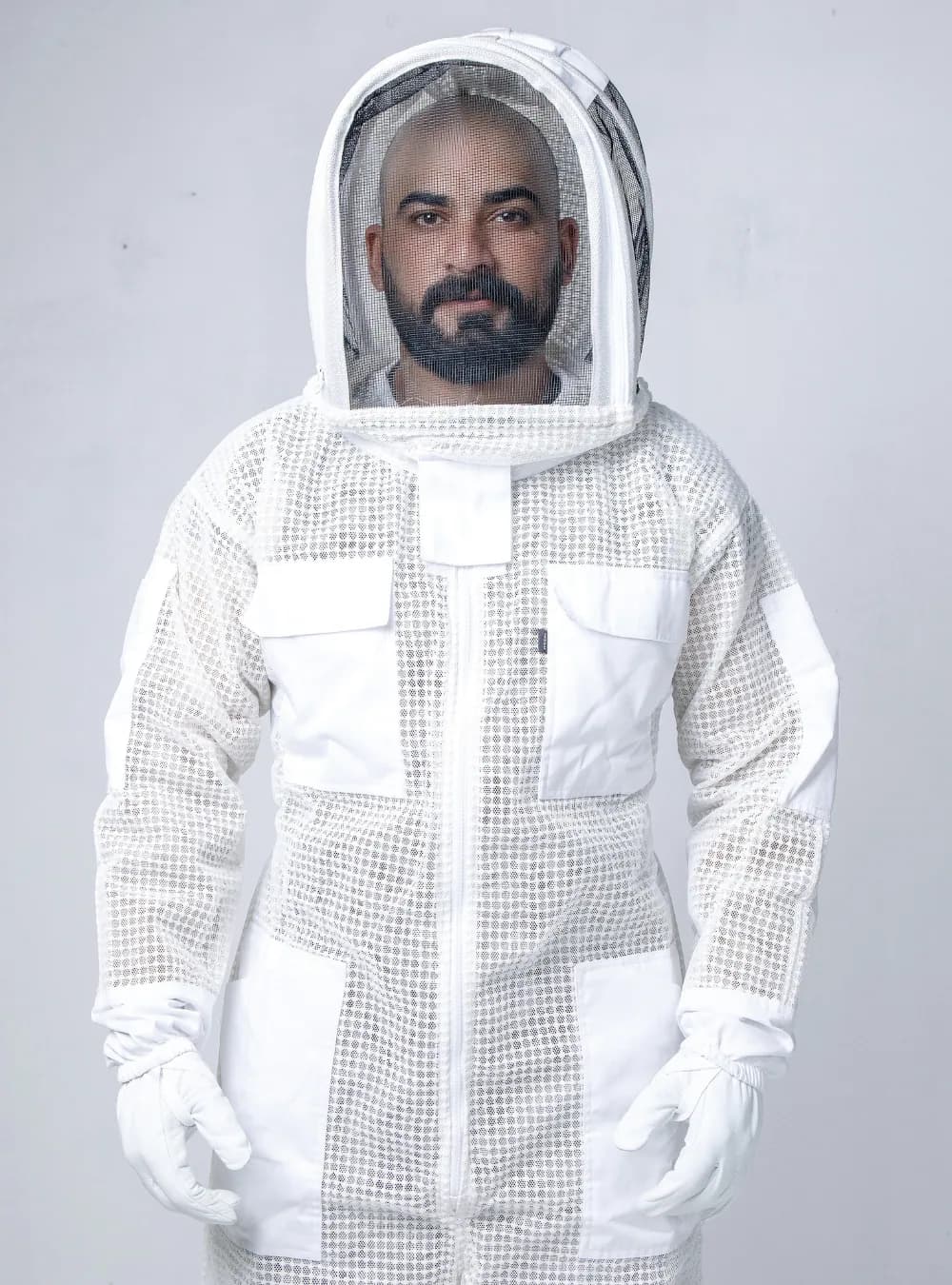
Bee suits for wasps and hornets work on the same principle and with less margin. The mechanism is unchanged — the suit holds its outer surface further from your skin than a sting can reach — but these stings are longer, they are not left behind, and the same insect can sting repeatedly. A suit that is comfortable with honey bees is closer to its limit here.
Bee suits for wasps: what is actually different
| Honey bee | Wasp / hornet | |
|---|---|---|
| Sting | Barbed; usually left behind | Smooth; withdrawn and reused |
| Repeat stings | No, from one bee | Yes, from the same insect |
| Reach | A few millimetres | Longer, and longer again in a hornet |
| What a suit must do | Hold a gap | Hold a larger gap, repeatedly |
So the garment's job is the same and the bar is higher. Can bees sting through a bee suit explains the mechanism; everything there applies, with less room for error.
Where bee suits for wasps lose their margin
In exactly the places it is already thin.
Anywhere pulled tight. Shoulders when you reach, thighs when you kneel. A longer sting needs a smaller gap to cross, so compression matters more.
Single-layer cloth. A woven suit protects by slack, and slack is what disappears under pressure. Bonded ventilated construction holds its gap mechanically, which is why it is the sensible choice here — three-layer versus two-layer mesh.
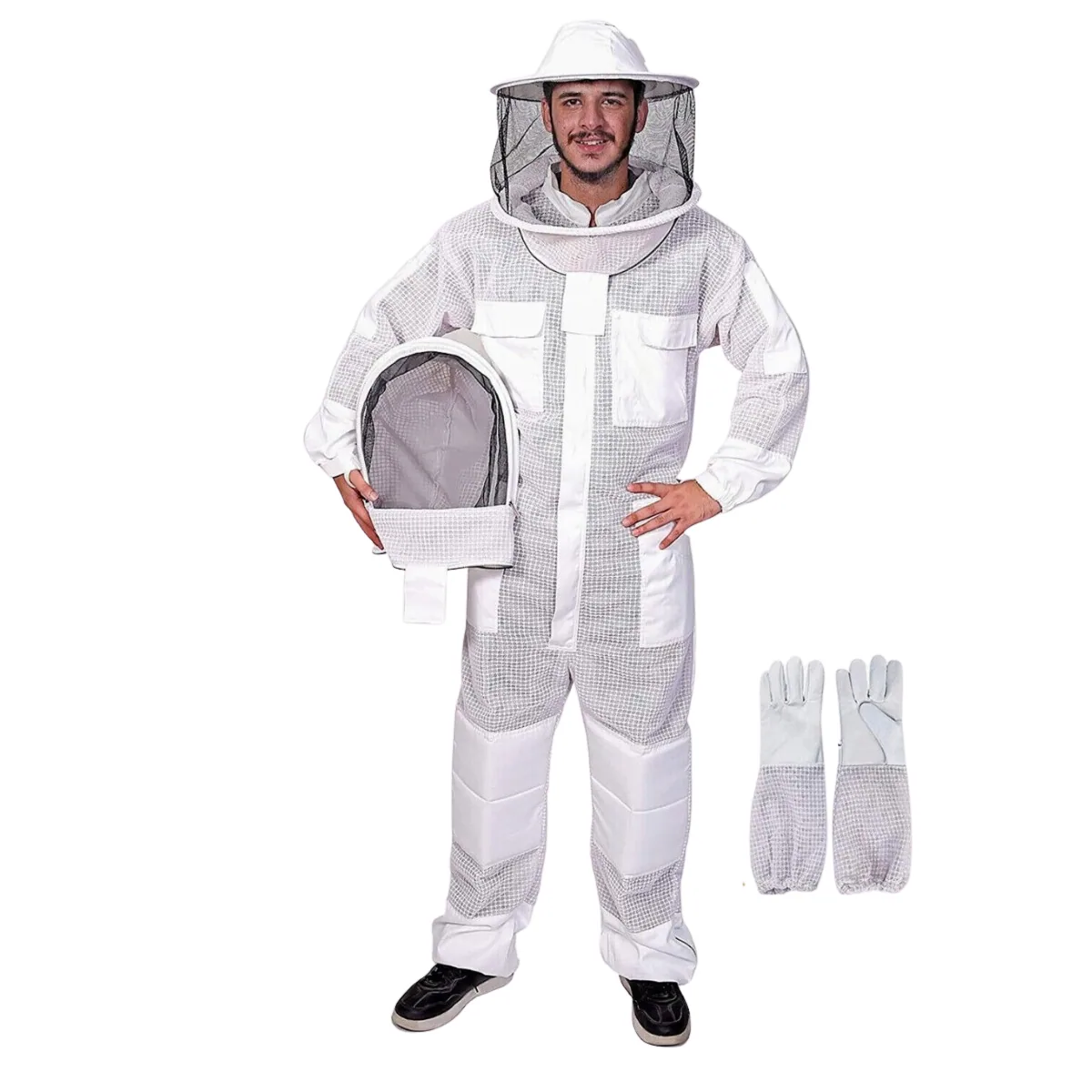
The veil. Mesh resting on a forehead or cheek is a problem with honey bees and a worse one here. A round veil's standoff is worth having.
Where bee suits for wasps actually get used
Three situations, and they are not the same problem. Swarm collection is a fourth again.
Wasps robbing a hive in late summer. The commonest by far, and the least dramatic. You are doing ordinary apiary work with wasps about. Your usual suit is fine; the wasps are interested in the hive rather than in you.
A wasp nest found while doing something else — in a shed, a bank, a compost heap. Here the sensible answer is to leave it alone and take advice.
Deliberate nest removal. A different trade with different equipment, different rules and different hazards. A bee suit is not the kit for it.
On nest removal, plainly
We make bee suits, and we are not going to tell you how to deal with a wasp or hornet nest. It is work with real risks — including a colony that will pursue, and in some regions species that are notifiable or regulated — and the right advice is local rather than general.
Your local authority, a licensed pest controller, or your national beekeeping association are the right first calls. Extension services keep current regional guidance: Penn State Extension's beekeeping resources and the University of Georgia Bee Program are the sort of source to start from.
What we will say about the garment: a bee suit alone is not a nest-removal kit, and nobody should buy one believing otherwise.
Wearing bee suits for wasps around the apiary
The same rules as always, applied more carefully.
- Ventilated construction, for the gap that survives compression.
- A thin layer underneath, which adds millimetres exactly where the fabric touches — what to wear underneath.
- Cuffs and ankles that still grip, checked by stretching them. A wasp that gets inside a suit can sting repeatedly.
- A veil with real standoff, and a cap under it.
- Nothing loose or dangling, and nothing to snag if you need to move quickly.
What a wasp inside a suit means
The difference that matters most in practice, and it changes the drill.
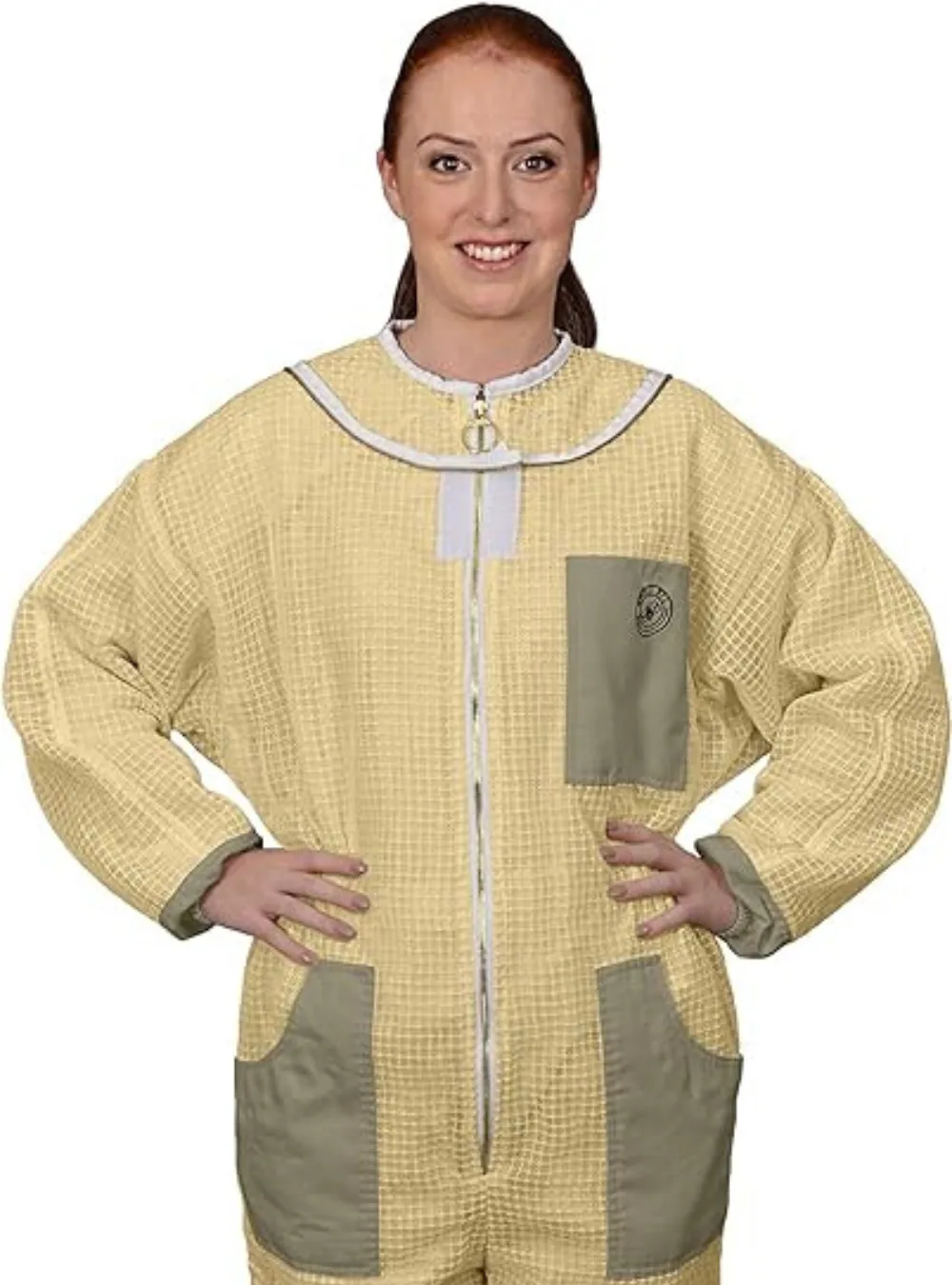
A honey bee that stings inside a suit has stung once and is finished. A wasp can sting repeatedly, which makes getting clear and getting it out more urgent rather than less. The order is the same — walk away, then open up — but there is less reason to be leisurely about it.
It also raises the stakes on worn cuffs. A bee inside the suit covers the drill; with wasps about, the cuff check before a visit is worth doing properly.
Hornets specifically
Larger, with a longer sting, and in some regions a species that is notifiable and must be reported rather than dealt with.
That last point is the important one and it is regional. Which hornets are present where you keep bees, what you are required to do if you find one, and who to tell are questions for your national beekeeping body or bee inspector — not for a supplier, and not for a general article.
What we can say about the garment is the same as above: bonded ventilated construction holds its gap, a longer sting needs a larger gap, and bee suits for wasps and hornets are closer to their limit than they are with honey bees.
Keeping wasps away from the hives
More useful than any clothing choice, and it is colony management rather than kit.
Reducing entrances, not leaving honey or supers exposed, and dealing promptly with a weak colony are the standard approaches. Robbing is a late-summer problem and it is also when colonies are most defensive anyway.
The specifics — entrance sizes, traps, whether to intervene at all — vary by region and species, and belong with your association rather than with a supplier.
The honest summary
For beekeeping in wasp season, your normal suit is the right suit, and ventilated construction is the better of the two. For anything involving a nest, a bee suit is not the question you should be asking first.
Our three-layer ventilated suits are the construction described here, and veils come in shapes with more standoff if yours sits close.