
Beekeeping starter kit: the clothing
Most starter kits bundle a suit you would not have chosen. Here is what the clothing half should contain, and what to buy separately.

The clothing in a beekeeping starter kit should be a veil or a jacket with one attached, and gloves that fit your hand. That is it. Boots and a base layer you already own, and everything else in a bundle is either equipment or something you would be better choosing yourself.
Why a beekeeping starter kit goes wrong on the clothing
A starter kit is assembled to hit a price, and clothing is where the saving is easiest to take without it showing in a photograph.
The usual compromises are a stitched-in veil, a glove in one size, and a suit sized by a chart that publishes only chest. None of those is visible in a listing, and all three cost you later — a stitched-in veil in particular makes the whole garment a consumable, because the veil is what gets damaged.
What to check in a beekeeping starter kit
- Does the veil detach? The single most useful question. If not, a snag ends the suit.
- What glove size is included, and can you change it? "One size" means it fits nobody properly, and a loose glove makes you clumsy.
- Jacket or full coverall, and is that the one you want? Most beginners are better in a jacket.
- Is it ventilated or woven, and does that match your summers? Ventilated versus cotton is the decision.
- Can you buy the clothing separately from the equipment? Often the better arrangement.
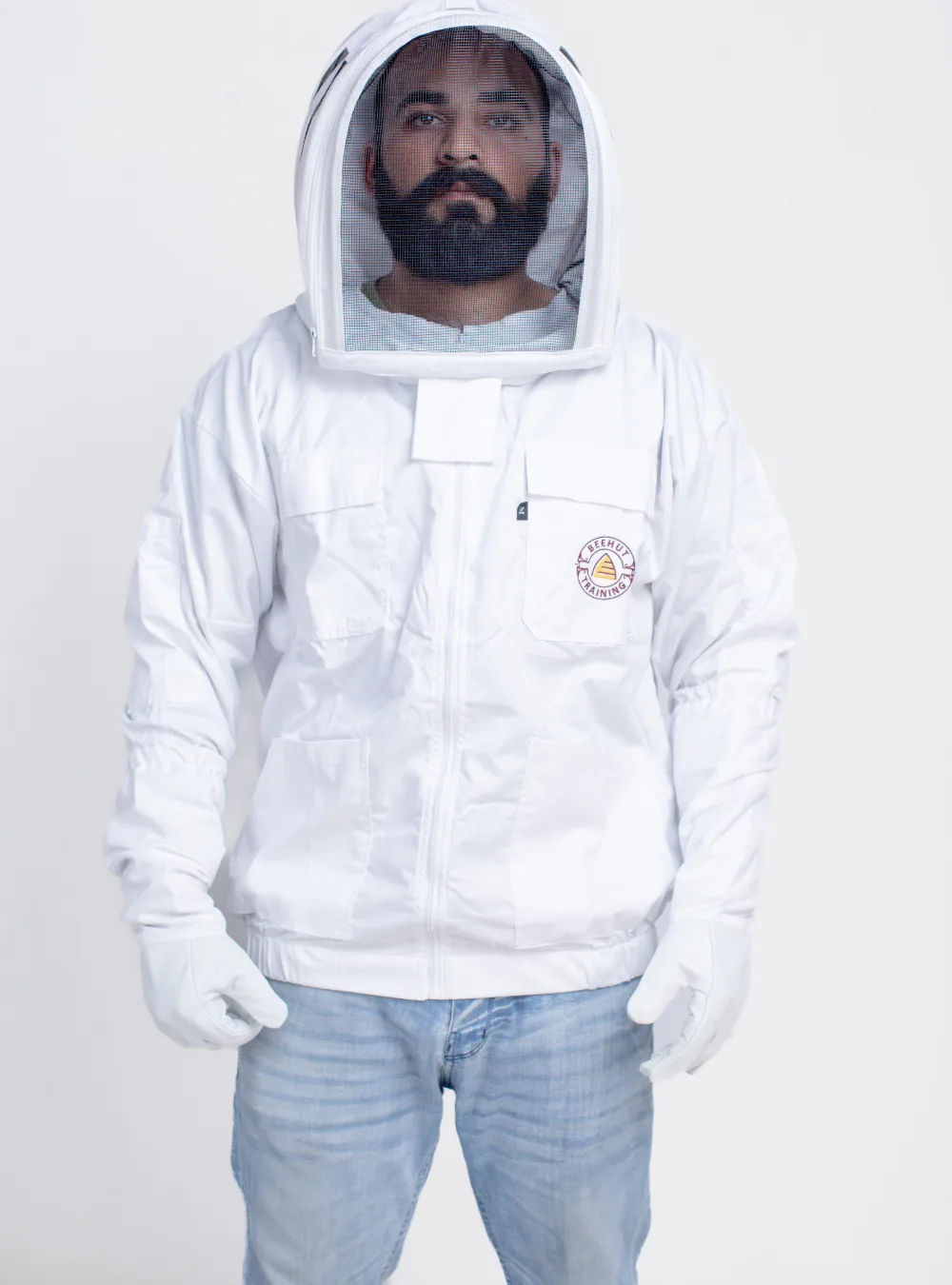
What the clothing half should contain
| Item | In a starter kit? |
|---|---|
| Veil, or jacket with one | Yes. The only non-negotiable |
| Gloves, in your size | Yes, if you can specify the size |
| Full coverall | Only if you kneel, or it is for a child |
| Boots | No. You own some |
| Base layer | No. You own some |
| Spare veil | Not yet — useful once the first is damaged |
| Hat | Only with a round veil, which needs one |
The hat row catches people: a round veil is useless without one, and a fencing veil needs none. Do you need a hat with a bee veil covers it.
What you probably already own
Three of the items a beekeeping starter kit might charge you for.
Boots. Anything covering the ankle, with a shaft the trouser leg goes over. Wellingtons are ideal and most households have a pair.
A base layer. A thin pale long-sleeved top and full-length trousers. What to wear underneath covers why one layer beats none, which surprises people on a hot day.
A thin peaked cap, worn under the veil. It pushes the mesh forward, cuts glare and keeps it off a wet forehead — the cheapest useful thing in any kit.
Borrow before the bundle
Most associations lend kit for a first visit, and an afternoon in somebody else's jacket tells you what you want better than any description, including ours.
You will find out how hot you get, whether a fencing veil suits your face, and whether you mind gloves. Then buy once, deliberately. A bee suit for beginners covers what a first season actually needs.
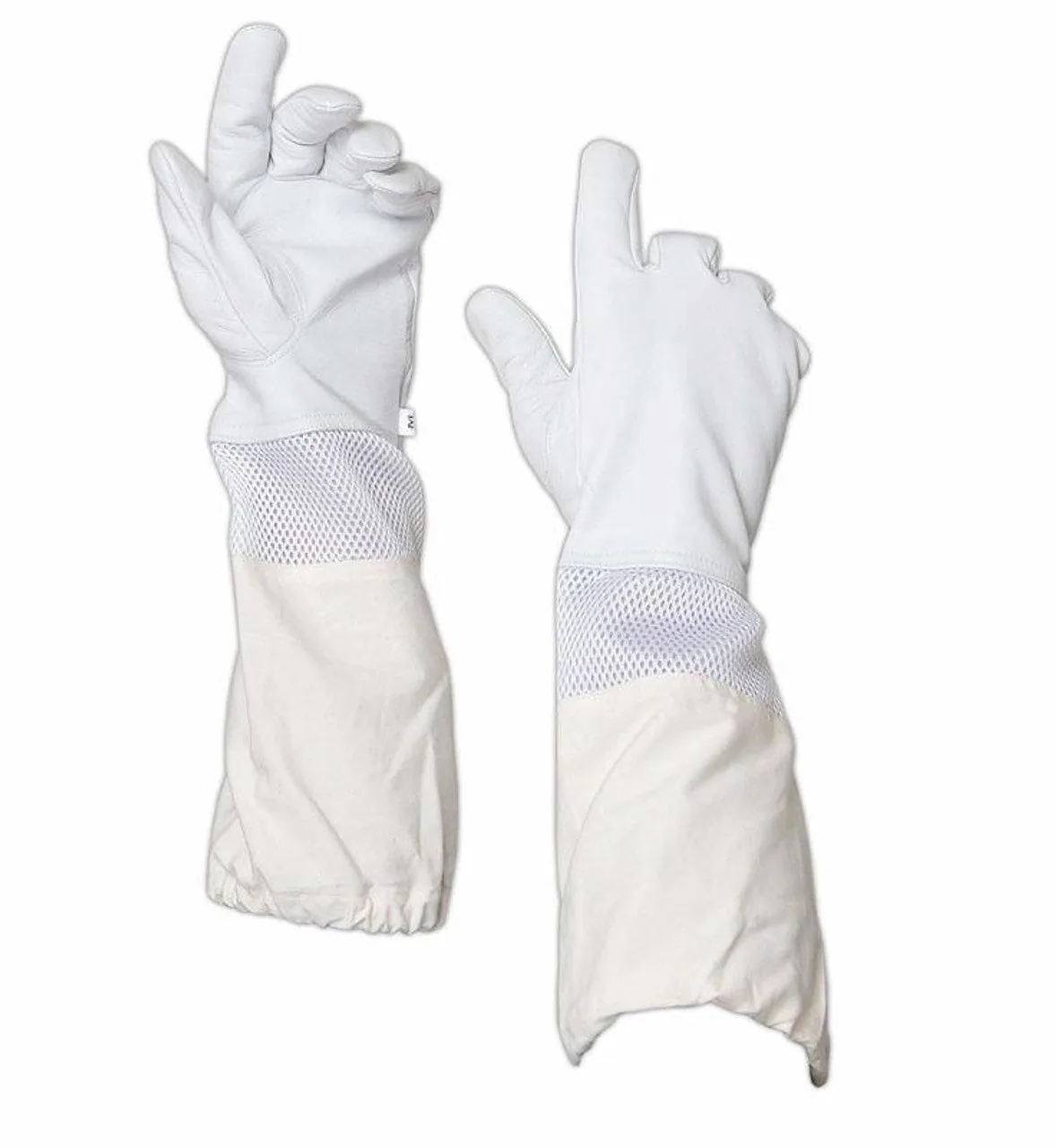
Buying the clothing separately
Usually better, and not much more expensive.
You choose the construction for your climate, the veil shape for your face, and the glove for your hand — three decisions a bundle makes for you, and the three that decide whether you enjoy wearing it.
It also means you can buy the equipment half second-hand or from an association, which is where the real savings are. Hive tools and smokers last decades and do not care who owned them first.
For a family or a group
Bundles are a poorer fit again, because everybody needs a different size of the one thing that must fit.
A family kit covers which items are per-person and which are shared — the short version is that protective gear is never shared and almost everything else is. For a club, buying for a group covers the size spread.
What a beekeeping starter kit gets right
Worth saying, because this page is otherwise a list of cautions.
A bundle removes decisions, which matters at a first inspection. For somebody who has never kept bees that is genuinely valuable. You get a working set without having to research five categories, and everything is compatible with everything else.
The equipment half is usually fine — a hive tool and a smoker are a hive tool and a smoker. It is the clothing half where a bundle's compromises cost you, because clothing has to fit a particular person and equipment does not.
So the sensible approach is often to buy the bundle for the equipment and the clothing separately.
If you have already bought a beekeeping starter kit
If the suit is wrong, do not force it. Three common cases.
The veil is stitched in. Nothing to do now; note it, and buy the next one with a detachable veil.
The gloves do not fit. Replace them. They are the cheapest item in the kit and the one that causes the most trouble when wrong — gloves sizing.
The suit is too hot. Wear it for early-season visits and buy a ventilated jacket for summer. The woven one will last for years doing light work — spring versus summer covers the split.
The honest minimum
- A jacket with a veil, ventilated if your summers are warm.
- Gloves that fit your hand.
- Boots and a thin layer you already own.
Everything else is a decision for after a season rather than before one. What beekeepers wear is the full list if you want to see what you are deferring.
Our jackets and gloves are sold separately for the reasons above. For a kit list from somewhere with nothing to sell, see Penn State's beekeeping basics and the University of Georgia Bee Program.