
Beekeeping veil for glasses wearers
Glasses change which veil works for you, and the deciding factor is not the shape — it is how far the mesh sits from the lens.

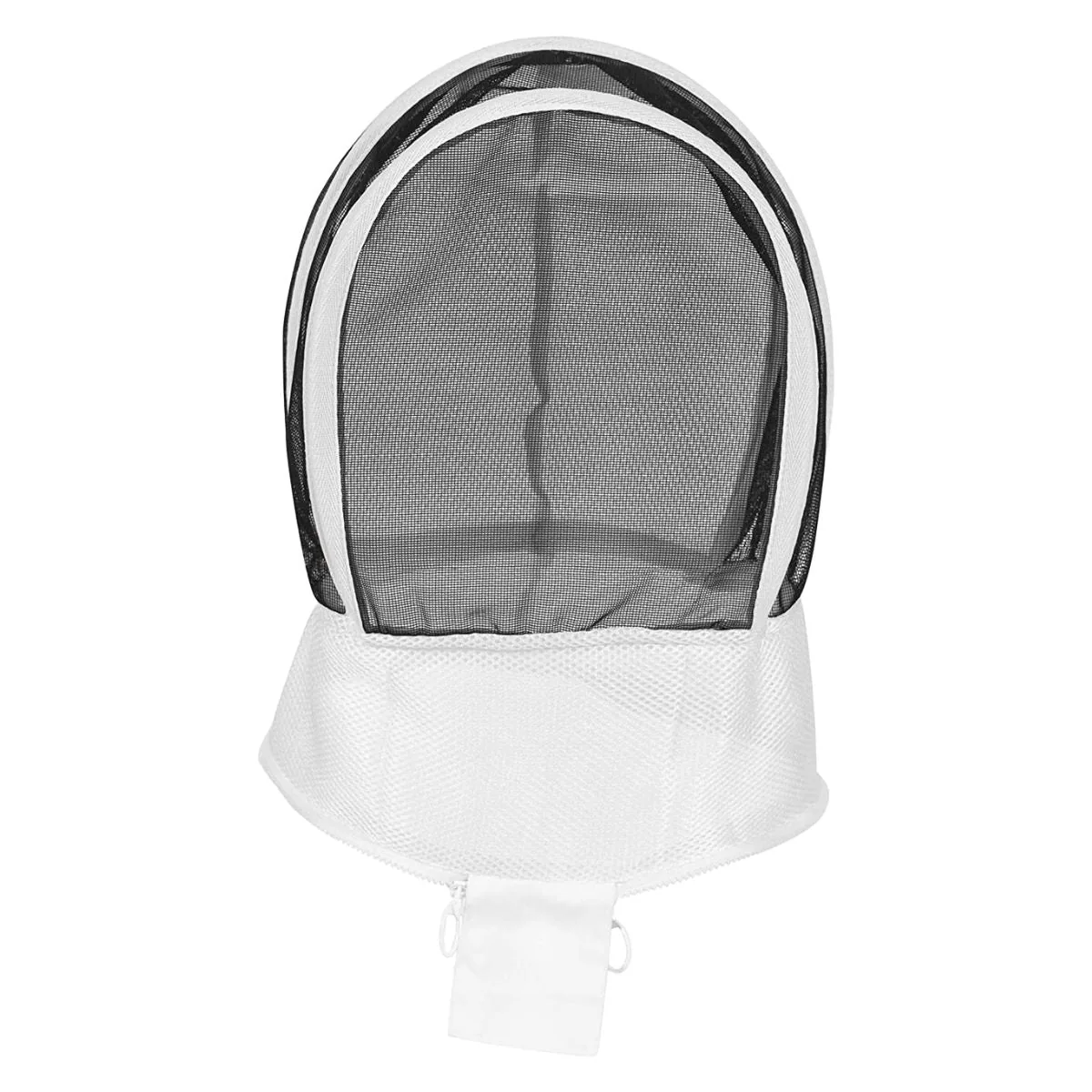
A beekeeping veil for glasses needs two things a veil for everyone else does not: enough clearance that the mesh never touches the lens, and enough airflow that your breath does not fog it. A round veil gives you both most easily. A fencing veil can work, but it sits closest to your face of any shape and that is exactly what glasses cannot afford.
Why glasses change the answer
Normally a veil's clearance is about stings — mesh touching skin is mesh a sting can reach through. With glasses it is also about seeing, and the second problem is tighter than the first.
Your lenses sit a centimetre or so in front of your eyes already. Mesh resting on or near them does three things: it smears, it sits inside your focal range so you see the weave rather than through it, and it traps the warm air coming off your face against a cold lens, which is how fogging starts.
So the question for a beekeeping veil with glasses is not "which is best" but "which veil keeps the most air between the mesh and my lens".
A beekeeping veil for glasses: the shapes ranked
| Veil | Clearance at the lens | Verdict |
|---|---|---|
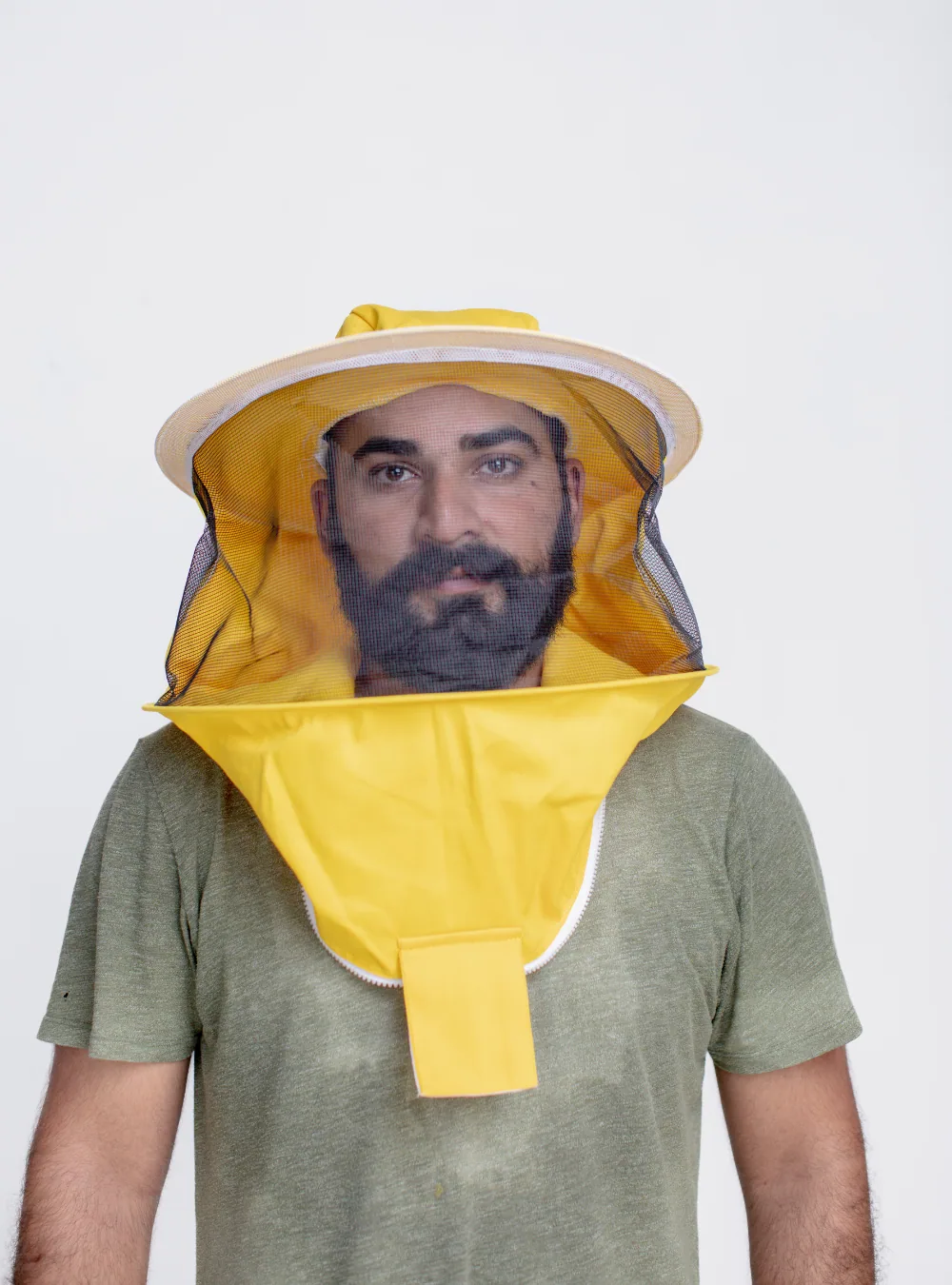
| Round (hat and veil) | Most — the hoop holds the mesh well forward | The straightforward choice |
| Square | Good at the front, flat panel ahead of the face | Works well; corners distort at the edges |
| Fencing | Least — follows the head, closest when you look down | Workable with a cap, frustrating without |
The round veil's hoop is doing exactly the job glasses need: holding mesh away from the face regardless of how you tip your head. Fencing versus round and round versus square cover what else separates them, and the fencing veil in detail is worth reading if you would rather keep its visibility and speed.
Fogging a beekeeping veil over glasses, and how to stop it
Fog is warm damp air from your breath meeting a cooler lens. Three things reduce it, in order of how much they help.
Keep the veil off your face. Air has to move. A veil touching your cheek channels every breath straight up the inside of your lens. This is the fix that matters and it is why shape comes first.
Direct your breath downward. A thin peaked cap under the veil helps here too, and so does the simple habit of breathing out through your nose with your chin slightly down when you are working close to a frame.
Treat the lens. Anti-fog spray or wipes, applied before you go out rather than when it fogs. Ordinary washing-up liquid smeared thin and buffed off is the cheap version and works about as well.
What does not help: taking the veil off to wipe the lens. That is the moment you are least protected and most likely to be stung on the face. For protective-kit guidance from somewhere with nothing to sell, Penn State’s beekeeping basics and the University of Georgia Bee Program are the right sort of source.
The cap is the single best accessory
A thin peaked cap under any beekeeping veil helps glasses twice over: it pushes the mesh forward a centimetre or two, cuts the glare that makes mesh hard to see through, and keeps wet mesh off your forehead. For a glasses wearer in a fencing veil it is close to essential; in a round veil it is still worth it.
It costs very little and it is the difference between a fencing veil being unusable and being fine.
Varifocals: a beekeeping veil for glasses that change focus
Varifocals complicate this in a specific way. You read a frame through the lower part of the lens, which means tipping your chin down and bringing your forehead forward — exactly the movement that pushes a veil against the mesh.
Two things help. A round veil, because its clearance does not change when you tip your head. And raising the work: a hive stand that brings the top box to waist height means you look at a frame by lifting it rather than by leaning over it, which is better for your back as well as your veil.
If you wear varifocals and find yourself constantly adjusting, the hive height is more likely to be the problem than the veil.
Practical things that help a beekeeping veil for glasses
- Put the glasses on before the veil, every time. Threading an arm behind a veil you are already wearing is how glasses end up inside the hood and on the ground.
- Use a strap or cord. Dropping your glasses inside a veil over an open hive is a genuinely bad few seconds.
- Thinner arms sit better under a hood than thick ones, which lift the fabric and open a gap at the temple.
- Clean the lenses before you start, and the mesh too. You cannot do either afterwards, and a smear you could ignore indoors becomes the whole view behind mesh.
- Dark mesh is doing work. It cuts glare. A pale veil looks better in photographs and is harder to see through in bright sun, which matters twice as much behind a lens.
What about contact lenses?
They remove both beekeeping veil problems glasses create at once, and for anyone who can wear them they are the simplest answer — a fencing veil becomes a perfectly reasonable choice again.
The one caution is smoke and wind, both of which are harder on contact lenses than on glasses. If you find your eyes drying out in the apiary, that is worth knowing before you commit to it as the plan.
Prescription safety glasses
Worth mentioning because people ask. A beekeeping veil for glasses is still just a veil — it is the protection and the glasses are only how you see, so they are not necessary for ordinary inspections — the veil is the protection and the glasses are just how you see. If you already wear them for other work and they are comfortable under a hood, there is no reason not to.
When a beekeeping veil for glasses should be a hat-and-veil
The classic round veil is a separate hat with a veil over it, and for glasses that separation is an advantage: the hat sets the clearance, and it does not move when the jacket does.
The cost is speed and fuss. It takes longer to put on, it has to be seated correctly, it can rotate if you do not tie it off, and it will not pack flat. For someone doing one inspection a fortnight that is a fair trade; for someone in and out of hives all day it is a real annoyance.
A fencing veil with a cap underneath lands between the two, and for many glasses wearers it is the practical answer.
Testing a beekeeping veil with your glasses on
Put it on with your glasses on, indoors, and do three things: look straight ahead, look down at your own feet, and turn your head sharply left and right.
A veil that fails this test is one to replace rather than tolerate. If the mesh touches the lens in any of those, it will touch in the apiary when you are leaning over an open box, which is more demanding than any of them. That is the test, and it takes a minute.
Our hats and veils include all three shapes. If you are also deciding on a suit, what to wear underneath covers the cap and the rest of the layer that sits between you and the garment.