
Beekeeping without gloves: pros and cons
Experienced beekeepers often work bare-handed on purpose. It is a real technique with a real cost, and it is a bad idea for a beginner.

Beekeeping without gloves is a real technique rather than bravado: bare hands feel what they are doing, crush fewer bees, and work faster. It is also a choice with a genuine cost, and the people it suits least are exactly the people most likely to try it — beginners, and anyone who has never checked how they react to a sting.
Why anybody tries beekeeping without gloves
One reason, and it is a good one: feedback — the same argument against oversized gloves, taken further.
A glove dulls what your fingers can feel. You cannot tell how hard you are gripping a frame, how much a comb weighs, or that there is a bee under your thumb until it is too late. Bare hands tell you all three immediately.
That matters because crushed bees are the main cause of a defensive colony. A crushed bee releases alarm scent, the colony responds, and an inspection that was going well stops going well. Beekeeping without gloves, done by somebody with the hands for it, crushes fewer bees than the same person in gloves — which means fewer stings overall, not more.
Beekeeping without gloves: the pros, honestly
- Better handling. The real argument. Everything else follows from it.
- Faster. No fumbling with queen cages, clips, or small equipment.
- Cooler. Hands sweat a great deal inside gloves on a hot day.
- Cleaner between colonies. Hands can be washed properly; leather gloves cannot, which matters if you are working several sites.
- Cheaper. Gloves are the consumable in any kit, whatever the rest of it is made of.
The cons, equally honestly
- You will be stung on the hands. Not occasionally — regularly. Hands and wrists are where beekeepers get stung most, and bare hands remove the only thing in the way.
- Propolis gets everywhere and does not wash off easily.
- It is unpleasant in cold weather. Numb fingers are clumsier than gloved ones, which defeats the whole argument — see cold weather inspections.
- It removes your margin on a bad day. A colony that turns, a dropped frame, a wasp attack — these are the moments gloves exist for.
- It is a poor example to set if anyone is watching and learning from you.
Who should not try beekeeping without gloves
Four groups, and the first two are not negotiable.
Anyone who has reacted badly to a sting, or does not know whether they would. That is a medical question and belongs with a doctor before the next visit, not after one.
Children. Dexterity matters more at a small size, which is an argument for thin gloves rather than none — children's gloves covers it.
Beginners. The technique depends on hands that already know what they are doing. Without that, you get the stings and none of the handling benefit.
Anyone doing removals or working defensive colonies. Removal work is a sustained sting load, and bare hands there is not a technique, it is an injury.
The middle ground most people land on
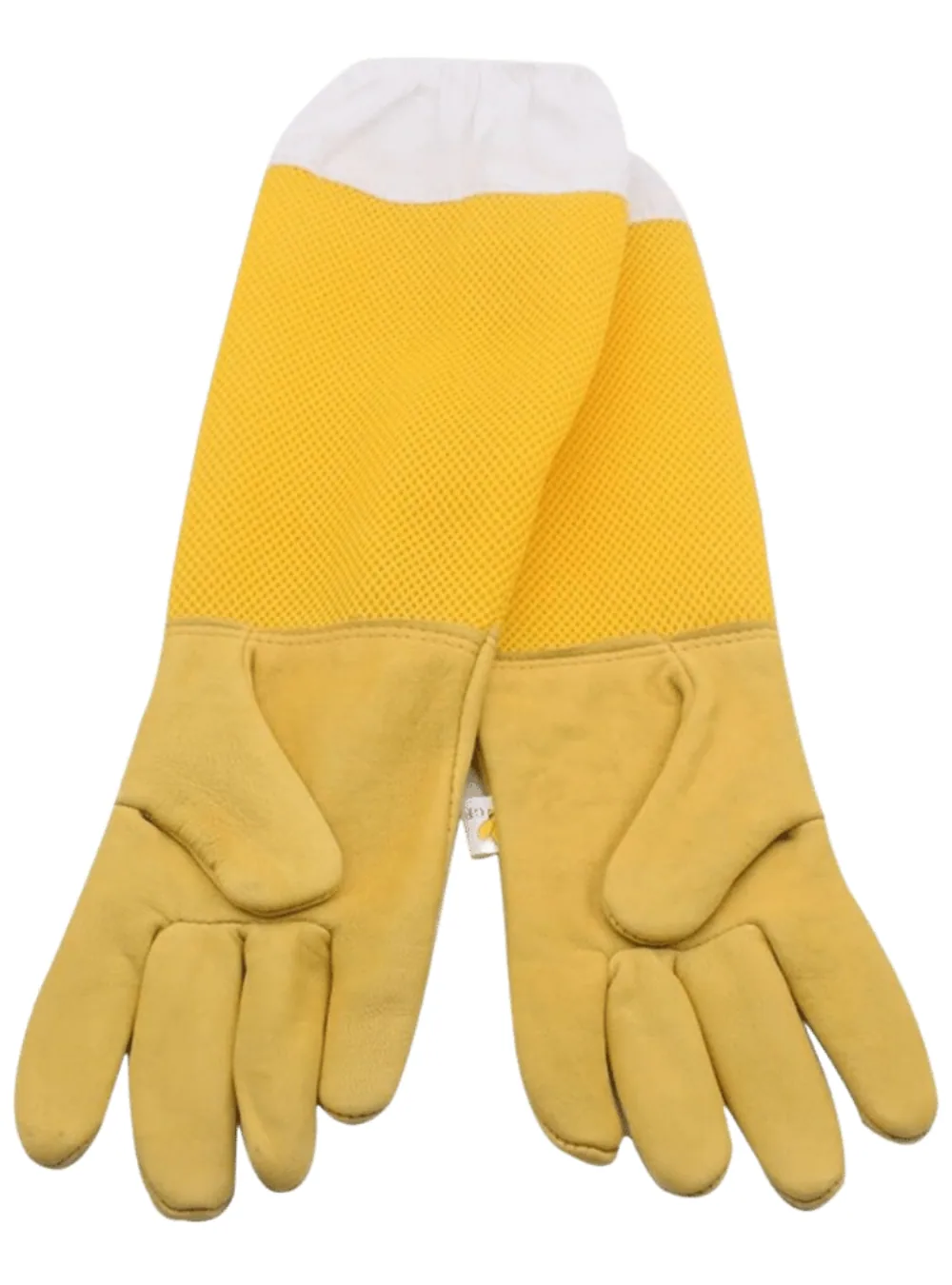
Thin gloves. Nitrile or thin goatskin give you most of the dexterity argument and keep a layer between you and the colony.
That is where the majority of experienced beekeepers actually sit, rather than at either extreme. Nitrile versus leather is the comparison, and the dexterity axis is the one that matters if this page interests you.
A second middle ground: gloves for the opening and the heavy lifting, bare hands for the delicate part — finding a queen, handling a cage — and gloves back on afterwards. It is fiddly and plenty of people work that way.
What changes about how you work
Beekeeping without gloves is not the same inspection with less equipment. The technique changes with it.
Your hands become slower and more deliberate, because there is a cost to carelessness you can feel. People who work bare-handed tend to lift frames by the lugs rather than the faces, put things down more carefully, and stop reaching into gaps they cannot see into. Those are good habits and they are the actual benefit — not the dexterity itself, but what the dexterity teaches you.
You also stop using the hive tool as a pry bar near your own fingers, which is worth noting as a different kind of injury risk entirely.
Propolis, which nobody warns you about
The practical nuisance rather than the dramatic one. Bare hands collect propolis constantly, it does not wash off with soap and water, and it transfers to car doors, phones and everything else.
What works is a barrier before you start — any hand cream or oil — and an oil-based cleaner afterwards rather than detergent. What does not work is scrubbing. It is the same resin that does not come out of a suit, and skin is no different.
If you want to try it
- Know how you react to a sting first. Everything else is secondary to this.
- Start with a colony you know is calm, on a good day, late in the season when you have practice behind you.
- Keep gloves in your pocket. The point is to be able to stop.
- Do not do it alone the first time.
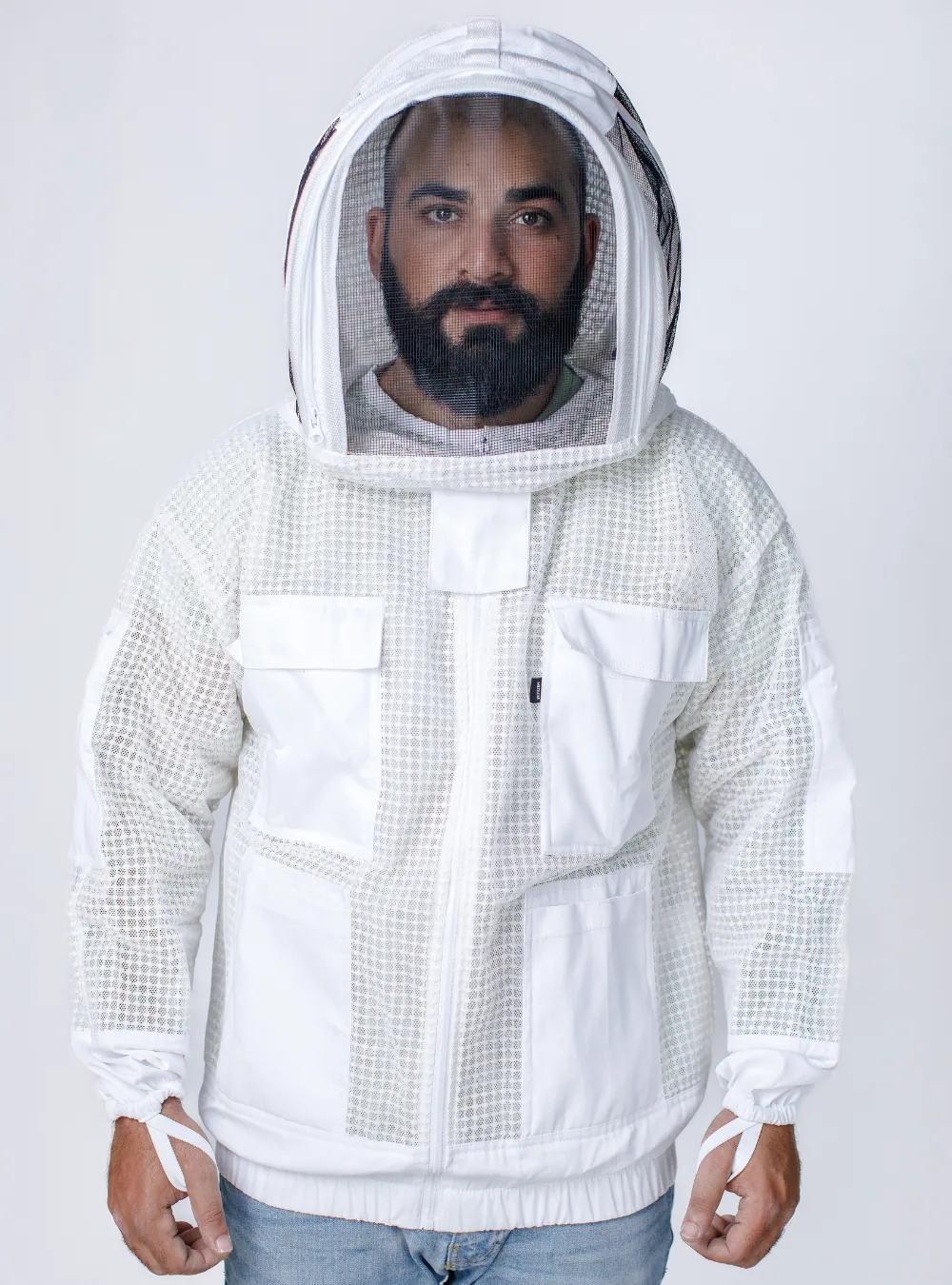
- Keep everything else on. Veil, suit, boots. Bare hands is a specific choice, not a general relaxation.
What it does not change
The rest of the kit. The veil is never optional, the cuffs still need to grip, and sealing the wrists matters more rather than less — with no gauntlet, the sleeve opening is the last thing between a bee and your forearm.
It also does not change how you should work. Slow hands, nothing crushed, look before you put a frame down. Those habits are what make beekeeping without gloves possible, and they are worth having whether or not you ever take the gloves off.
For guidance on handling technique from somewhere with nothing to sell, Penn State's beekeeping basics and the University of Georgia Bee Program are the right sort of source. Our gloves run from thin nitrile to goatskin if you would rather keep the layer.