
How long does a bee suit last?
Anyone who gives you a number is guessing. What can honestly be said is what wears out, in what order, and which of it is in your control.

How long a bee suit lasts depends on how much sunlight it sees, how often it is washed, and how hard it is worked — in that order. Anyone quoting you a number of years is guessing, because nobody measures this and the range between a hobbyist's suit and a removal professional's is enormous. What can honestly be said is what fails, in what order, and which of it you control.
Why nobody can say how long a bee suit lasts
We make suits and we will not tell you a bee suit lasts five years, because we would be making it up. Two people buying the same suit on the same day can be years apart at the end of it.
A beekeeper with two hives, inspecting fortnightly in summer, storing the suit indoors in the dark, washing it twice a season, is putting a different garment through a different life than someone doing cut-outs in lofts three times a week. The fabric is identical. The outcome is not comparable.
Treat any published figure as marketing. The useful question is not how long a suit lasts but what will end this one, and the answer to that is the same for everybody. For guidance on kit that is not written by somebody selling it, Penn State’s beekeeping basics and the University of Georgia Bee Program are the right sort of source.
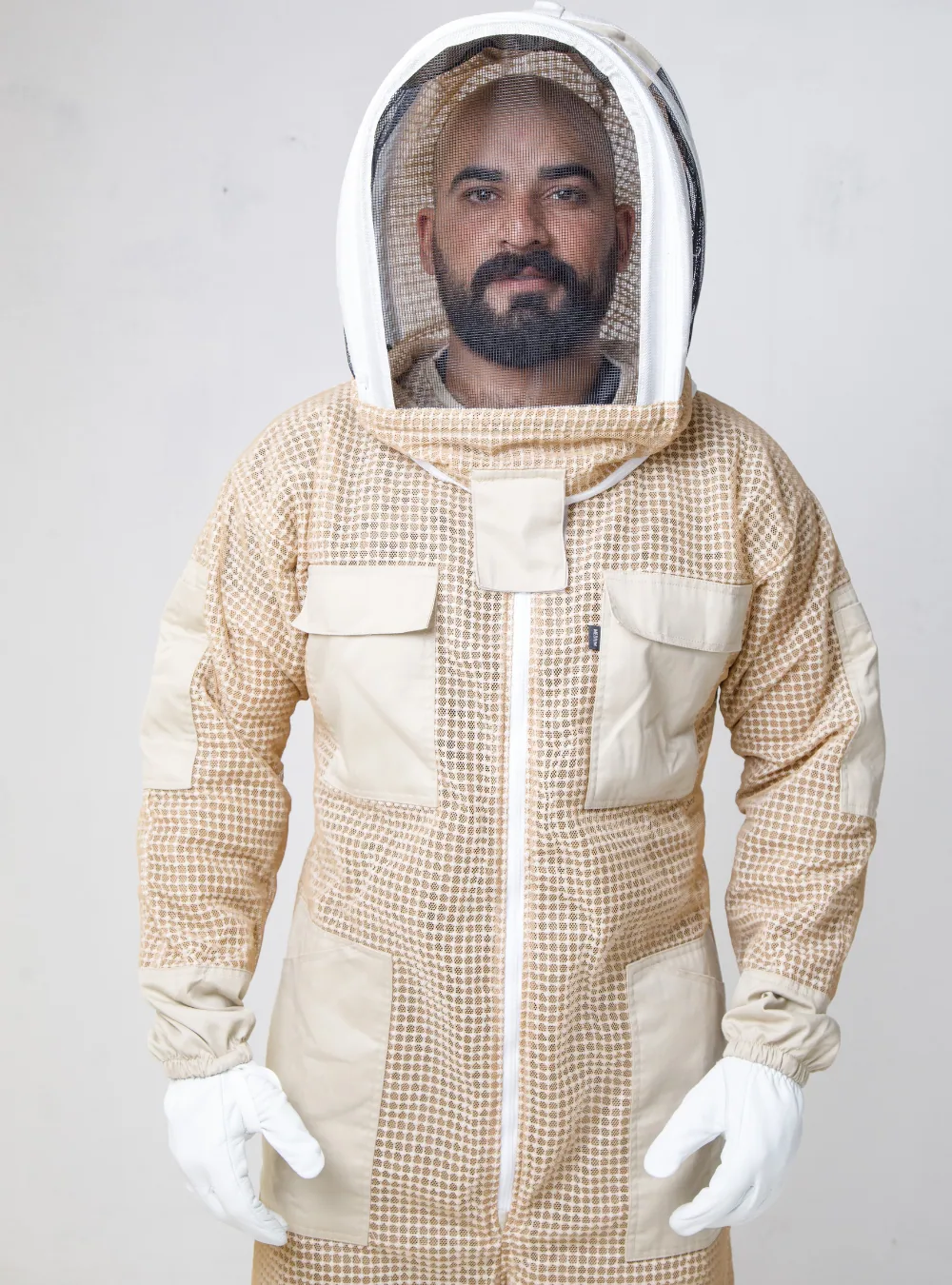
What goes first, in order
- Cuff and ankle elastic. Almost always first — see sealing wrists and ankles. Almost always first, and the most dangerous, because it fails invisibly. The suit looks fine; the sleeve is open. Stretch a cuff and let go — if it does not spring back, that is the suit telling you.
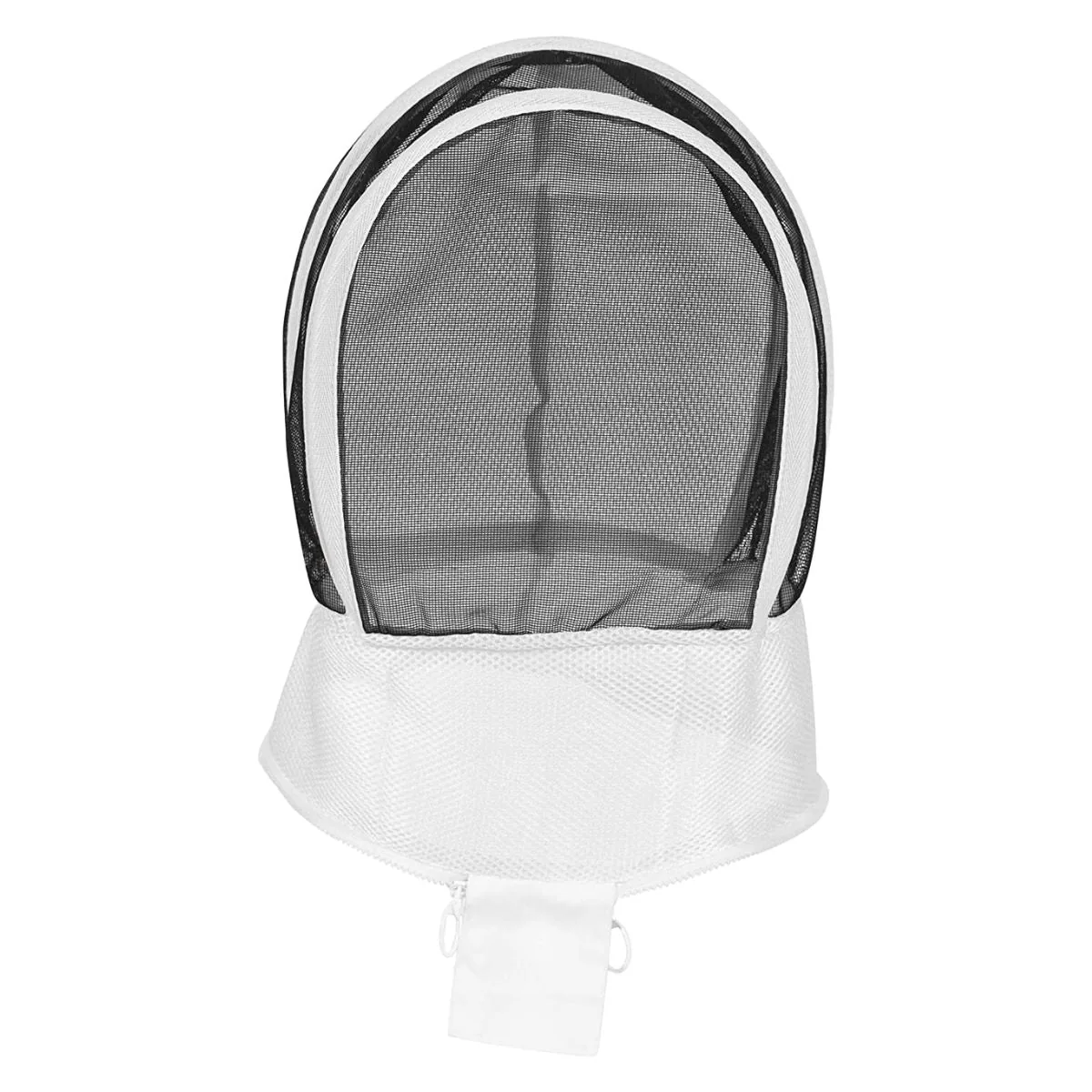
- The veil. A snag from a thorn, a nail or a washing machine becomes a hole in a season. This is the part most likely to take a whole suit out of service, which is why being able to buy a replacement veil on its own matters more than any warranty.
- Zips. Opened and closed every visit with sticky gloves, and on a hood they run round a curve.
- Knees and seat. Only if you kneel, but if you kneel they go.
- The fabric itself. Last, usually by a long way. People replace suits because of the first four, not this one.
Note that none of the top three is what a buyer looks at when deciding how long a bee suit will last. Fabric weight and mesh layers get all the attention, and they are the part least likely to end the suit.
The three things that decide how long a bee suit lasts
Sunlight. The biggest one, and the one almost nobody manages. Ultraviolet breaks down mesh and elastic whether the suit is being worn or hanging in a porch. A suit stored in the dark can outlive an identical suit hung by a window by a wide margin, with no difference in use at all. Storing it properly is the cheapest thing you can do for it.
Heat. Mostly from laundry. A tumble dryer costs more elastic in an hour than a season of wearing does, and a hot wash is not far behind. Washing it cool is the second cheapest thing.
Abrasion. This is the one that actually varies by what you do. Apiary work barely abrades a suit. Crawling through a loft does, and removal work is a different question entirely — there, a suit is a consumable and should be budgeted as one.
Does an expensive bee suit last longer?
Sometimes, and not for the reason the price tag implies.
What a higher price usually buys is better construction at the points that fail: stronger elastic, better zips, neater seams, denser mesh, and — more important than any of them — the existence of spare parts. None of that is visible in a photograph, which is why price is a poor proxy.
What it does not buy is immunity to sunlight, heat or abrasion. An expensive suit stored in a sunny porch and tumble dried will be finished before a cheap one kept in a wardrobe and line dried. The owner's habits outweigh the price difference, comfortably.
The honest version: spend on fit and on a supplier that sells replacement parts. Both affect working life more than fabric weight does.
Fit shortens a suit's life too
Worth saying because it is not obvious. A suit that is too tight splits at the seams, and that is the commonest structural failure there is — and the one no warranty pays for, because it is attributed to fit rather than manufacture.
A suit that is slightly loose lasts longer than one that is slightly snug, every time. If you are between sizes and wondering which way to go, that question has an answer, and durability is one more argument for the larger one.
When to replace rather than repair
| Fault | Repair or replace? |
|---|---|
| Torn veil | Replace the veil, keep the suit |
| Slack cuffs | Repairable. New elastic, or over-sleeves as a stopgap |
| Broken zip | Repairable, by anyone who alters clothes |
| Worn knees | Patch them. Cosmetic until they go through |
| Mesh gone soft and flat | Replace the suit. The gap is the protection and it cannot be restored |
| Seams splitting in several places | Replace. It is telling you the suit is the wrong size |
The pattern: everything except the fabric structure itself is a part, and a supplier that sells those parts is one whose suits last longer in practice whatever the materials. What to check in a warranty is really a list of questions about this.
How to tell it is time
Four signs, and only the last is obvious.
- Cuffs that no longer spring back. Stretch and release. If it stays stretched, the suit has stopped closing — this is the one to check every season.
- Mesh that squashes flat and stays there. Press it between finger and thumb. The gap is the protection, and once the bonding has gone there is nothing to restore.
- Stings getting through where they did not before. The clearest signal there is, and worth taking seriously rather than putting down to a bad-tempered colony.
- Seams splitting in more than one place. Usually the suit telling you it is the wrong size rather than that it is old.
A bee suit can last years and look dreadful, or look presentable and have stopped protecting. A suit can look filthy and be perfectly sound, or look presentable and have stopped protecting. Judge it by the four above rather than by appearance.
Making a bee suit last
Four things, in order of how much they are worth — and none of them is what you spent:
- Store it indoors, in the dark. Costs nothing, matters most.
- Wash cool, never tumble dry, air it instead of washing where you can.
- Buy the right size — loose beats snug.
- Repair snags the week you find them. A centimetre of torn mesh becomes a hole in a season.
And keep a second suit if you can. Not for durability directly, but because a suit that needs a repair gets repaired rather than worn damaged, which is how most suits actually end.
If you are weighing a cheap suit against a better one on this basis, whether a measured suit is worth it covers the other half of that decision — fit, which is both a safety question and, as above, a durability one.