
What to wear under a bee suit
One thin layer, long sleeves, light colour, natural fibre. The instinct to wear as little as possible in heat is the one that gets people stung.

Wear under a bee suit one thin layer with long sleeves, in a light colour and a natural fibre, plus full-length trousers or leggings and socks that come over the ankle. The instinct on a hot day — wear as little as possible — is the one that makes you both hotter and easier to sting.
Why less is worse
Two reasons, and the second one surprises people.
Protection is a gap — the whole mechanism in one word. A sting has to cross the distance between the outer surface of the suit and your skin. A thin layer underneath adds a few millimetres and, more usefully, keeps the suit's inner surface off you when the fabric is pulled tight — across the shoulders when you reach, across the thighs when you kneel. Bare skin against a suit is where stings get through a garment that is doing everything else right.
Bare skin is hotter, not cooler. Sweat cools you by evaporating. On bare skin under fabric it pools and runs instead. A thin layer spreads it over a wider area so more of it evaporates, which is the whole mechanism by which you lose heat. This is why the people who work longest in suits wear a base layer rather than nothing.
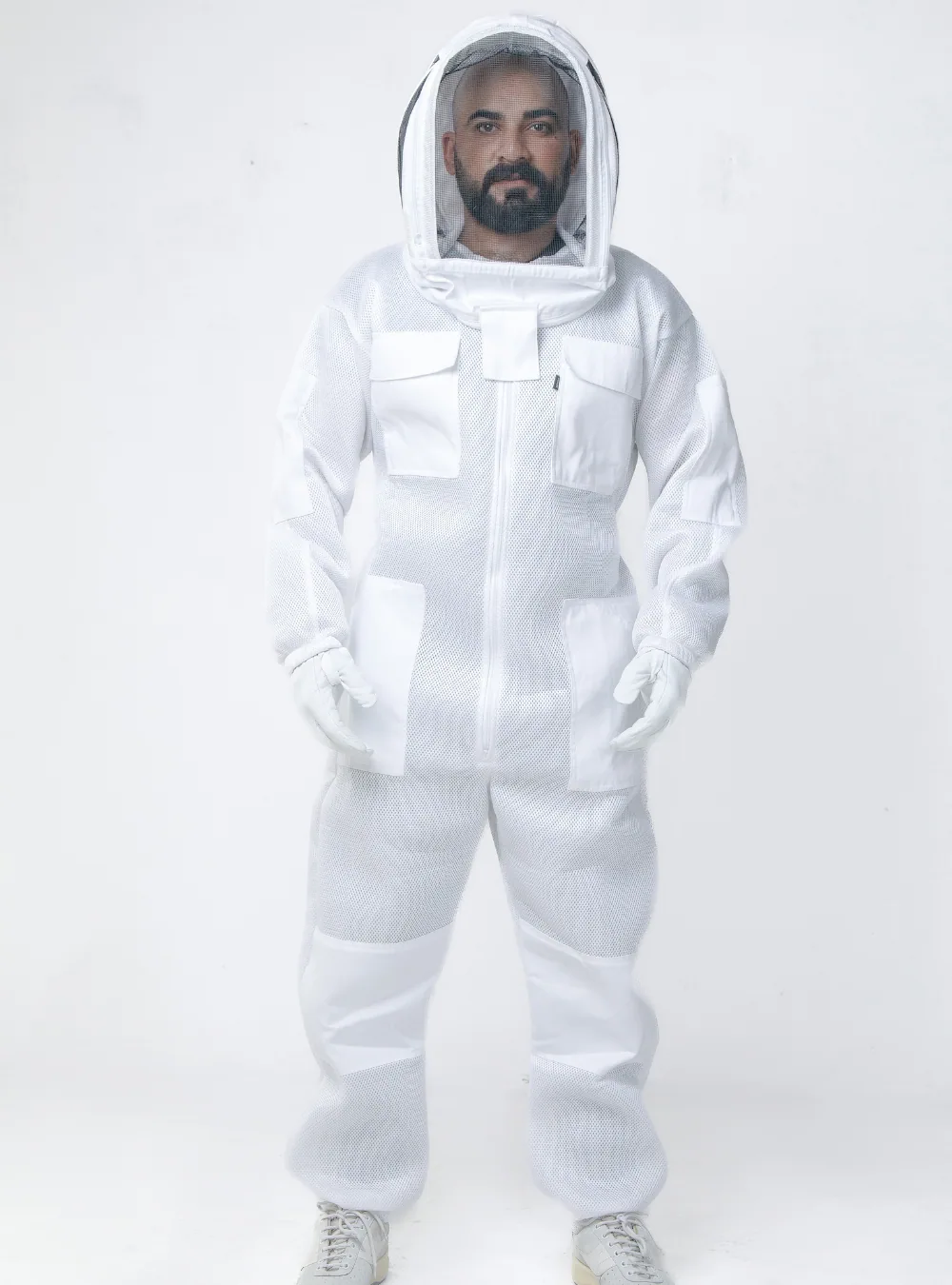
What works under a bee suit
| Layer | Choose | Avoid |
|---|---|---|
| Top | Thin long-sleeved cotton or merino, pale | Vests, bare arms, heavy sweatshirts, dark colours |
| Legs | Full-length light trousers or leggings | Shorts, bare legs under a coverall |
| Socks | Long enough to meet the trousers over the ankle | Trainer socks — they leave a bare band |
| Head | A thin peaked cap | Nothing, if your veil touches your forehead |
| Hair | Tied low, at the nape | A high bun — it pushes the hood forward |
What not to wear under a bee suit
| Avoid | Why |
|---|---|
| Nothing at all | Sweat pools instead of evaporating, and bare skin against fabric is where stings reach you |
| Shorts under a coverall | Leaves bare thighs exactly where the suit pulls tight when you kneel |
| Dark colours | Shows through pale mesh, and the pale-clothing convention applies to what shows |
| Thick synthetic fleece | Holds moisture against you and adds bulk where the suit needs to hang loose |
| Strong scent, hairspray, perfume | Bees navigate by smell. This one is worth taking seriously |
| Loose jewellery and a watch strap | Catches on cuffs and stops them seating; a ring under a glove is a pressure point |
The scent point deserves its own line. Strongly perfumed deodorant, aftershave or laundry products are the commonest reason a calm beekeeper gets more attention than they expected, and it costs nothing to switch to something unscented on inspection days.
Natural fibre beats technical
Sports base layers are designed to move moisture to an outer surface where air can take it away. Inside a bee suit there is no such airflow at the skin, so a polyester base layer holds the moisture against you and gets clammy.
Thin cotton works. Merino works better and smells less. Both beat the gym shirt, which is the thing most people reach for.
The cap under a bee suit hood, which people skip
A thin peaked cap under the veil does three things at once. It pushes the mesh forward a centimetre or two, which is the clearance that stops a sting at the forehead. It keeps wet mesh off your skin on a hot day. And the peak cuts glare, so you can actually see through the veil in bright sun.
It matters twice over if you wear glasses — a veil for glasses lives or dies on that clearance. It matters most with a fencing veil, which follows the shape of your head rather than standing away from it — the fencing veil's main drawback is largely solved by a cap that costs almost nothing.
Colour matters a little, here too
Keep the layer underneath pale, for two reasons. A dark layer shows through pale mesh, which is a dark shape moving near a colony. And on a ventilated suit, light passes through the outer layer, so what you wear underneath is partly what the bees see.
It is a small effect next to the suit itself. What colour actually does in heat covers how small, and why construction decides your comfort rather than colour.
Footwear, and the bare band under a bee suit leg
The suit's ankle elastic needs something to grip over. A boot with a high shaft gives it several inches of overlap; a trainer gives it a sock. When you crouch and the leg rides up, that overlap is the only thing between you and a bare ankle.
Wellingtons are fine and cheap. Work boots are better on rough ground. The one thing to avoid is anything that leaves skin between the top of the shoe and the suit.
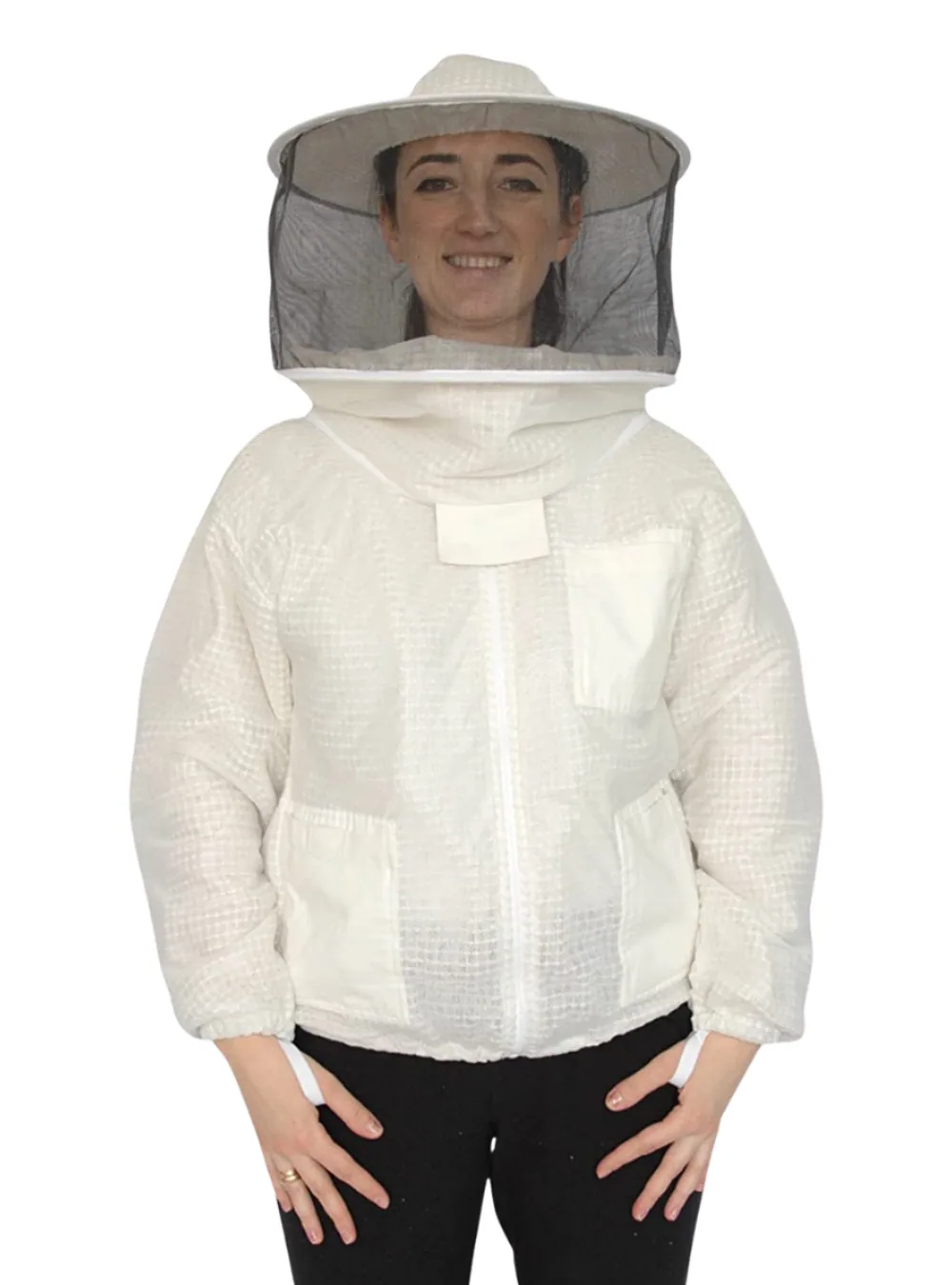
In real heat
Work early or late, keep sessions short, and drink before you start rather than after you finish. None of that is about clothing, and all of it does more for you than taking a layer off would. the University of Georgia Bee Program and Penn State Extension’s beekeeping resources publish seasonal guidance for hot regions worth reading alongside this.
If you are regularly uncomfortable, the garment is the problem rather than what is under it. Ventilated versus cotton is the decision that changes your afternoon, and a jacket rather than a coverall is the cheaper half-step.
A worked example for a hot afternoon
Thin pale long-sleeved cotton top. Light full-length trousers. Long socks over the ankle, inside a boot with a high shaft. A thin peaked cap. Hair tied low. Nothing scented.
That is more under a bee suit than instinct suggests and it will be more comfortable than less, because every layer there is doing a job: evaporation, standoff, overlap at the ankle, clearance at the forehead. The alternative — a vest and bare arms — is hotter, more visible to the colony and easier to sting through.
Then do the things that actually help: go early, keep it short, and have water waiting.
In cold
Layer under a bee suit rather than buying a heavier one. A suit sized for a base layer and a fleece is a suit that is too big in July; a suit that fits in July takes a thin layer in April and that is usually enough, because early-season inspections are short.
If you are buying with layers in mind, size for the clothes you will actually wear under it — measure over them, not over a t-shirt.
Our ventilated suits and jackets are both cut with room for one layer underneath, which is what the size guide assumes.