
Why beekeeping veil mesh is black
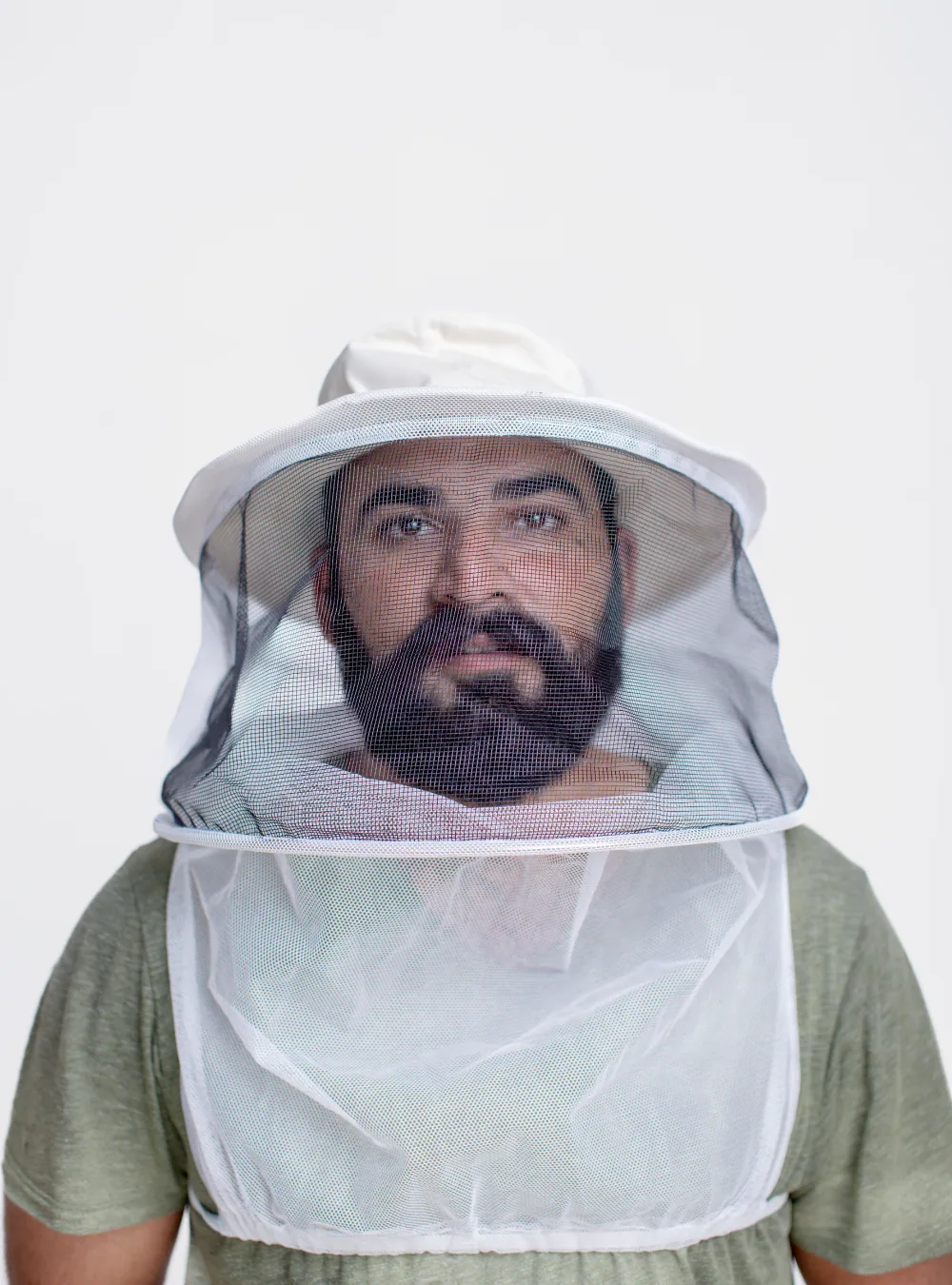
It is not about the bees. Black mesh is the colour you can see through, and the reason is the same one that makes a window screen disappear.

Beekeeping veil mesh is black because black is the colour you can see through. It has nothing to do with what bees prefer — the suit around it is pale for that reason, and the veil is the one part deliberately dark. The optics are the same reason a window screen seems to vanish while a net curtain does not.
The optics of veil mesh, briefly
You are looking through a grid of threads at a scene beyond it. Two things decide whether you see the scene or the grid.
Black threads absorb light. They send nothing back toward your eye, so they read as gaps in your vision and your brain fills in the scene behind. Pale threads reflect light straight at you, so each one is a small bright line competing with what you are trying to look at.
Contrast matters more in bright light. In full sun a white mesh is lit up like a screen a few centimetres from your eyes, and the hive beyond it is relatively darker. That is the worst possible arrangement. Black mesh stays dark whatever the sun does, so the contrast between it and the scene never inverts.
The effect is strong enough that it is not really a preference. A beekeeper handed a white veil and a black one in an apiary will choose the black one within a minute.
So why is the suit white and the veil black?
Because they are solving different problems, and this is the part that confuses people.
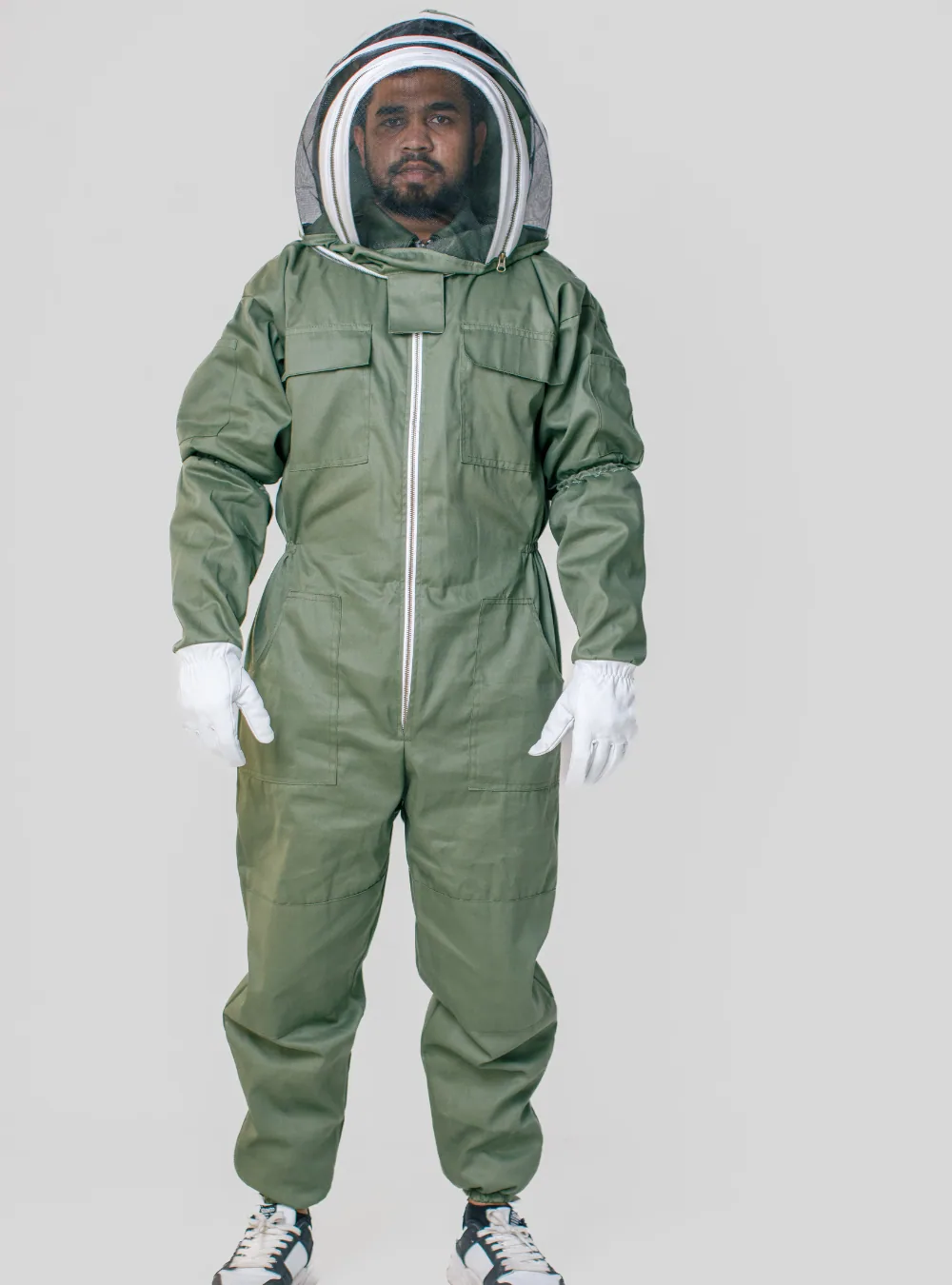
The suit is pale because of the long-standing convention that bees respond to dark colours and fast movement — why bee suits are white covers where that comes from. It is a large pale surface and the convention applies to it.
The veil mesh is a small area of thread with far more hole than material, sitting a few centimetres from your eyes. What a colony sees is mostly your pale hood and shoulders; what you see is entirely decided by the mesh. The visibility argument wins because the colour argument barely applies at that scale.
Where veil mesh is not black
Veil mesh is a different material from the suit, and look closely and the black is usually only at the front. Many are built with black mesh across the face panel and pale mesh or fabric at the sides and back, which is the honest compromise: dark where you look through it, pale everywhere the bees see.
That is worth checking when you buy. A veil that is black all the way round is slightly warmer in sun and slightly more conspicuous; a veil with a pale crown and a black face panel is the arrangement most makers settle on.
What else decides how well you see through veil mesh
| Factor | Effect on visibility |
|---|---|
| Mesh colour | Large. Black, for the reasons above. |
| Distance from your eye | Large. Further is better — the weave falls out of focus. |
| Thread fineness | Moderate. Finer threads, more open weave, more to see through. |
| Veil shape | Moderate. A brim or a hoop crosses your vision; a fencing veil does not. |
| Glare from behind you | Moderate, and a peaked cap fixes most of it. |
| Whether it is clean | Larger than people expect. Propolis and dust on mesh scatter light. |
Distance is the one worth dwelling on. Mesh close to your eye sits inside your focal range, so you see the weave itself; mesh further away falls out of focus and effectively disappears. That is the real visibility difference between veil shapes, and it is why a fencing veil, which follows your head, trades clearance for everything else it does well.
Why not a clear visor?
A reasonable question, and the answer is that every advantage a solid visor has is cancelled by condensation. A clear panel has no airflow through it, so your breath condenses on it within minutes of close work and you are left wiping the one thing between your eyes and a colony.
Veil mesh breathes. That is the whole reason it is mesh rather than a window, and it is why no amount of optical clarity makes a solid panel the better choice.
The same logic rules out any treatment that fills the weave. A veil is an array of holes you look through, and keeping the holes open is the design.
Does black veil mesh make you hotter?
Marginally, and not enough to change anything. A veil is mostly hole — the actual area of thread is small, and most of the heat you are losing or failing to lose is at your body rather than your face.
The construction of the suit is what decides whether you overheat, not the colour of a few grams of mesh. Colour in hot climates sets out how much colour does anywhere on a suit, which is less than most people assume.
Veil mesh gauge, and what you can actually see
Colour decides whether the threads intrude; the weave decides how much detail gets through — and looking down at a frame is where it is tested.
A fine thread in an open weave gives the most to see through, and the difference shows at the task that matters most: looking for eggs in the bottom of a cell. A coarse mesh is tougher and easier to make, and you will notice it the first time you are trying to decide whether a colony is queenright.
The trade is durability. A fine mesh snags more easily and is less forgiving of a thorn or a nail, which is why suits built for removal work often use something heavier — removal work puts a veil through far more than an apiary does.
Judge it in daylight with something detailed behind it, not under a shop light.
What this means when you buy
- Prefer a black face panel. If a veil is pale across the front, you will notice in your first bright afternoon.
- Look at the weave, not just the colour. A fine, open black mesh beats a coarse one, and the difference shows when you are looking for eggs.
- Keep it clean. Propolis and dust dull the mesh and scatter light and undoes the whole advantage — washing the veil separately is five minutes well spent.
- If you wear glasses, distance matters more than colour. Veils for glasses wearers covers why.
The one myth worth correcting
You will read that black veils exist because bees are attracted to dark colours and the veil draws them away from your face. That is backwards, and following it would be dangerous advice — nobody designs a garment to attract stings to the one part protecting your eyes.
Black mesh is there so you can see. Everything else about a bee suit's colour is a separate question with a separate answer. the University of Georgia Bee Program and Penn State Extension’s beekeeping resources cover protective clothing as part of their general guidance, which is a useful check on anything a supplier tells you.
Our veils and hats use a dark face panel for exactly this reason, and every jacket takes a veil that zips off so it can be replaced on its own.