
Why Are Bee Suits White? The Real Reasons, From People Who Make Them
Heat, bee behavior and being able to see what is crawling on you — three reasons bee suits are white, ranked by how well each one actually holds up, plus an honest look at whether colored suits work.
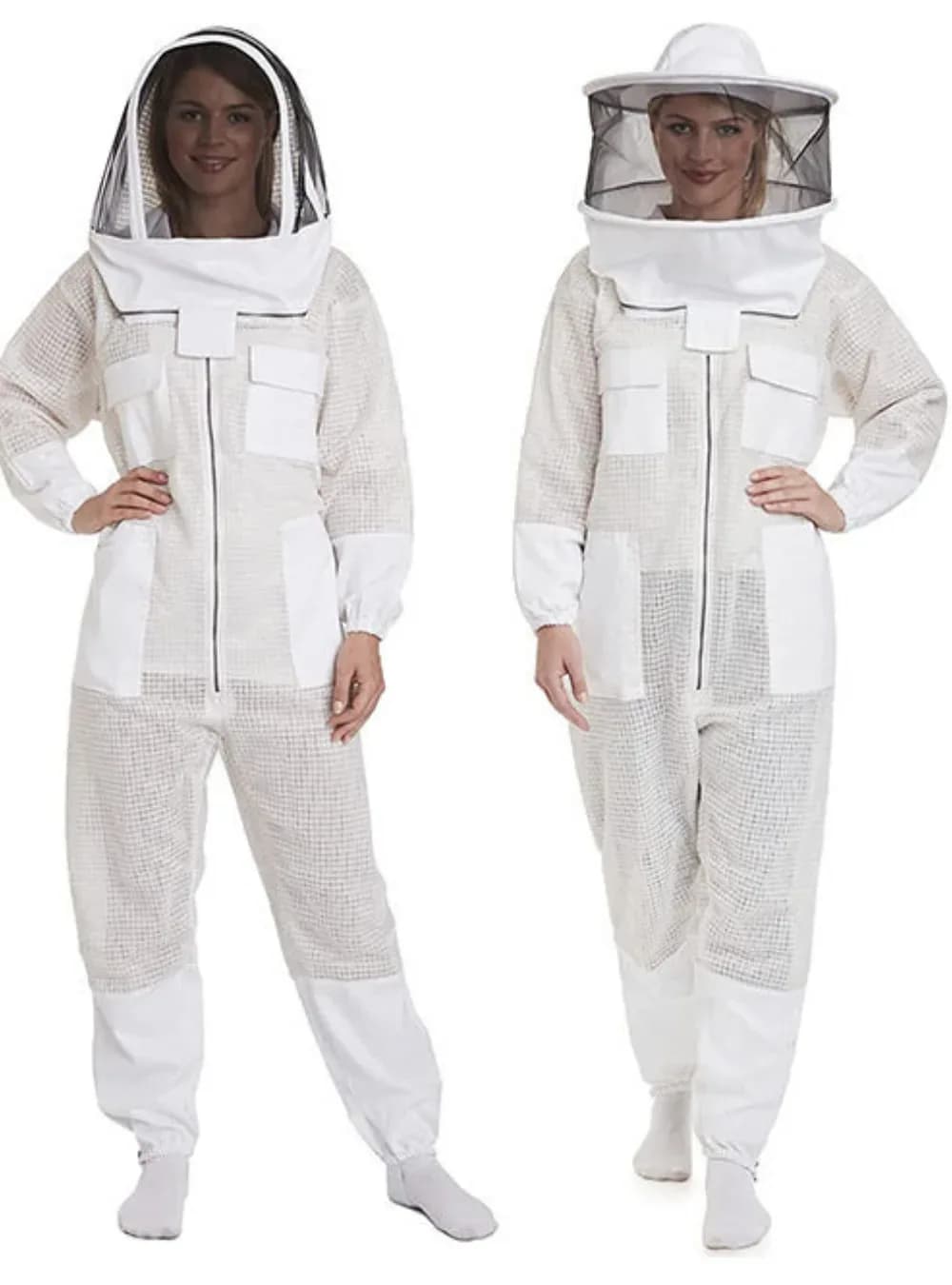
Why are bee suits white? Three reasons — and only one of them is about the bees. White reflects sunlight, so a white suit runs cooler than a dark one in the same fabric; that is physics, and it is the reason that holds up best. White also contrasts with the dark, furry animals that raid hives in the wild, which is the basis for the widely repeated claim that bees react less to pale clothing. And white shows you instantly what is crawling on you, which matters more in practice than most beekeepers expect.
Key Takeaways
- Heat is the strongest reason. A pale surface absorbs less solar radiation than a dark one. In a suit you already find warm, that difference is worth having.
- The "bees hate dark colors" idea is real but overstated. It comes from the predator-contrast argument, not from the suit color deciding whether a colony defends itself.
- White shows you what is on you — a bee walking toward an open cuff, or a sting left in the fabric.
- Colored suits are not a gimmick. Camouflage, khaki and pastel suits are worn seriously, and we make suits in eight colors.
- Color is the least important thing about a bee suit. Fit and standoff gap decide whether you get stung. Color decides how hot you are while not getting stung.
Why are bee suits white? The short answer
If you ask ten beekeepers why bee suits are white, nine will say "because bees attack dark colors." That answer is not wrong, but it is the third-best reason, and stating it as the whole story has left a lot of people confused about why camouflage and colored suits exist at all.
Ranked by how well each reason holds up:
- Heat. Measurable, uncontroversial, and it matters every single time you wear the suit on a sunny day.
- Visibility on the fabric. Practical, immediate, and almost never mentioned.
- Bee behavior. Real in its origins, but smaller in effect than the folklore suggests.
- Tradition and supply. Unglamorous, but genuinely part of why the standard persists.
Reason one: heat
This is the one that survives scrutiny, so it deserves to go first.
A pale surface reflects more of the sun's visible light than a dark surface does. A dark surface absorbs that energy and converts it to heat. Stand two people side by side in identical suits, one white and one black, in direct summer sun, and the person in black will be hotter. Nobody disputes this, and you do not need a study to feel it.
For a beekeeper this compounds with something else. A bee suit is already a heat trap. You are wearing an extra layer — sometimes three — over your normal clothes, with the openings deliberately sealed, in the middle of the day, in summer, standing still and concentrating. Any variable that adds heat is working against you.
What color does and does not do
It is worth being precise, because this is where a lot of blog posts overreach.
Color affects how much solar radiation your suit absorbs. It does not change how well the fabric breathes, how much air moves through it, or how quickly sweat evaporates. Those are all functions of construction, not color.
This means a white cotton suit can easily be hotter than a dark ventilated mesh suit, because airflow beats reflectance. If you are choosing a suit for a hot climate, the ventilation decision matters far more than the color decision. A three-layer ventilated mesh suit in any color will outperform a heavy cotton one in white.
Color is a useful second-order improvement. It is not the lever that fixes heat.
Tip: If you overheat in your suit, do not buy the same suit in a lighter shade. Change the construction first — ventilated mesh, then fit, then color.
Reason two: bees and dark colors
Here is the claim, stated fairly: honey bees respond more defensively to dark, moving objects than to pale ones, because the animals that raid their nests — bears, skunks, badgers — are dark and furry. A pale, smooth surface reads as less threatening than a dark, textured one.
That reasoning is sound as an evolutionary argument, and it is why the convention started. University extension material on protective equipment consistently recommends light-colored clothing and specifically warns against dark or woolly garments; the Texas A&M AgriLife Extension protective clothing guide is a good example of the standard advice.
What the claim gets right
Texture and color together do seem to matter at the margins. Dark wool, fleece and fur draw more attention than smooth pale cotton — which is why the advice is usually phrased as "avoid dark, fuzzy clothing" rather than simply "wear white." If you have ever worn a black fleece near an agitated colony, you probably have a story.
What it gets wrong
The claim is often stretched into something much stronger: that a white suit is what stops you being stung, and a colored one invites attack.
That does not hold up. A colony defends itself because you opened its home, you are breathing carbon dioxide on it, and you are moving frames. Rusty Burlew makes this point directly at Honey Bee Suite — the bees know you are a threat because of what you are doing, not because of what you are wearing. Changing your suit color does not change what you are doing.
The honest position is that color is a small modifier on top of much larger factors: how gently you work, whether you use smoke well, the weather, the time of day, the nectar flow, and the temperament of that particular queen's daughters.
It is worth saying plainly what the evidence actually looks like, because almost every page on this question states the color claim as settled fact and none of them cites anything. What exists is long-standing extension guidance recommending light, smooth clothing, and a sound evolutionary argument about hive-raiding predators. What does not exist, as far as we can find, is a controlled study putting a number on how much a suit's color changes your chance of being stung. Treat anyone who gives you that number without a source with suspicion.
Reason three: you can see what is on you
This is the reason nobody writes about, and it is the one experienced beekeepers mention first.
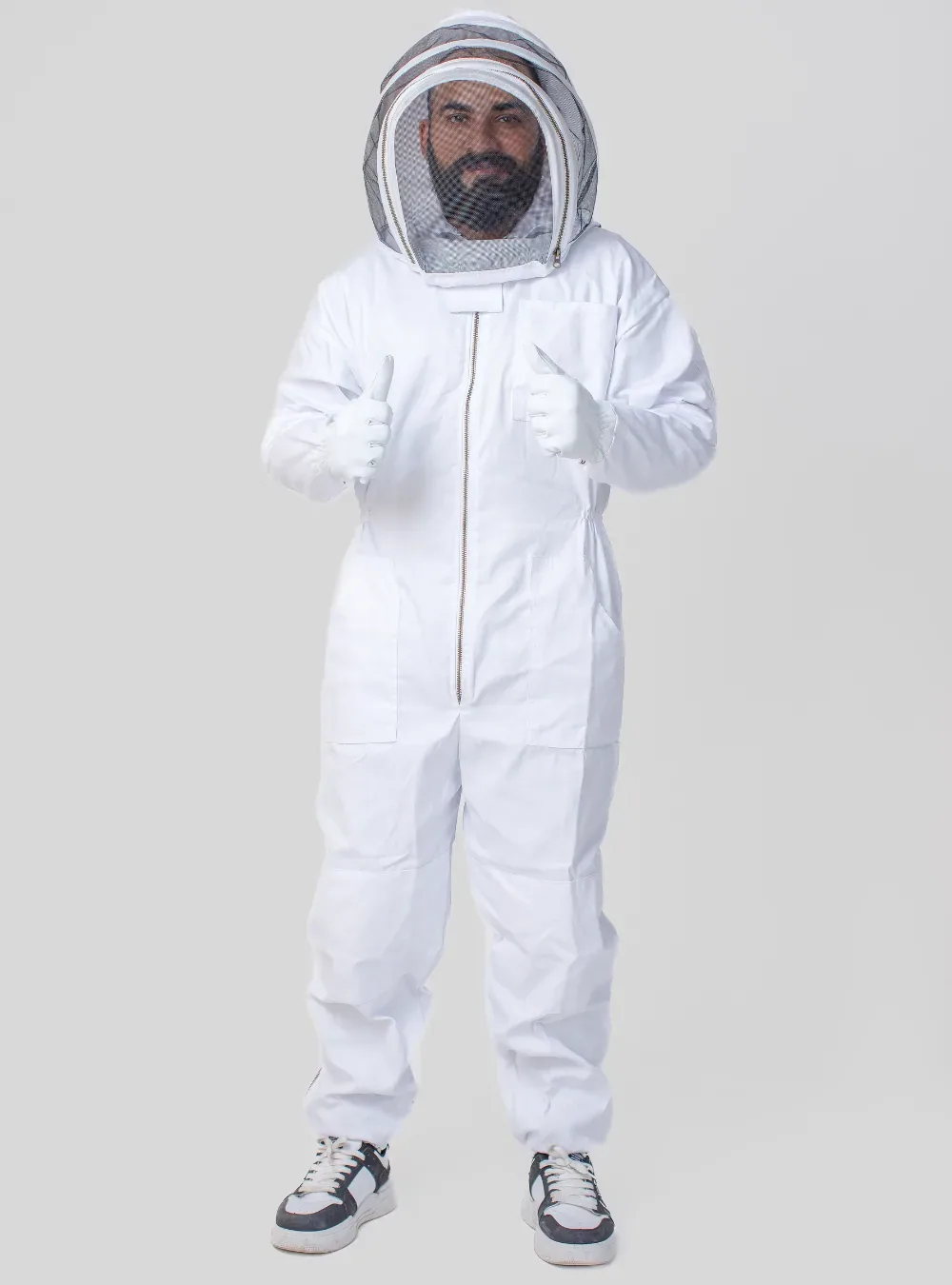
On a white suit, a bee is unmistakable. You can see one walking up your sleeve toward the gauntlet gap. You can see three of them clustered on your shoulder and know the colony is more interested in you than it was five minutes ago. You can see a sting left in the fabric — and the alarm pheromone that comes with it — and wipe it off before it recruits company.
On a dark suit you see none of this reliably.
The same applies after the inspection. Before you take a suit off, you check it. A white suit makes that check instant. A camouflage suit does not, which is a genuine, practical argument against camo that has nothing to do with bee psychology.
It also shows dirt, propolis and wax, which sounds like a disadvantage and is actually useful. A suit that looks filthy is a suit you wash — and a clean suit carries less residual alarm pheromone from previous inspections.
Reason four: tradition and manufacturing
Part of the answer is simply that this is how it has always been done, and there are practical reasons for that inertia.
Undyed and bleached cotton drill was the obvious material for protective workwear long before anyone was marketing bee suits. It was cheap, hard-wearing and available. White became the default because it was the cheapest thing that worked, and the convention outlived the economics.
There is a modern version of the same effect. Beekeeping associations, training courses and equipment lists all specify white. Club apiaries often require it. When a new beekeeper asks what to buy, the answer they get is white — and so that is what gets bought, and made.
None of this is a bad reason. Standards that work are worth keeping. But it is worth naming, because it explains why white persists even in situations where another color would serve better.
Choosing your first suit? If you want the conventional, safe default, a white ventilated bee suit is a sound choice for any climate and any club. If you want something different, keep reading — the alternatives are more legitimate than most articles admit.
So do colored bee suits actually work?
Yes. And we can say that with more confidence than most people writing about it, because we make suits in eight colors — white, camouflage, khaki-olive, brown, pink, blue, green and yellow — and we hear back from the people wearing them.
Here is the honest breakdown.
Camouflage
Camouflage bee suits are the most-requested non-white option, and the reasons are almost never about bees.
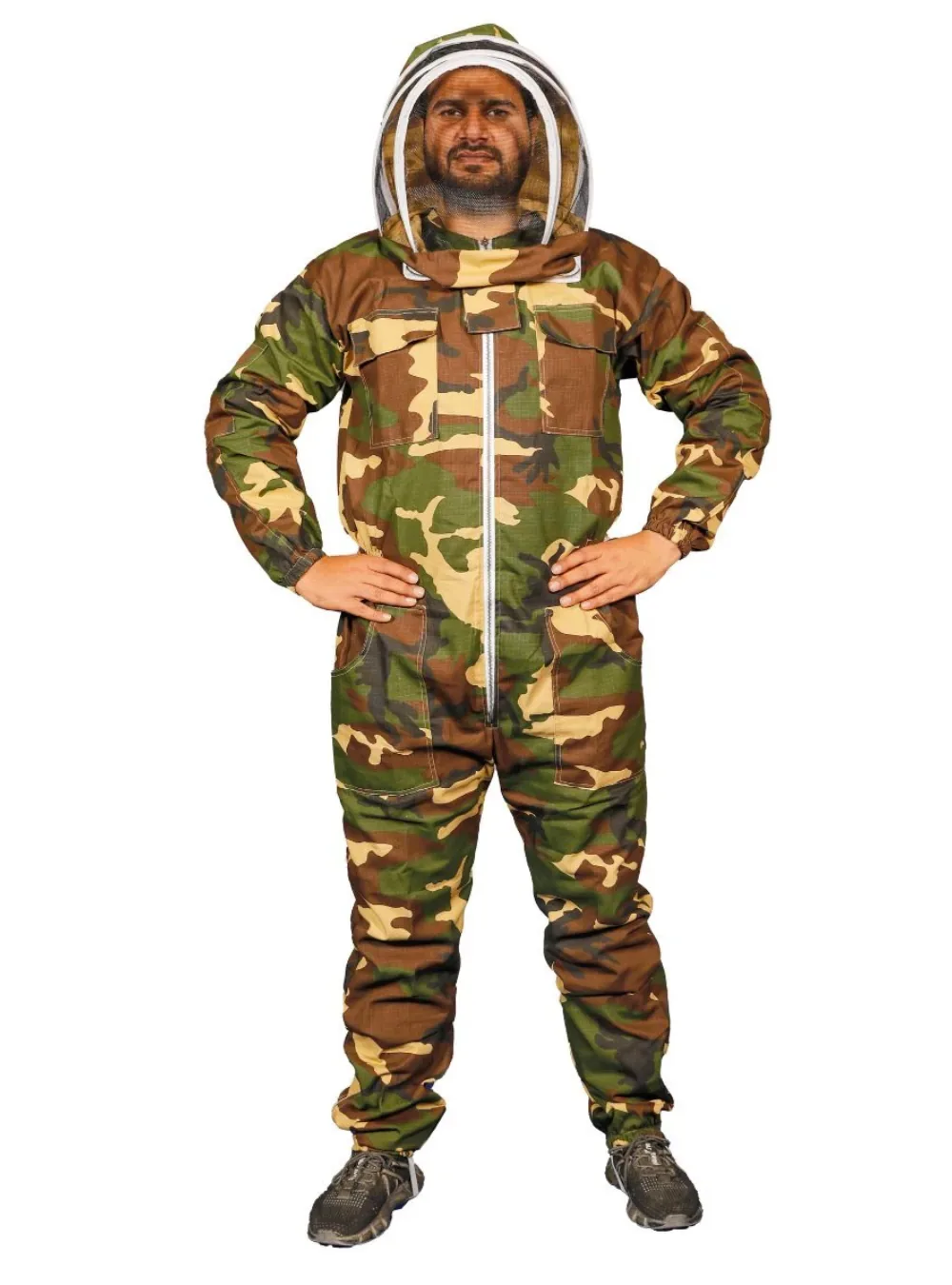
People buy camo because their hives are on land where a bright white figure is visible from a road, because they hunt and already own camo, or because they simply prefer it. In terms of bee response, camo patterns are typically mid-tone rather than black, so the predator-contrast argument applies weakly at most.
The real trade-off with camo is the one from the section above: you cannot see bees on it. If you choose camo, get into the habit of a slower, deliberate check before you unzip.
Colored suits — pink, blue, green, yellow
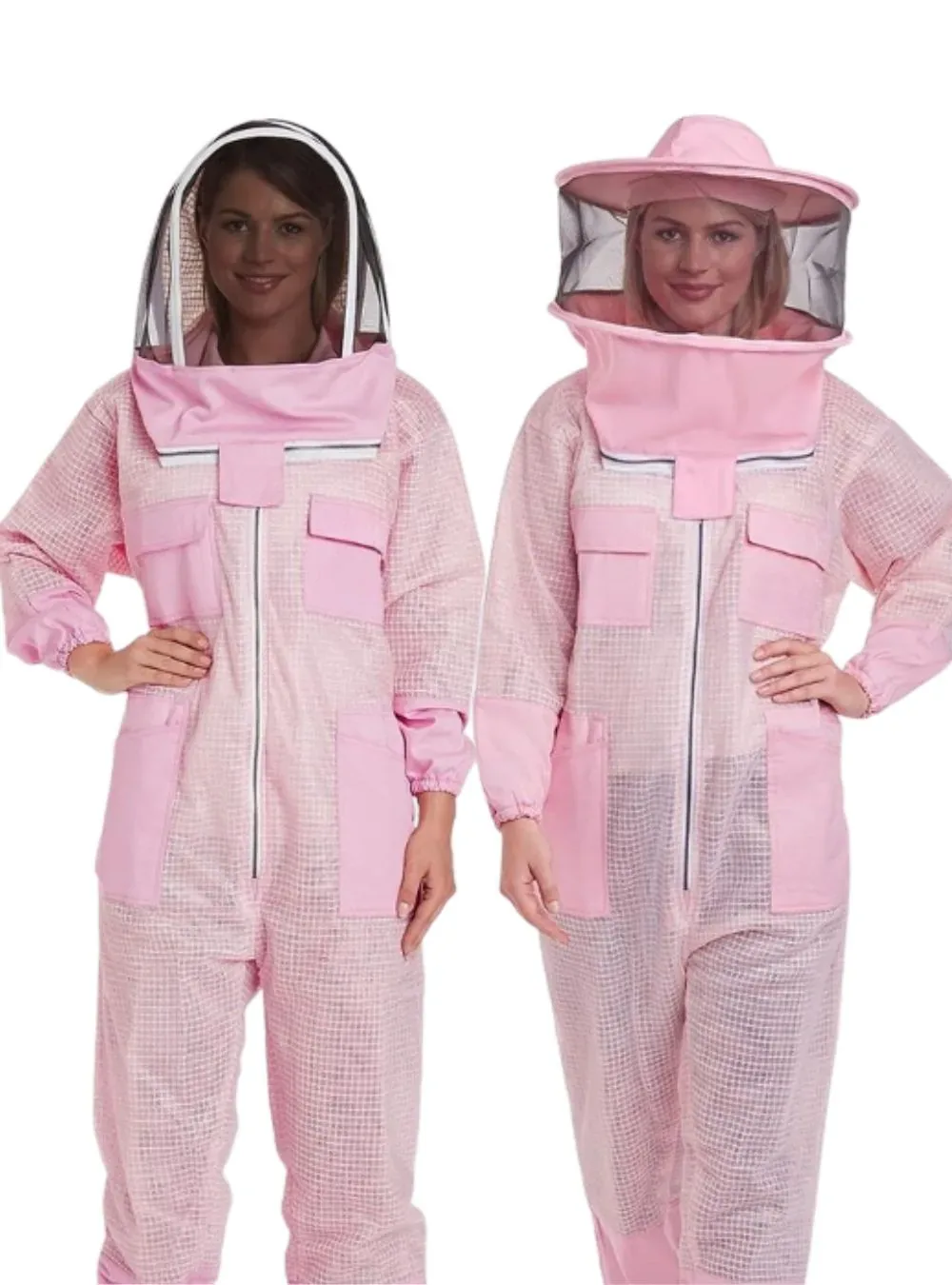
These are mostly bought for visibility, personal preference, or to tell whose suit is whose in a shared apiary. A pink bee suit or a blue one is a light or mid-tone garment, not a dark one, so the heat penalty against white is small and the behavioral argument barely applies.
There is one genuine practical benefit that gets overlooked: in a teaching apiary or a family operation, being able to identify people at a distance by suit color is useful.
What making them in eight colors has taught us
The useful thing about making the same suit in eight colors is that everything except the color is held constant. Same pattern, same mesh, same seams, same veil. So when someone asks whether a colored suit is a worse suit, we can answer without hedging: it is the identical garment. The dye does not change the standoff gap, the cuff seal, or the weave.
What does change is the two things in the table below — how the suit behaves in direct sun, and whether you can see a bee on it. Those are the trade-offs worth thinking about, and they are small next to fit.
The one piece of advice we would give anyone choosing a darker color: build the habit of a slow, deliberate check before you unzip. On white that check is instant and you will do it without thinking. On camo or brown it takes a few seconds of actually looking, and those are the seconds people skip.
Bee suit colors compared
| Color | Heat in direct sun | Bees visible on fabric | Shows dirt | Common reason for choosing |
|---|---|---|---|---|
| White | Coolest | Excellent | Yes — easily | Default; club and course requirements |
| Pale khaki / cream | Near white | Good | Less than white | Wants white's benefits, hates the laundry |
| Pink / blue / pastels | Slightly warmer | Good | Moderate | Preference; telling suits apart |
| Yellow | Slightly warmer | Good | Moderate | Visibility; preference |
| Green / olive | Warmer | Fair | Hides it well | Discretion on visible land |
| Camouflage | Warmer | Poor | Hides it well | Discretion; hunters; personal taste |
| Brown | Warmer | Fair | Hides it well | Preference; practicality |
| Black or very dark | Hottest | Poor | Hides it well | Not recommended for beekeeping |
The pattern is consistent: the further you move from white, the cooler-looking the suit and the hotter the wearer, and the less you can see what is on you. Everything else is preference.
When white is the wrong choice
There are real situations where white is not the best answer.
Your hives are somewhere you would rather not advertise. A white figure is visible a long way off. If your apiary is near a footpath or a road, a green, brown or camouflage suit attracts less attention — from people, which is usually the concern.
You will not keep up with the washing. A gray, stained suit is not just unattractive. Ground-in propolis and old alarm pheromone are worth avoiding, and a suit you are embarrassed to wear is a suit you avoid wearing. If you know you will not wash it often, a pale khaki hides honest wear better than bright white while keeping most of the heat advantage.
You are working in cold weather. In early spring, a darker suit is not a disadvantage at all. The heat argument runs the other way.
Shared apiary, multiple people. Color-coding suits by person is genuinely useful, and safer than everyone looking identical from thirty feet away.
What matters more than color
If you take one thing from this page, take this: color is the least important decision you will make about a bee suit.
Fit matters more. A sting cannot reach skin that is further away than the sting is long. A loose suit protects; a tight suit of the same fabric does not. This is why buying a size up is standard advice rather than an upsell.
Construction matters more. Three-layer ventilated mesh holds a standoff gap between the outer surface and your body. A single layer of cotton pressed against your shoulder does not. Both can be white.
Sealing matters more. Ankle cuffs, wrist gauntlets, the zipper storm flap, and the veil-to-collar joint. Most stings to a suited beekeeper come through an opening, not through fabric. The University of Florida field guide to personal protective equipment makes the same point.
How you work matters most of all. Smoke properly, move slowly, do not bang frames, pick a warm calm afternoon when foragers are out. A beekeeper in a camouflage suit working gently will be stung less than one in a white suit working roughly.
How to keep a white bee suit white
The honest answer is that you will not, entirely. Propolis stains, and it stains permanently. But most of a white suit's grubbiness is avoidable.
- Wash it cool and often. Frequent cool washes beat occasional hot ones. Heat sets stains and damages elastic and mesh.
- No fabric softener. It coats fibers, holds odor, and on mesh it reduces airflow.
- Never tumble dry a mesh suit. Hang it in the shade. Heat is what kills the standoff layer.
- Treat propolis before it sets. Cold water and patience work better than scrubbing. Scrubbing wears the weave thin, and a thin patch is a sting waiting to happen.
- Zip the veil closed before washing. An open veil zipper catches on mesh and tears it.
- Dry it fully before storage. A damp suit in a sealed box grows mildew, and mildew stains do not come out.
On temperature: cool is the rule for both cotton and mesh, and the reason differs for each. Cotton shrinks and the weave tightens, which costs you the looseness the suit depends on. Mesh is worse — heat softens the spacer layer that holds the standoff gap open, and once that layer has collapsed you have a thin suit that looks fine and protects like a t-shirt. Neither damage is visible until you need the suit to work.
Choosing your suit
If you want the conventional answer, buy white. It is cooler in the sun, it shows you what is crawling on you, and no club will question it.
If you want something else, buy something else — just choose a light or mid-tone color rather than black, and get into the habit of checking yourself carefully before you unzip.
Browse white and ventilated bee suits → Browse camouflage bee suits →
Whatever color you choose, get the fit right first. Our size guide covers the measurements that decide whether a suit protects you — and if you are between sizes, take the larger one.
Common questions
Do bees really attack dark colors?
Bees respond more defensively to dark, furry, moving objects — the profile of a hive-raiding animal. Extension guidance consistently advises light, smooth clothing. But this is a small factor next to how gently you work the colony. A dark suit does not cause an attack; opening the hive is what the bees respond to.
Can I wear a black bee suit?
You can, but it is the worst of both worlds: hottest in the sun, and you cannot see bees on it. If you want a dark suit, olive or brown gives you most of the discretion with far less of the heat penalty and slightly better visibility on the fabric.
Is a camouflage bee suit safe?
Yes. Camo patterns are usually mid-tone rather than black, and protection comes from fabric construction and fit, not color. The one real drawback is that you cannot easily see bees on the fabric, so check yourself carefully before unzipping.
Does a white bee suit keep you cooler?
In direct sunlight, yes — a white surface absorbs less solar radiation than a dark one. But the effect is smaller than the effect of ventilation. A ventilated mesh suit in a mid-tone color will be cooler than a white cotton suit.
Why are beekeeping veils black if suits are white?
Visibility. Black mesh in front of your eyes reduces glare and gives far better contrast when you are looking into a shaded hive body. It is the same reason sunglasses are tinted. The veil is the one part of the suit where dark is the correct choice.
Will a colored bee suit get me stung more?
There is no good evidence that a light or mid-tone colored suit meaningfully increases stings. Fit, sealing and technique are what decide that. Very dark, fuzzy clothing is the case where the concern is legitimate.
Do beekeeping clubs require white suits?
Many training courses and shared apiaries do specify light-colored suits, and some are stricter than others. If you are joining a club or taking a course, check before you buy — it is the most common reason a beekeeper ends up owning a white suit they did not especially want.
What color should a child's bee suit be?
White, for the visibility reason above all. Being able to see at a glance whether a bee is on a child's sleeve is worth more than any style preference. Full coverage and a properly sealed cuff matter more still.
Written by Alex, Bee suit maker, BEESUITWEAR · United States.
Writes about protective clothing from the workshop where the suits are made.