
Buying guides7 min read
Leather vs Goatskin Beekeeping Gloves: Which Should You Buy?
Goatskin is leather. What you are really choosing between is goatskin and the thicker cowhide beside it — and for hive work the deciding factor is dexterity, not thickness.
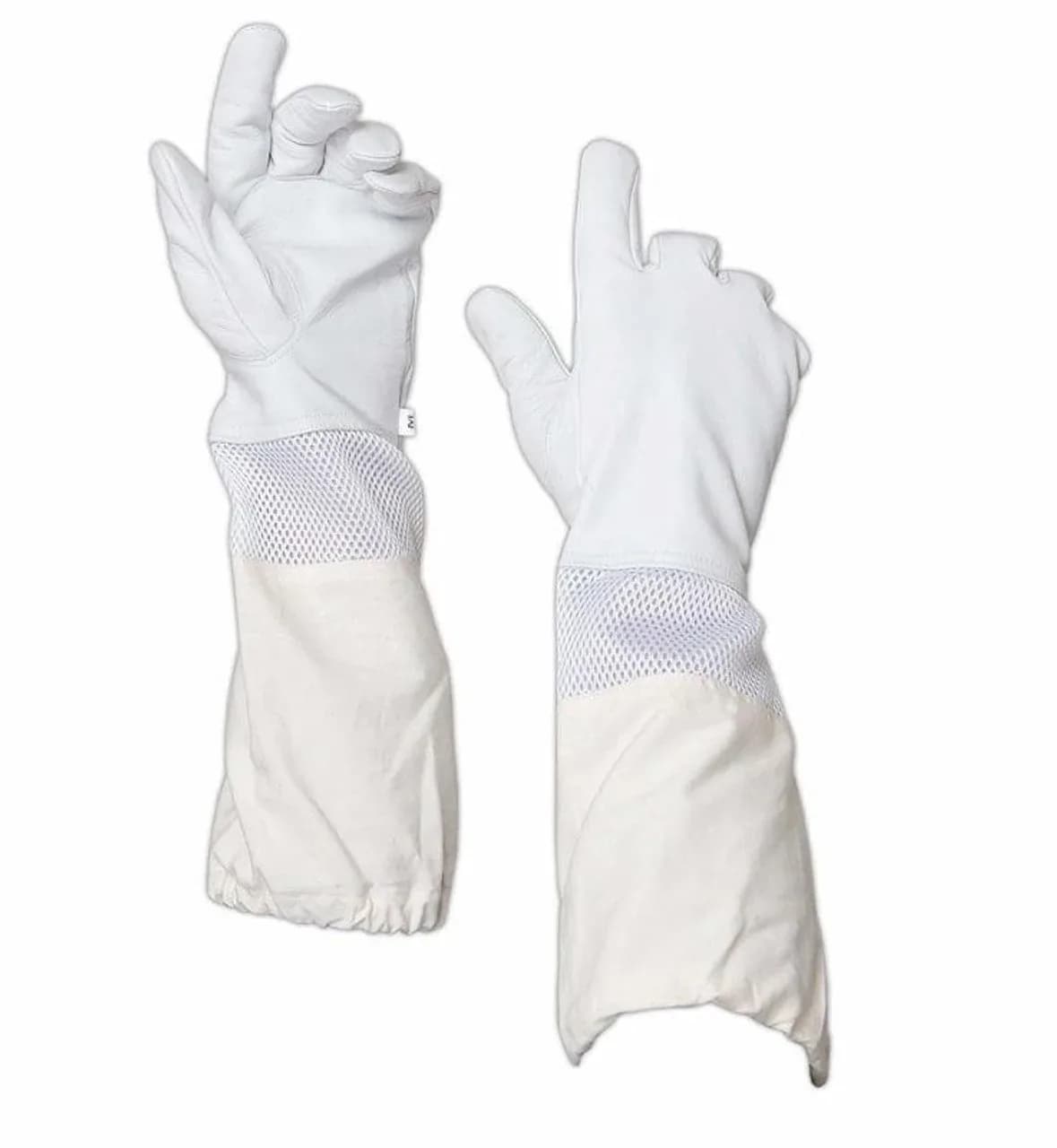
The leather vs goatskin beekeeping gloves question contains a mistake worth clearing up first: goatskin is leather. What buyers are really choosing between is goatskin and the thicker cowhide or split leather sold beside it. Goatskin is thinner, more supple and lets you feel a frame; cowhide is tougher against abrasion and stiffer on your hands. For hive work, goatskin wins — and the reason is dexterity, not protection.
Key Takeaways
- "Leather" in a listing usually means cowhide or split. Goatskin is leather too, and the label rarely says which you are getting.
- Dexterity is a safety feature. Stiff gloves make you clumsy, clumsy hands crush bees, and a crushed bee releases the alarm pheromone that brings the rest.
- Goatskin is thin and strong at the same time. Its fiber structure is tight, which is why a glove you can work in still turns a sting.
- Cowhide earns its place outside the hive — brambles, removals, rough timber, anywhere abrasion beats a sting for likelihood.
- The gauntlet matters as much as the glove. Most stings on the hands arrive at the wrist, not the palm.
The short answer
Buy goatskin if you inspect hives: lifting frames, finding a queen, handling a hive tool. You need to feel what you are doing, and goatskin lets you.
Buy cowhide if your hands take a beating — cutouts, removals, hauling boxes through scrub — and you accept losing some feel for it.
Buy synthetic or nitrile only for short, clean jobs. They are cheap and washable, and they do not have the puncture resistance of a hide.
Goatskin is leather — here is what actually differs
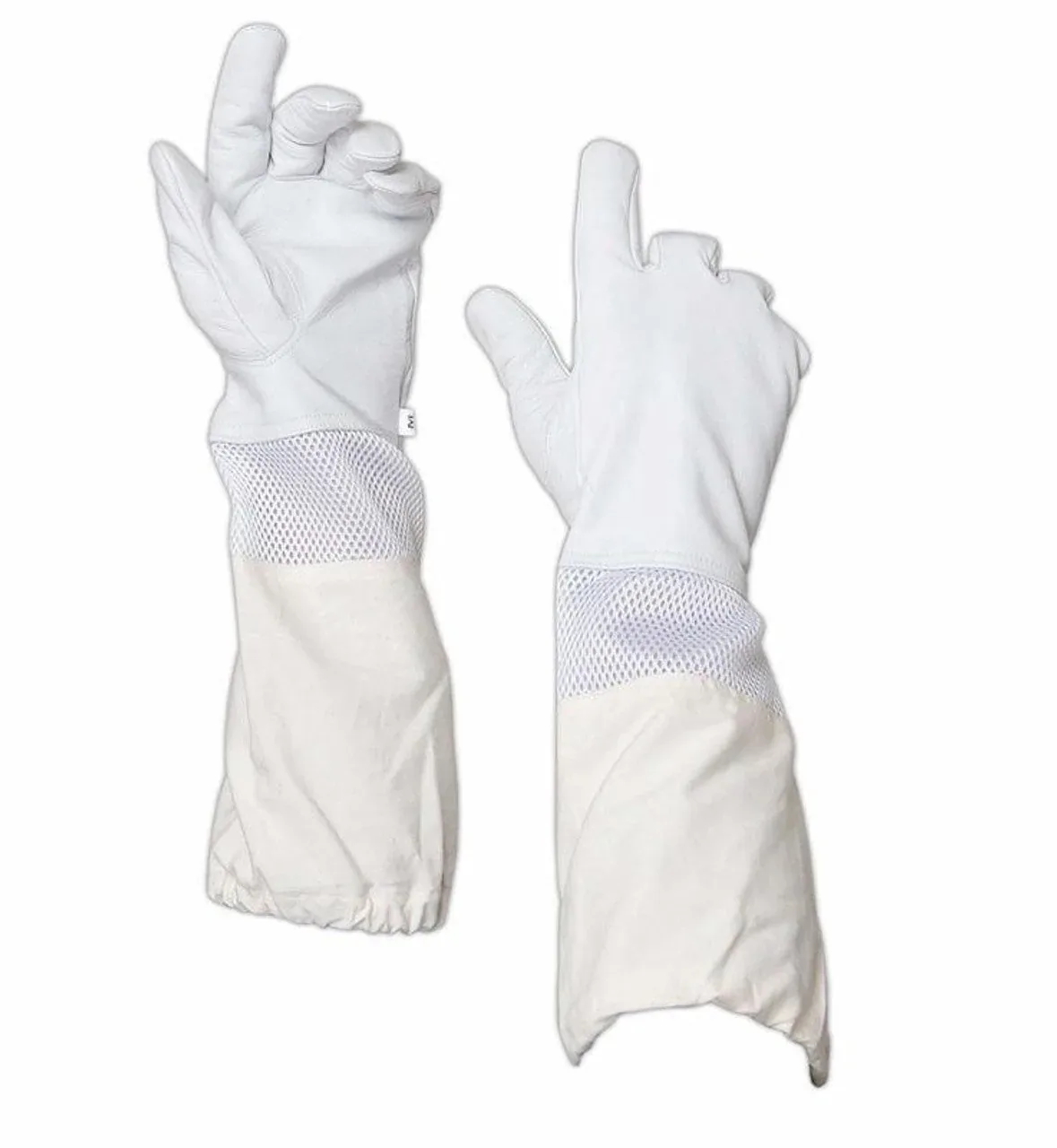
Leather is skin, and different animals give very different skin.
Goatskin has a dense, tightly interlocked fiber structure. That is why it can be thin and still resist a puncture: the strength is in how the fibers are woven together rather than in bulk. It is also naturally supple, so it needs no breaking in and does not go board-stiff when it dries.
Cowhide is thicker and heavier. Full-grain cowhide is extremely abrasion resistant — the right thing for a chainsaw glove — but in a thickness that stops a sting it also stops you feeling a frame lug.
Split leather is the layer shaved off underneath the grain, the suede-feeling one. It is cheap, it is weaker for its thickness, and it drinks propolis and moisture. Most bargain "leather" beekeeping gloves are split.
Synthetics — nitrile, coated nylon — are washable and cheap. They give good feel and poor puncture resistance, which is a fair trade for a quick job and a bad one for a defensive colony.
Texas A&M AgriLife Extension describes beekeeping gloves simply as light in color, made of leather or goatskin, with long arms that pull up over the elbow — and notes they should be worn over the suit sleeve, not tucked inside it.
Leather vs goatskin beekeeping gloves, side by side
| Goatskin | Full-grain cowhide | Split leather | Nitrile / synthetic | |
|---|---|---|---|---|
| Feel through the glove | Excellent | Poor | Moderate | Excellent |
| Sting resistance | High | Very high | Moderate | Low |
| Abrasion resistance | Good | Excellent | Moderate | Low |
| Weight | Light | Heavy | Medium | Very light |
| Breaking in | None needed | Needed | Some | None |
| Behavior when wet | Stays supple | Stiffens | Stiffens badly | Unaffected |
| Washable | Wipe only | Wipe only | Poorly | Yes |
| Typical use | Hive inspections | Removals, rough work | Budget | Short, clean jobs |
Why dexterity is the real argument
This is the part most buying guides miss, and it is the one a beekeeper feels on the first inspection.
A glove you cannot feel through makes you slow and heavy-handed. You grip a frame too hard, you set it down carelessly, you roll bees between the frame and the box. Every bee you crush releases alarm pheromone, and the colony answers it. A thick glove does not just cost you speed — it changes how the hive behaves around you.
Goatskin is the thinnest hide that still reliably turns a sting. That is the whole reason it dominates this trade.
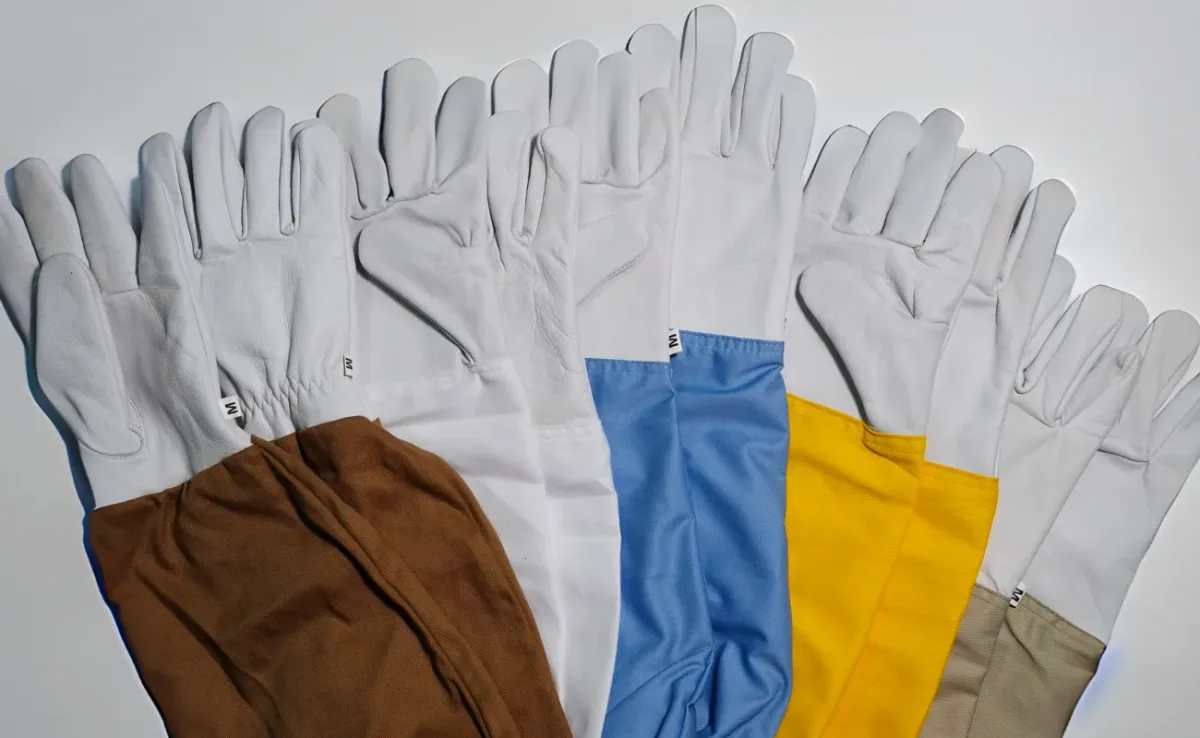
Our goatskin ventilated gloves are $30, and the five-pack with colored gauntlets is $80 to $90 — worth it if more than one person works your hives.
Where cowhide is the better buy
Honesty matters more than selling here: goatskin is not always right.
Removals and cutouts. Cutting comb out of a wall means nails, splinters, insulation and torn timber. Abrasion is the threat, not stings, and cowhide takes it better.
Rough ground and brambles. An overgrown out-apiary chews up a thin hide.
Very defensive colonies. If you are working bees that sting the glove rather than land on it, thickness buys margin.
Cold weather. Cowhide holds warmth better; goatskin is thin in both senses.
What to check before you buy
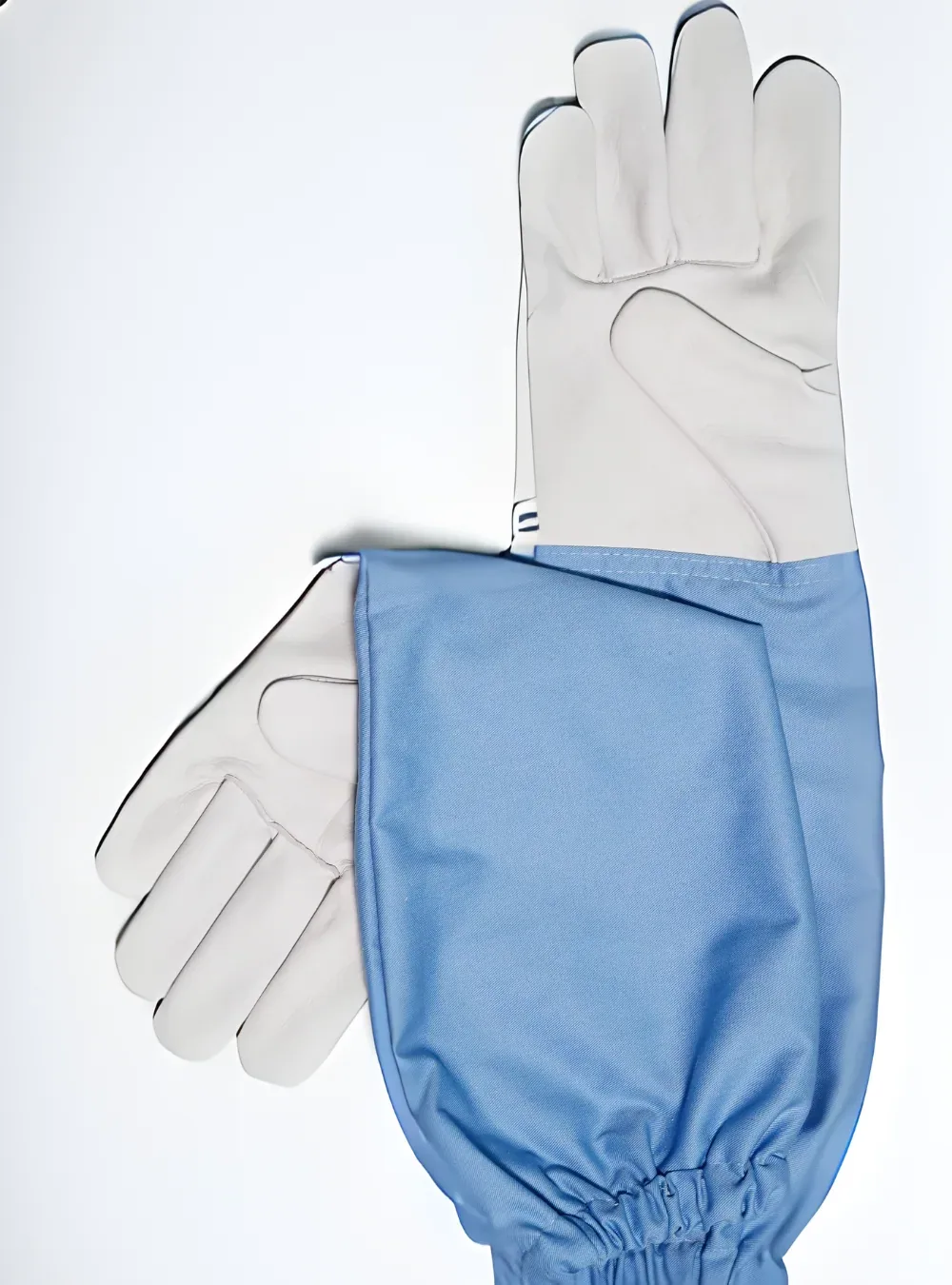
Look at the surface. Grain leather has a smooth, slightly patterned face. Split has a fuzzy, suede-like face on both sides. If both sides look like suede, it is split, whatever the listing says.
Check the gauntlet length. It should reach well past your wrist and ideally past the elbow, and it should have elastic at the top that still grips. This is where stings arrive.
Look at the stitching at the fingertips. That is where gloves fail first. Double stitching there is a sign someone was paying attention.
Try to make a fist. New goatskin should let you, straight out of the bag, with no stiffness to work out.
Ignore color claims. Pale gloves are conventional and sensible, but a darker gauntlet is not dangerous — we cover why in why bee suits are white.
Caring for leather gloves
Leather absorbs two things you do not want it keeping: propolis, and alarm pheromone from previous stings. A glove that smells of last month's angry colony starts your next inspection badly.
- Wipe after every use. Warm water, a cloth, no detergent soak.
- Never machine wash leather. It will dry stiff and stay stiff.
- Dry away from heat. A radiator ruins a hide faster than a season of stings.
- Scrape propolis cold. It comes off far more easily when hard.
- Replace when the fingertips thin. That is the first place a sting gets through, and it is easy to miss until it happens.
Getting the size right
Glove fit gets less attention than suit fit and causes more trouble.
Too big is the common mistake. Loose fingertips mean you cannot feel the frame, and the spare material bunches where you grip — so you squeeze harder to compensate, which is exactly the heavy-handedness you bought good gloves to avoid.
Too small is worse in a different way. A glove stretched tight over your knuckles has no slack left, and leather pressed flat against skin protects about as well as cloth pressed flat against a shoulder. It is the same principle that decides whether a suit works.
The test: make a fist, then spread your fingers wide. You should be able to do both without the leather pulling across the back of your hand or the fingertips standing empty. If you are between sizes, take the smaller one in goatskin — it gives a little with wear — and the larger one in cowhide, which does not.
Do you actually need gloves?
Worth saying plainly, because experienced beekeepers argue about this and beginners hear only one side.
Some keepers work bare-handed deliberately. The case is real: nothing beats skin for feel, you move more carefully because the consequence is immediate, and you never carry pheromone from one hive to the next on a glove.
The case against is just as real. A sting on the hand hurts and swells where it interferes most, one bad reaction ends the inspection, and anyone still learning to read a colony has no business finding out the hard way that today is not a calm day.
Our view, as people who make the things and would happily sell you more of them: start gloved. Learn the colony first. If you later find gloves are costing you more in clumsiness than they save you in stings, take them off on a calm day with a calm hive — not on a hot afternoon in August with a colony you have not opened in three weeks.
Which should you buy
Goatskin for hive inspections, which is most beekeeping for most people. Thin enough to work in, strong enough to trust.
Cowhide as a second pair for removals, cutouts and rough work.
Synthetic only where you want something washable for a short job — and not for a colony you do not know.
If you are still building out your kit, our beekeeping gloves run $30 to $90, and the guides to full suits and jackets and veils cover the rest of what goes with them.
Common questions
Is goatskin the same as leather?
Goatskin is a leather. When a listing says leather without naming the animal it usually means cowhide or split leather, which are thicker and stiffer. The real comparison is between goatskin and those, not between goatskin and leather.
Can bees sting through goatskin gloves?
Rarely through the hide itself while it is in good condition. Stings get through at the fingertips once the leather has thinned with wear, and at the wrist where the gauntlet meets the glove. Check both at the start of each season.
Why are thin gloves safer than thick ones?
Because you can feel what you are doing. Stiff gloves make you heavy-handed, and crushed bees release the alarm pheromone that turns a calm inspection into a defensive one. A glove thin enough to work in changes how the colony behaves around you.
What is split leather and should I avoid it?
Split is the layer shaved from under the grain, the one that feels like suede on both sides. It is cheaper, weaker for its thickness and absorbs propolis and moisture. Most bargain leather beekeeping gloves are split.
How long should beekeeping glove gauntlets be?
Past the wrist at minimum and ideally over the elbow, with elastic at the top that still grips. Most stings on the hands arrive at the wrist, not the palm, and the gauntlet is what closes that gap.
Can you wash leather beekeeping gloves?
Wipe them with warm water and a cloth, but never machine wash them. Leather dries stiff and stays stiff. Scrape propolis off when it is cold and hard, and dry the gloves away from any heat source.
Written by Alex, Bee suit maker, BEESUITWEAR · United States.
Writes about protective clothing from the workshop where the suits are made.