
Buying guides7 min read
Polycotton vs Cotton Bee Suit: Which Fabric Should You Buy?
Polycotton resists tearing and dries fast. Pure cotton breathes better and will not melt near a smoker. One difference decides most of these purchases, and it is not the one listings talk about.
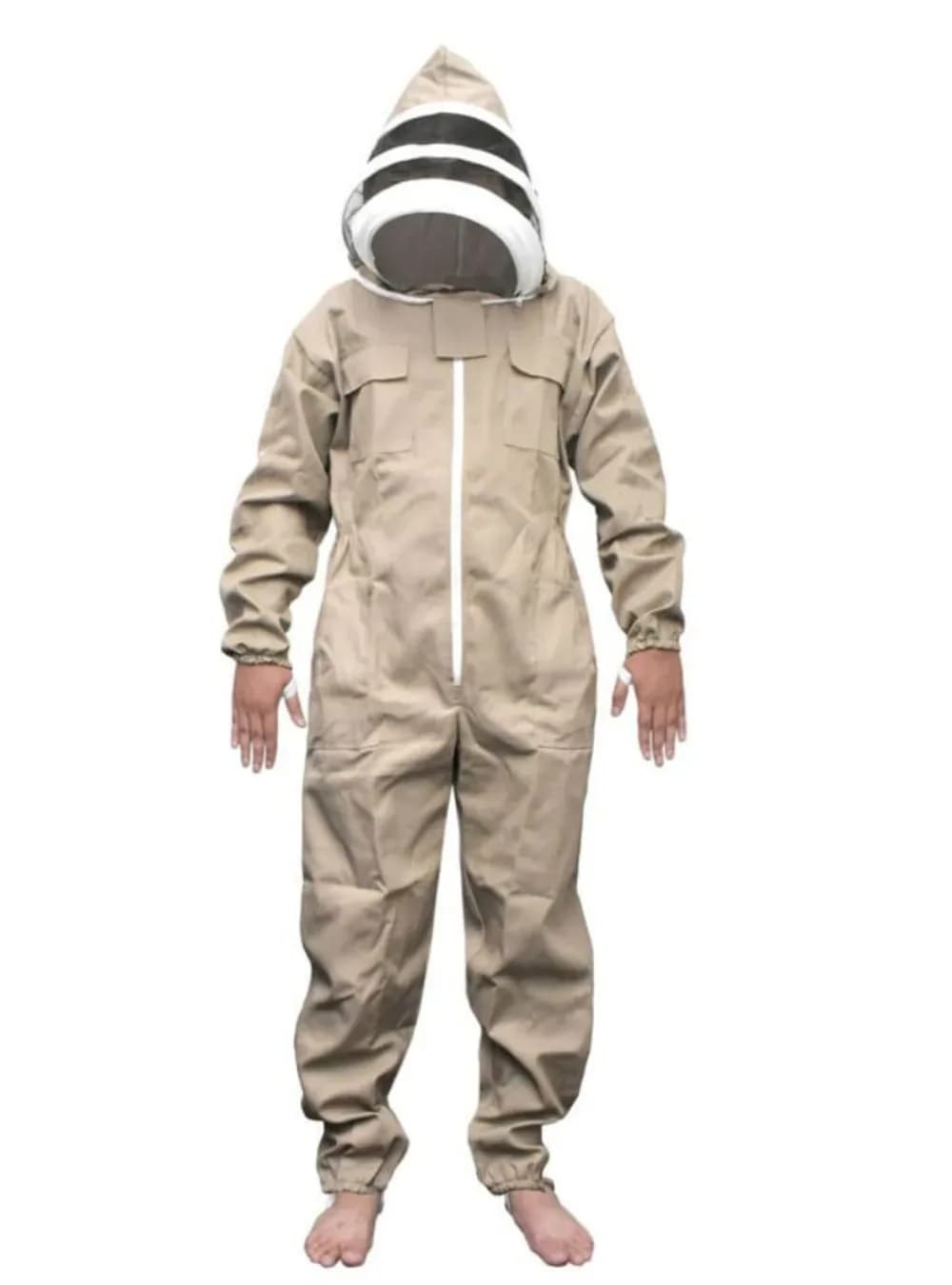
The polycotton vs cotton bee suit choice is a trade between durability and breathability. Polycotton — a cotton-polyester blend, commonly around 65/35 either way round — resists tearing, dries faster and holds its shape through years of washing. Pure cotton breathes better, stays cooler in still air and will not melt near a smoker. Most beekeepers are better served by polycotton. If you work close to lit smoke, buy cotton.
Key Takeaways
- Polycotton is stronger, cotton is safer near heat. Polyester melts. Cotton chars. That single difference decides more purchases than anything else on this page.
- Neither fabric is cooler in real heat. If heat is your problem, the answer is a ventilated mesh suit, not a different woven fabric.
- GSM matters more than the blend. A 280 GSM polycotton protects better than a 200 GSM pure cotton, whatever the label says.
- Polycotton wins on laundry. It dries in a fraction of the time and comes out of the wash without the shrinkage cotton is famous for.
- Both are barrier fabrics. They stop a sting by being thick, which means both fail in exactly the same place — anywhere the cloth is pressed flat against you.
The short answer
Ask what your suit spends its life doing.
If it gets dragged through brambles, washed every fortnight and packed damp into a car boot, polycotton will outlive cotton by years. The polyester in the weave is what stops a snagged sleeve turning into a torn one.
If you use a smoker heavily, work in a commercial yard where suits get hot, or simply want the most breathable woven fabric you can get, pure cotton is the better buy — and the melting point is the reason, not comfort.
Everything else between them is small.
What the two fabrics actually are
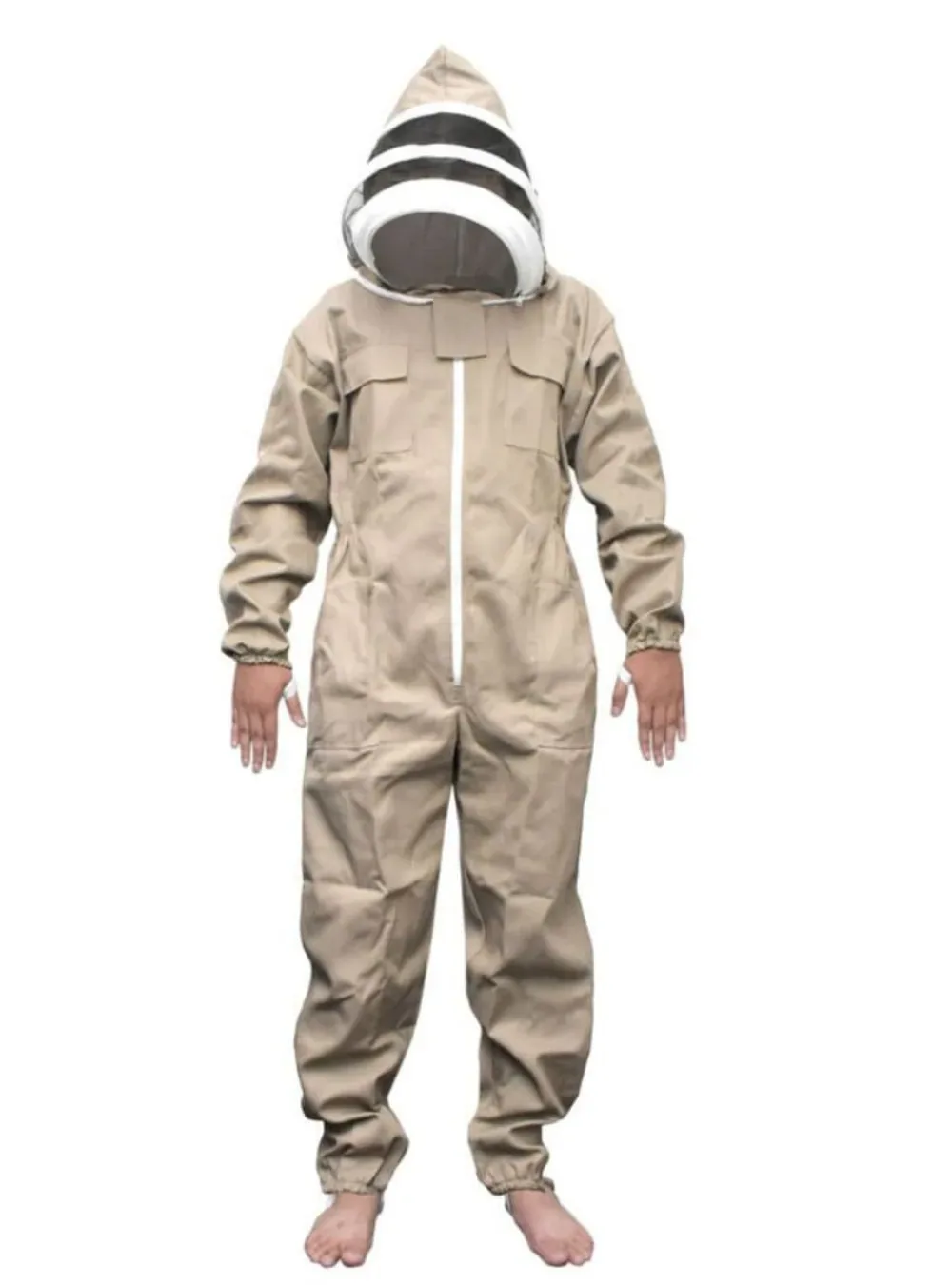
Polycotton is a woven blend, and the label is the only reliable guide to it. 65/35 is common, but it runs both ways — cotton-dominant or polyester-dominant — and 50/50 exists. More polyester means more strength and less breathability. The cotton gives it the handle and breathability of a natural fiber; the polyester gives it tear strength, dimensional stability and fast drying.
Cotton in a bee suit means cotton drill or a heavy twill — not shirting. It is one fiber doing every job, which makes its strengths and weaknesses easy to predict.
Both are barrier fabrics. They work by being thicker than a honey bee's sting is long. That is a different mechanism from a ventilated mesh suit, which holds its outer surface at a fixed distance from your skin. Understanding which mechanism you are relying on tells you how to wear the suit: a barrier fabric protects only while there is slack in it.
Polycotton vs cotton bee suit, side by side
| Polycotton (blend) | Pure cotton | |
|---|---|---|
| Tear and abrasion resistance | Higher — polyester carries the load | Lower, tears propagate faster |
| Behavior near a smoker | Melts and can stick to skin | Chars, does not melt |
| Breathability | Good | Better |
| Drying time | Fast | Slow |
| Shrinkage after washing | Minimal | Noticeable on the first washes |
| Creasing | Resists it | Creases readily |
| Color retention | Holds dye well | Fades sooner in sun |
| Feel against skin | Slightly crisper | Softer |
| Typical life | Longer | Shorter, but ages gracefully |
Where polycotton wins
It survives ownership. Most suits do not die of stings. They die of snags on hive stands, of zips stressed by a suit pulled on in a hurry, and of being washed forty times a season. Polyester fibers take that better than cotton ones.
It comes out of the wash the same size. Cotton shrinks, mostly in the first two or three washes, and a bee suit that has shrunk is not merely tighter — it is less safe. A barrier fabric pressed against your shoulder has lost the slack that was doing the protecting.
It dries between inspections. If you keep bees before work, this matters more than anything else on this list.
It stays white longer. Not vanity: a pale suit is easier to spot bees on before you squash them.
Our polycotton bee suit runs $110 to $150 depending on size and veil.
Where pure cotton wins
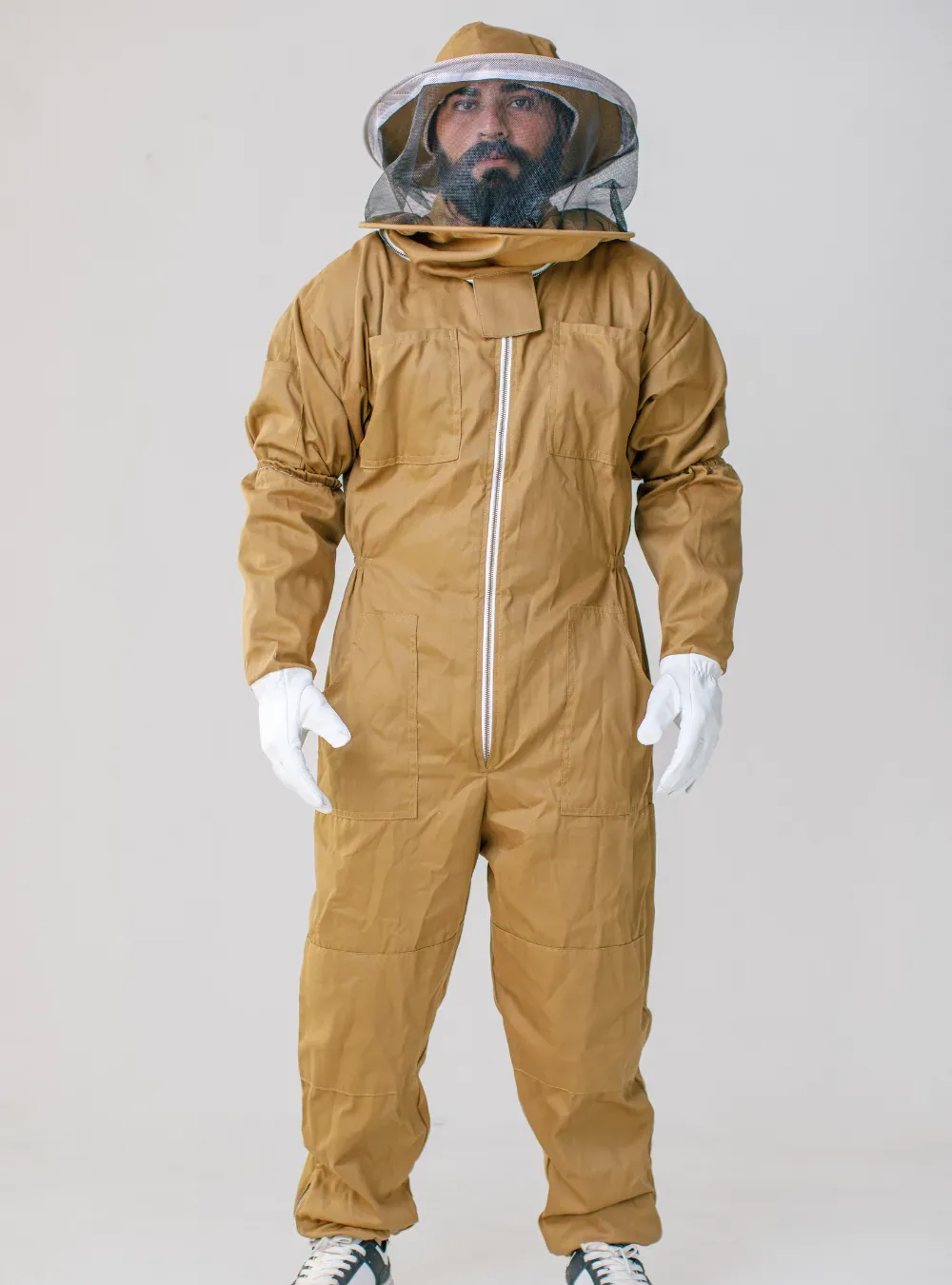
The smoker. This is the one that matters. Polyester softens and melts; molten synthetic fiber sticks to skin and keeps burning. Cotton scorches and chars but does not melt. If you handle a hot smoker for hours, or you have ever set a sleeve down on one, buy cotton and do not think about it again.
Breathability in still air. Cotton moves moisture better. In a humid, windless apiary you will notice.
It is quieter. Cotton drill rustles less than a blend. Whether that changes bee behavior is genuinely debated; that some beekeepers working close prefer it is not.
It ages honestly. Cotton gets softer and thinner in a way you can see. Polycotton can look sound while the cotton content has worn away around the polyester, which makes wear harder to judge.
Our cotton bee suits start at $70.
GSM matters more than the blend
Fabric weight is measured in GSM — grams per square meter. It is the number that decides whether a sting reaches you, and it is the number most listings leave out.
Beekeeping fabric generally sits between 230 and 280 GSM. Below roughly 220 you are buying a shirt with a veil attached, whatever it is made of. A heavy polycotton protects better than a light pure cotton, so if you have to choose between knowing the blend and knowing the weight, ask for the weight.
A seller who cannot tell you the GSM of their own fabric is a seller who did not specify it.
How to tell what you are actually buying
Listings are vague about fabric because vagueness sells. Three checks cut through it.
Hold it to the light. A suit heavy enough to protect will let very little light through the weave. If the fabric reads like a bedsheet against a window, it is too light, whatever the blend.
Pinch and pull. Grip a fold and stretch it. Polycotton springs back to shape. Pure cotton holds the distortion a moment longer and creases where you pinched. It is a crude test, but it is the one you can do in a shop.
Read the care label, not the listing. The composition label is a legal requirement and the listing is not. "Cotton-rich" on a product page can mean anything; the label sewn into the collar gives the actual split, and it is often more polyester than the listing implies.
And ask the question most sellers cannot answer: what is the GSM? A manufacturer knows. A reseller repeating a supplier's description usually does not.
What the blend does not change
Two things are worth saying plainly, because a lot of buying advice implies otherwise.
A blend will not make a suit sting-proof at the shoulders, the knees or anywhere else you press cloth against yourself. Neither fabric can. That is a fit problem, not a fabric problem, and it is solved by buying a suit with room in it.
Texas A&M AgriLife Extension gives the clearest test of that we have seen: a suit should let you touch your toes without the fabric pulling tight across your back or pulling the veil against your face. If it does not, the suit is too small, and no fabric will make up the difference.
And no woven fabric, in any blend, is cool in real heat. Cotton is marginally more breathable than polycotton, and both are hot. If that is your complaint, the fabric aisle is the wrong aisle.
Which should you buy
Buy polycotton if you keep bees as a hobby or side business, wash your suit often, work in and out of vehicles, or want one suit to last several seasons without fuss. This covers most beekeepers.
Buy pure cotton if you use a smoker heavily, work in high heat where every degree of breathability counts, or want a fabric whose wear you can read at a glance.
Buy neither if heat is your actual complaint. If you cut inspections short because you are cooking, no woven fabric will fix that — a three-layer ventilated suit will. Compare them in our guide to ventilated vs cotton bee suits.
Caring for each
Cotton and polycotton want slightly different handling.
- Wash cool, both of them. Hot water sets propolis and accelerates cotton shrinkage.
- Skip fabric softener. It coats fibers and reduces the fabric's ability to move moisture.
- Air dry polycotton. It dries fast enough that a tumble dryer is unnecessary, and heat is the one thing polyester dislikes.
- Expect cotton to shrink on its first two or three washes. Buy with that in mind.
- Wash the veil separately or by hand. Veil mesh outlives the suit if it is not tumbled against zips.
- Hang it up, do not fold it away. Texas A&M AgriLife Extension makes the point plainly: a folded suit may mold, and a suit put away damp is the usual reason. Hang it somewhere it can dry and vent.
That extension guidance also recommends removing the hood or veil before washing and using a mild, unscented detergent — advice worth following whichever fabric you own.
We cover this properly in our care guides.
Common questions
Is polycotton or cotton better for a bee suit?
Polycotton for most beekeepers. It resists tearing, dries quickly and does not shrink, which keeps the slack in the fabric that is doing the protecting. Choose pure cotton if you use a smoker heavily, because polyester melts and cotton does not.
Can a bee sting through polycotton?
Not through a heavy polycotton with slack in it. A sting reaches you where the fabric is pressed flat against your body, whatever it is woven from. Fabric weight matters more than the blend: look for 230 to 280 GSM.
Does a polycotton bee suit shrink in the wash?
Very little. The polyester holds the weave dimensionally stable, which is one of its main advantages over pure cotton. Pure cotton typically shrinks over its first two or three washes, so buy it with that in mind.
Why does it matter that polyester melts?
Because beekeepers work beside a lit smoker. Polyester softens and melts, and molten synthetic fiber sticks to skin and keeps burning. Cotton scorches and chars instead. If you handle a hot smoker for long periods, that difference outweighs everything else.
What GSM should a bee suit be?
Between 230 and 280 GSM for a woven suit. Below roughly 220 the fabric is too thin to stop a sting reliably. A seller who cannot tell you the GSM of their fabric has not specified it.
Is polycotton cooler than cotton?
No, cotton breathes slightly better, though the gap is small. If heat is your real problem neither woven fabric will solve it. A three-layer ventilated mesh suit is dramatically cooler than both.
Written by Alex, Bee suit maker, BEESUITWEAR · United States.
Writes about protective clothing from the workshop where the suits are made.