
First hive inspection: what to wear
Borrowed kit, one thin layer underneath, and boots you already own. The list is shorter than you think, and getting dressed properly matters more than what you bought.

For a first hive inspection, wear a veil or a jacket with one attached, long trousers, boots that cover the ankle, gloves that fit, and one thin long-sleeved layer underneath. Borrow the jacket if you can. Getting dressed properly matters far more than what the kit cost.
The list, in the order you put it on
- Thin long-sleeved top and full-length trousers, pale, nothing scented.
- Long socks, then boots with a shaft the trouser leg goes over — not tucked in.
- The suit or jacket, zipped to the top.
- A thin peaked cap, then the veil, zipped fully home.
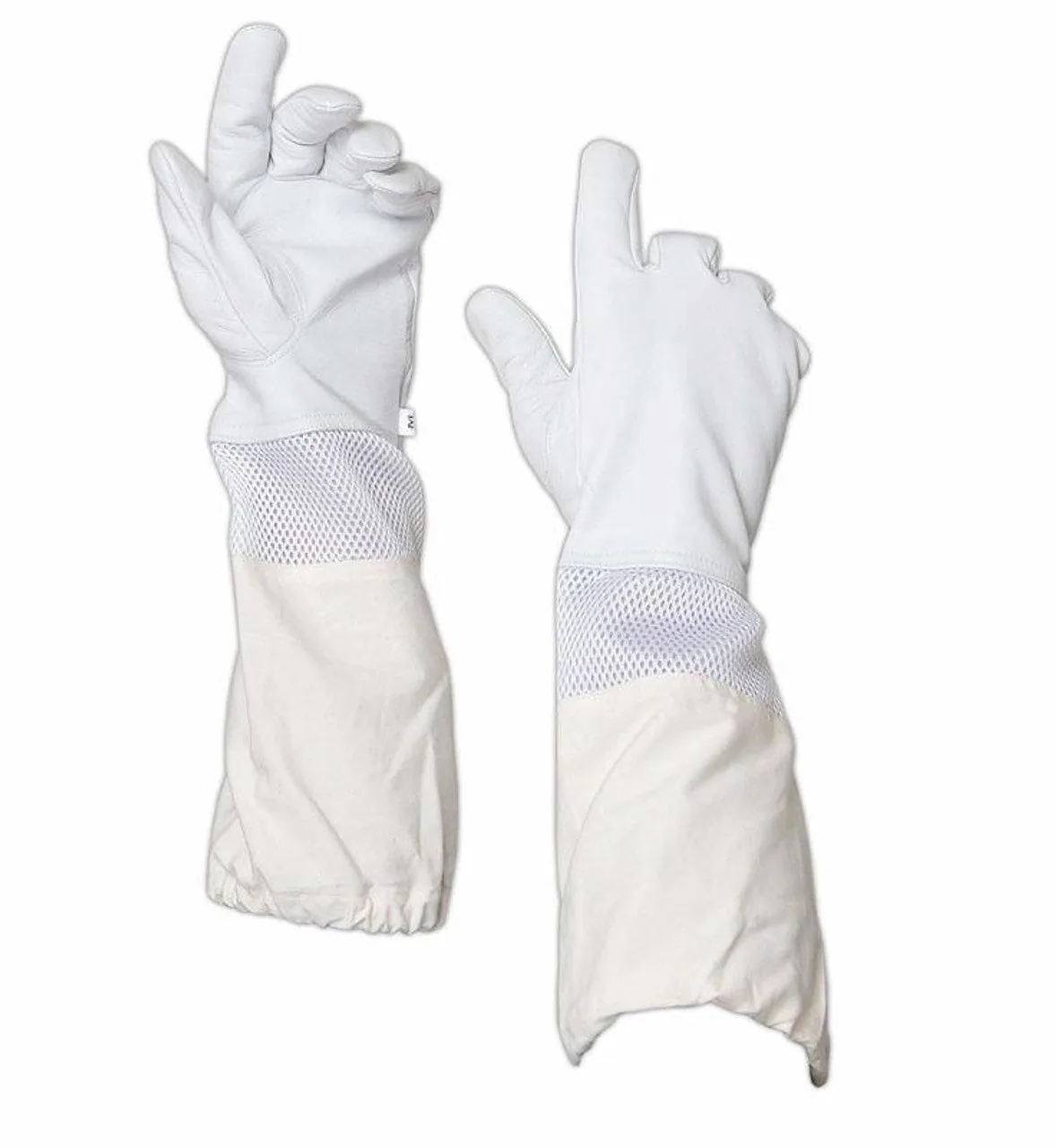
- Gloves last, gauntlets tucked under the sleeves.
Steps two and five are the ones people get backwards, and both are free to get right.
What goes wrong at a first hive inspection
Four things, in roughly the order they happen.
The hood zip is not run fully home. The last two centimetres are the ones that matter, and they are the ones people stop short of. Check it with a hand before you walk over.
Trousers tucked into boots. It feels tidier and it points the opening upwards, which is where bees walk from. Over the outside, always.
Gauntlets over the sleeves. Glove outside the cuff funnels bees towards the join; glove inside closes it — gauntlet length covers why the order matters more than the length.
Dressing at the hive. Bees investigate a suit being put on. Get dressed by the car and walk over ready.
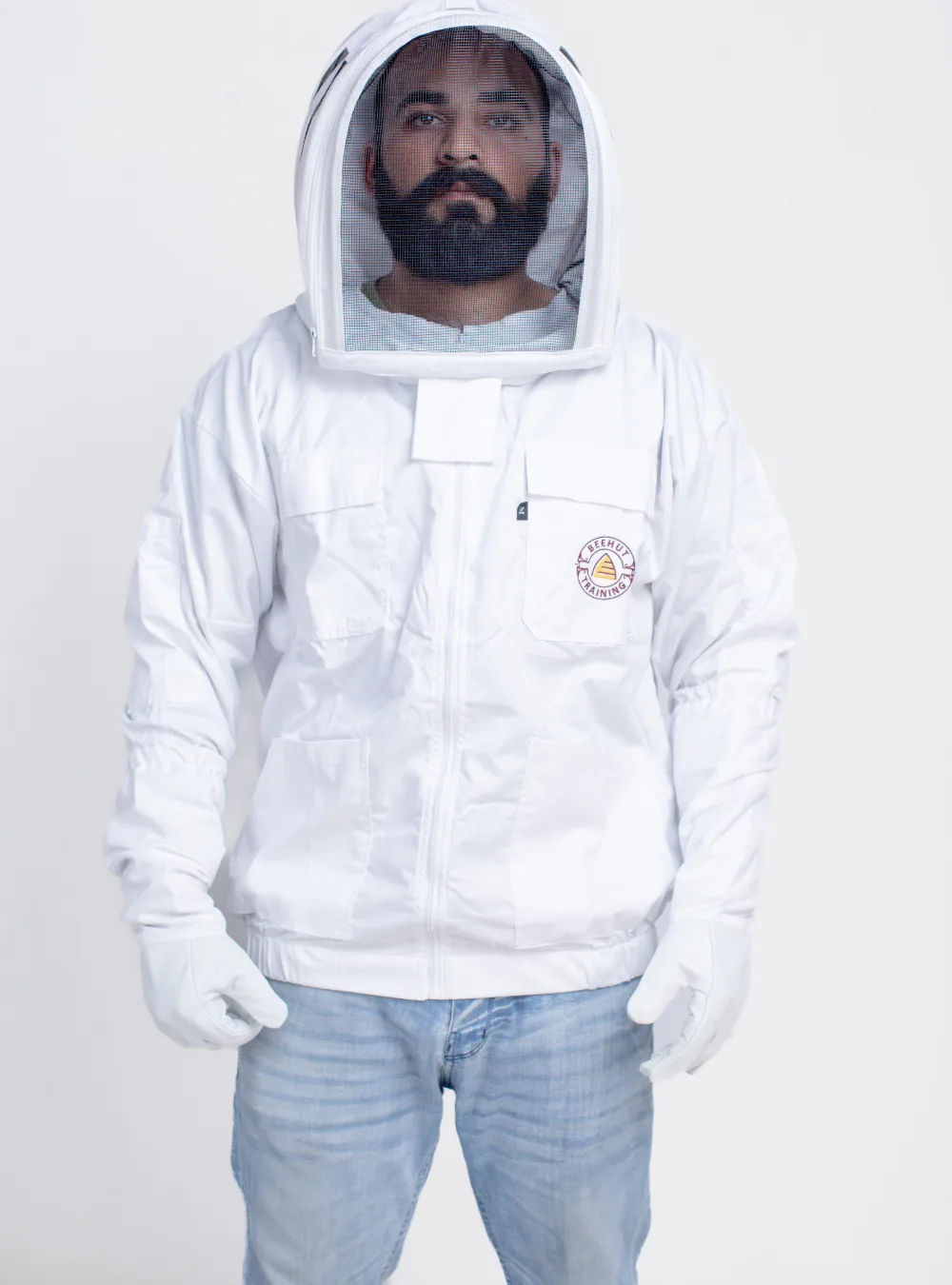
Borrow rather than buy
The single best piece of advice for a first hive inspection, and it involves spending nothing.
Most associations keep spare kit and will lend it. You will learn how hot you get, whether a fencing veil suits your face, and whether you mind gloves — none of which a description can tell you, including ours. A bee suit for beginners covers what to buy afterwards.
If you are borrowing, check the suit yourself rather than assuming. Stretch the cuffs, run the zips, hold the veil to the light. The five pre-inspection checks take thirty seconds and apply to borrowed kit twice over.
What you will actually feel
Worth knowing in advance, because it changes what you pack.
You will be hot — not from the weather, but from standing still, concentrating, in a sealed garment, with adrenaline. People who borrowed the heaviest suit available discover this in the first ten minutes.
The veil will feel close, and you will want it off before you expect to. That is normal. Walk clear of the hive first, every time.
And you will be slower than you imagined, which is correct. A first inspection is mostly looking.
The two rules before you open anything
Where you will walk to. Pick a direction and a distance before the hive is open. If a bee gets inside the suit, walking thirty metres in a direction you already chose is far easier than choosing one with a bee in your sleeve.
That you can stop. Say out loud, before you start, that you can leave at any point without discussion. That is what makes a first hive inspection something you repeat.
Gloves, specifically
Wear them. Experienced beekeepers often do not, which confuses people — but that works because their hands already know what they are doing. A beginner without gloves gets the stings and none of the handling benefit.
Make sure they fit. An oversized glove makes you clumsy, clumsy hands crush bees, and a crushed bee changes the colony's mood — which is a worse outcome than the sting the glove was preventing. Gloves sizing covers the measurement.
What to take as well as what to wear
Four things — the wider accessory list can wait — and somebody else will probably have them.
- Water, left where you will walk back to. You will want it and you cannot drink in a veil.
- A hive tool, even if you are only watching. Having your own means you are not borrowing mid-inspection.
- Your phone, reachable. Inside the suit rather than in a trouser pocket you cannot get to.
- Something to kneel on if the hives are low, because you will be down there longer than you expect.
Leave bags, jackets and anything loose well away from the hives rather than beside them.
Timing a first hive inspection
The weather decides more about a first hive inspection than the kit does.
A warm, still, bright day in the middle of the day is what you want: most of the foragers are out, the colony is calmer, and a smaller population is at home to object. A cold, windy or wet day is the opposite, and a colony that has been shut in is not where anybody should start.
Late summer is also harder than early summer — colonies are larger and have honey to defend, and that is when most stings happen. If you can choose, go in early summer.
What not to wear
| Avoid | Why |
|---|---|
| Perfume, aftershave, scented deodorant | Bees navigate by smell. The commonest avoidable mistake |
| Dark or fuzzy clothing | Both read as a threat; wool is worse than cotton |
| Shorts, sandals, trainers | The ankle is where it happens — see where beekeepers get stung |
| Nothing under the suit | Bare skin against fabric is where a sting reaches you |
| Loose jewellery, a watch | Catches on cuffs and stops them seating |
| Hair tied high | Holds the collar away from your neck |
Afterwards
Walk well clear before taking the veil off, then the gloves, then the suit. Hang it rather than folding it into a bag.
If you were stung more than once or twice, wash the suit before the next visit — it carries the scent of a bad visit. If you borrowed it, wash it anyway before returning it, and say so.
For guidance on the inspection itself rather than the clothing, Penn State's beekeeping basics and Cornell's Pollinator Network are the right sort of source, and both will help you find a group to do a first hive inspection with. Our jackets are the usual first purchase afterwards.