
A bee got inside my suit: what to do
Walk away first, then deal with it. The instinct to swat at it where you stand is what turns one bee inside a suit into a bad afternoon.

If a bee gets inside your suit: walk away from the hive first, at least twenty or thirty metres, calmly and without flapping. Then, well clear, open the suit and let it out. Dealing with a bee inside my suit where you are standing is what turns one sting into many, because the alarm scent goes up beside an open colony.
The order, and why it is that order
- Stop what you are doing. If a frame is in your hands, put it down properly rather than dropping it.
- Close the hive if you can do it in a few seconds. If not, leave it — you are coming back.
- Walk away. Steadily, not running. Twenty or thirty metres, and further if the colony is already unsettled.
- Then open up. Unzip the hood or roll the sleeve and let it out, well clear of the hive.
- Check yourself before going back, because where one got in, another can.
The reason for the distance is alarm pheromone. A sting, or a bee crushed against you in a panic, releases a scent that reads to the colony as an attack in progress. Released beside an open hive it recruits; released thirty metres away it mostly does not.
If it is already stinging
Scrape the sting out as soon as you can get to it — sideways, with a fingernail or a hive tool edge, rather than pinching it. Pinching squeezes the venom sac. Then get clear and deal with the suit.
How you then react to the sting itself is a medical question rather than a beekeeping one. If you or anyone in the household has ever reacted badly to a sting, that conversation belongs with a doctor and belongs before the next visit, not after it.
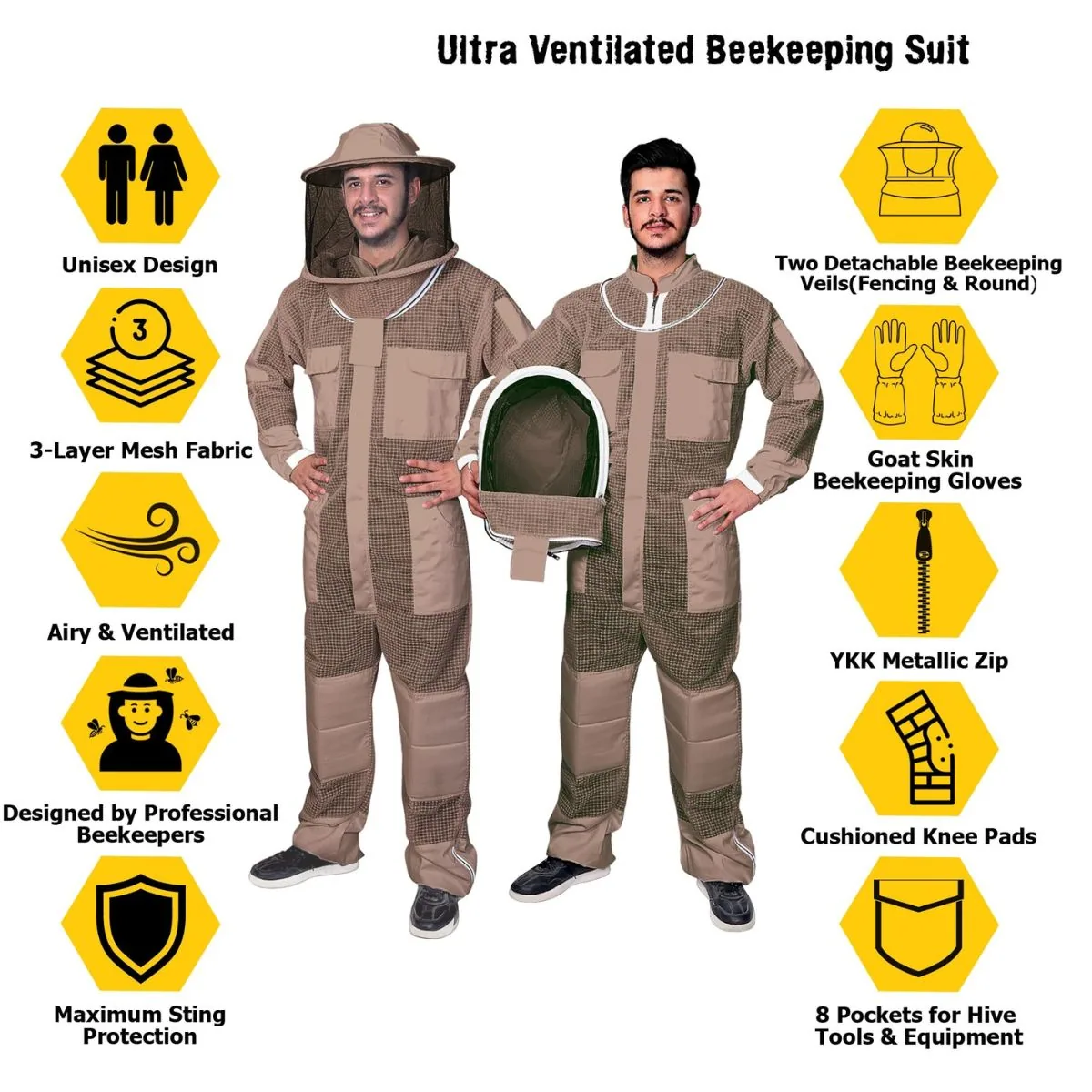
How a bee got inside my suit
Almost always one of five, and all five are findable.
- The hood zip not run fully home. The commonest by a distance. The last two centimetres are the ones that matter and the ones people stop short of.
- A cuff that has gone slack, or a sleeve that rode up over the glove while you were reaching.
- An ankle over a low shoe, picked up walking through grass rather than at the hive at all.
- A gap at the throat, often because long hair is tied high and holding the collar away.
- A hole you did not know about — a snag in the mesh, a failed seam, a split under the arm.
Where beekeepers get stung most is the same list in a different order, and sealing wrists and ankles covers the two openings that account for most of it.
What not to do
| Instinct | Why it makes it worse |
|---|---|
| Swat at it through the fabric | Crushes it against you — a sting plus alarm scent |
| Run | Fast movement is what a colony responds to. Walk. |
| Open the veil at the hive | Trades one bee inside the suit for a face full of them |
| Shake and flap | Pins the bee against skin and attracts attention |
| Carry on and hope | It will find a fold eventually, usually at the worst moment |
If you are on your own
Most beekeepers are, and it changes the advice slightly.
Decide the walk-away point before you open the hive - a direction, and roughly where you will stop. Thirty metres in a direction you have already chosen is easier to do calmly than thirty metres decided while a bee is inside your sleeve.
Leave the hive openable rather than open if you can: a crown board resting on top takes two seconds and means you are not leaving a colony exposed while you deal with yourself. And keep your phone somewhere you can reach it without taking the suit off.
Teaching someone else the drill
Anyone you take to the apiary needs this before they need anything else, and it takes a minute to teach.
Say it as three steps: stop, walk that way, then we sort it out. Agree it out loud before you open anything. For a child, add that they can say they want to leave at any point and it happens immediately, without discussion - that rule is what makes them willing to come back, and the children’s guide covers the rest of taking a child to a hive.
The instinct the drill replaces is the dangerous one: standing still and swatting. Practise walking away once, with nothing wrong, so the movement is familiar.
After: find the hole before the next visit
This is the part that stops it happening again, and it takes five minutes.
Hold the veil mesh up to the light and look for pinholes and snags. Stretch each cuff and ankle and let go — if it stays stretched, the elastic has gone. Run every zip end to end. Look under the arms and at the seat, where seams split first.
If you find a tear, repairing a torn bee suit covers what is worth mending and what is not. If the cuffs have gone, that is a repair rather than a new suit.
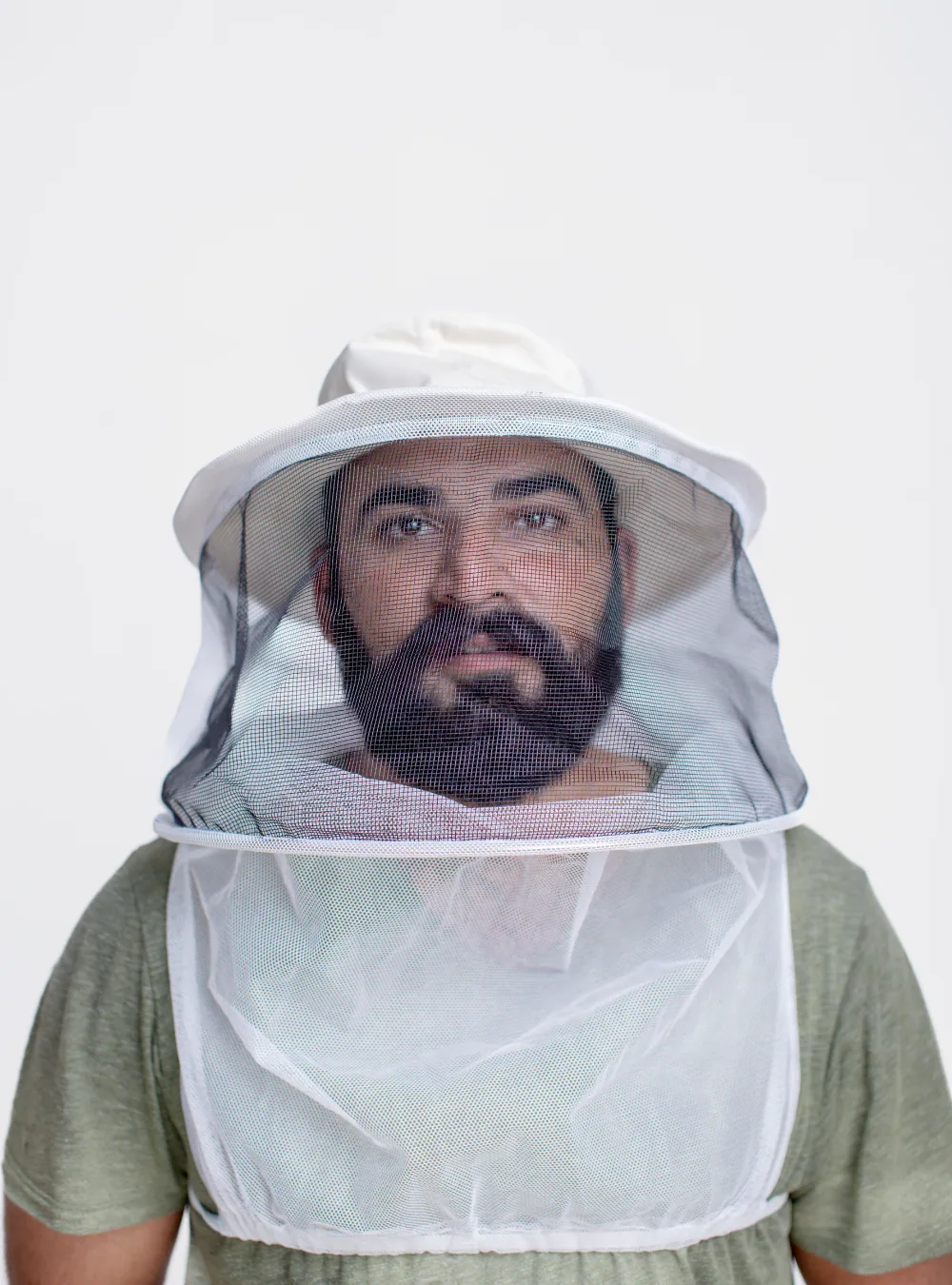
Stopping a bee getting inside my suit again
- Zip the hood all the way, every time. Make it the last thing you do and check it with a hand.
- Dress away from the apiary, in the full kit — in the right order — not beside the hives.
- Dress properly before you walk over, not beside the hives. Bees investigate a suit being put on.
- Wear a thin layer underneath. A bee inside the suit then has fabric rather than skin in front of it — see what to wear underneath.
- Check the cuffs at the start of each season. They fail invisibly.
- Tie long hair low, so the collar sits where it was drawn to.
If it keeps happening
A bee inside my suit once is an accident. Three times in a season is the suit telling you something, and it is usually one of two things: the elastic has gone, or the suit is the wrong size and gaping somewhere when you move.
The signs of a wrong size covers the second. For the first, stretch the cuffs — it takes ten seconds and it is the answer more often than anything else on this page.
On working calmly with a colony that is reacting, Penn State Extension's beekeeping resources and the University of Georgia Bee Program are better guidance than a supplier can give.
If the check turns up a damaged veil, our veils can be bought on their own rather than with a whole suit.