
How to remove propolis from a bee suit
Mostly you cannot, and anyone promising otherwise is selling something. What you can do is stop it spreading and choose a colour that hides it.

You cannot reliably remove propolis from a bee suit once it has set. It is a resin, it bonds to fibre, and it stains permanently — every working beekeeper's suit has the marks. What you can do is lift it while it is fresh, scrape the bulk off before washing, and avoid the methods that ruin a suit without shifting the stain.
Why you cannot remove propolis from a bee suit
You cannot remove propolis from a bee suit because of what it is: a plant resin the colony collects and works. It is sticky when warm, hard and brittle when cold, and it is not water-soluble — which is why ordinary washing does nothing to it.
Worse, it is coloured. Even when the physical resin is removed, the brown stain it has driven into the fibre usually stays. That is the part no detergent reaches.
So treat this page as damage limitation rather than a cleaning method. Washing a bee suit says the same thing, and the two pages agree on purpose: a shop that tells you propolis washes out is a shop that has not tried.
What actually removes propolis from a bee suit, in order
1. Freeze it, then crack it off. The most effective and the least damaging. Put the suit in a bag in the freezer for an hour. Propolis goes brittle below about room temperature and will crack and flake away under a fingernail or a blunt edge.
This removes the bulk, which is what matters — the lump that catches on things and transfers to your hands. The colour may remain.
2. Scrape it cold, carefully. A hive tool edge or a blunt knife, with the fabric supported. Never a sharp blade on mesh, and never with force on a ventilated panel — you can part the bonded layers and the gap between them is what stops a sting.
3. Wash normally afterwards. Cool, gentle, no softener. Washing before scraping just spreads it.
Methods that claim to remove propolis from a bee suit
| Method | Removes propolis? | Damage |
|---|---|---|
| Freezing and cracking off | The bulk, yes. Colour, often not | None. Start here |
| Hot wash | No — softens and spreads it | Costs elastic and bonding |
| Tumble drying | No — bakes it in | The worst thing you can do to a suit |
| Bleach or oxygen boosters | No | Weakens thread and elastic |
| Surgical spirit or alcohol | Softens it; lifts some colour | Spot-test first; can affect dyes and coatings |
| Solvents and degreasers | Sometimes | Can dissolve mesh bonding. Not worth it |
| Ironing with paper over it | Spreads it | Heat drives it into the fibre permanently |
Two rows deserve emphasis. Heat in any form — hot water, a dryer, an iron — makes propolis worse rather than better, and costs you the elastic and bonding at the same time. And solvents strong enough to dissolve resin are strong enough to attack the adhesive holding a ventilated suit's layers apart.
Using alcohol to remove propolis from a bee suit
Surgical spirit or isopropyl will soften propolis and lift some of the colour, and it is the only chemical approach worth considering. Three rules if you do.
Test on a hidden area first — a cuff lining, the inside of a hem. Some dyes run and some coatings lift. Work from the back of the fabric outward, so you push the resin out rather than further in. And keep it off mesh bonding entirely: use it on cotton and polycotton, not on the gap layers of a ventilated suit.
Wax, honey and the other marks
A cloth in a pocket prevents most of it. Propolis is the one that does not come out; the others mostly do, and each wants a different first move.
| Mark | First move |
|---|---|
| Wax | Let it go hard, scrape the solid off cold, then wash. Never iron it - heat drives it in |
| Honey | Cold rinse straight away. Hot water sets the proteins |
| Smoke smell | Air it. Washing works less well than a day outdoors |
| Grass and soil | Let it dry, brush it off, then wash |
| Alarm pheromone after a bad visit | Wash it. This one is worth doing promptly - the colony can smell it next time |
The last row is the only one that affects how your bees behave rather than how the suit looks, which makes it the one worth acting on.
Gloves and the hive tool
Both collect more propolis than the suit does, and both transfer it to everything else.
Leather gloves take it permanently and there is little to be done — one quiet argument for bare hands, which at least wash. Nitrile is disposable, which is one quiet argument for it. The hive tool is the real culprit: scraped clean after each visit it carries nothing, and wiped on a trouser leg it is how most suit marks arrive in the first place.
The real answer is colour
Since you cannot remove propolis from a bee suit, the only variable left is whether it shows.
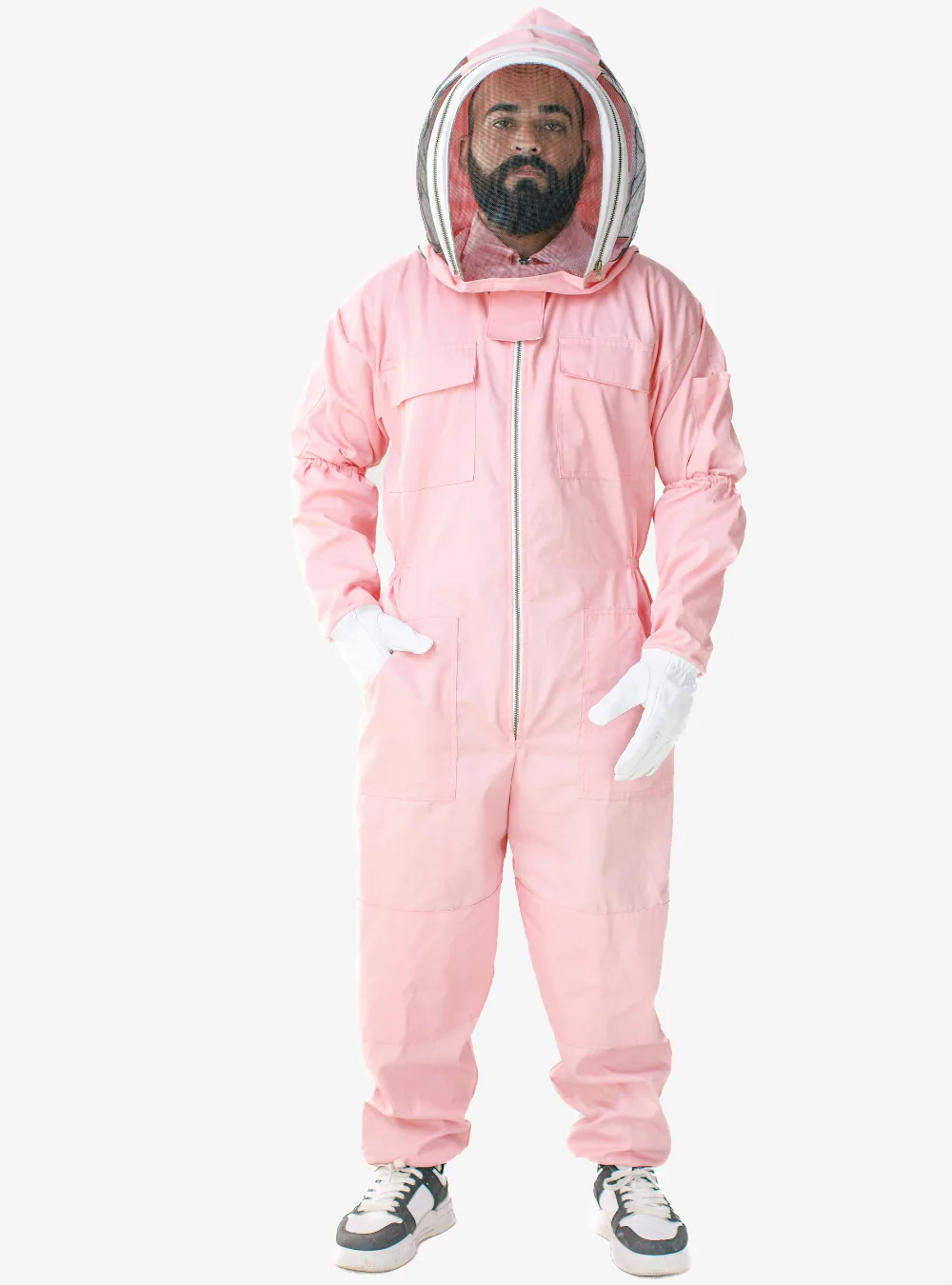
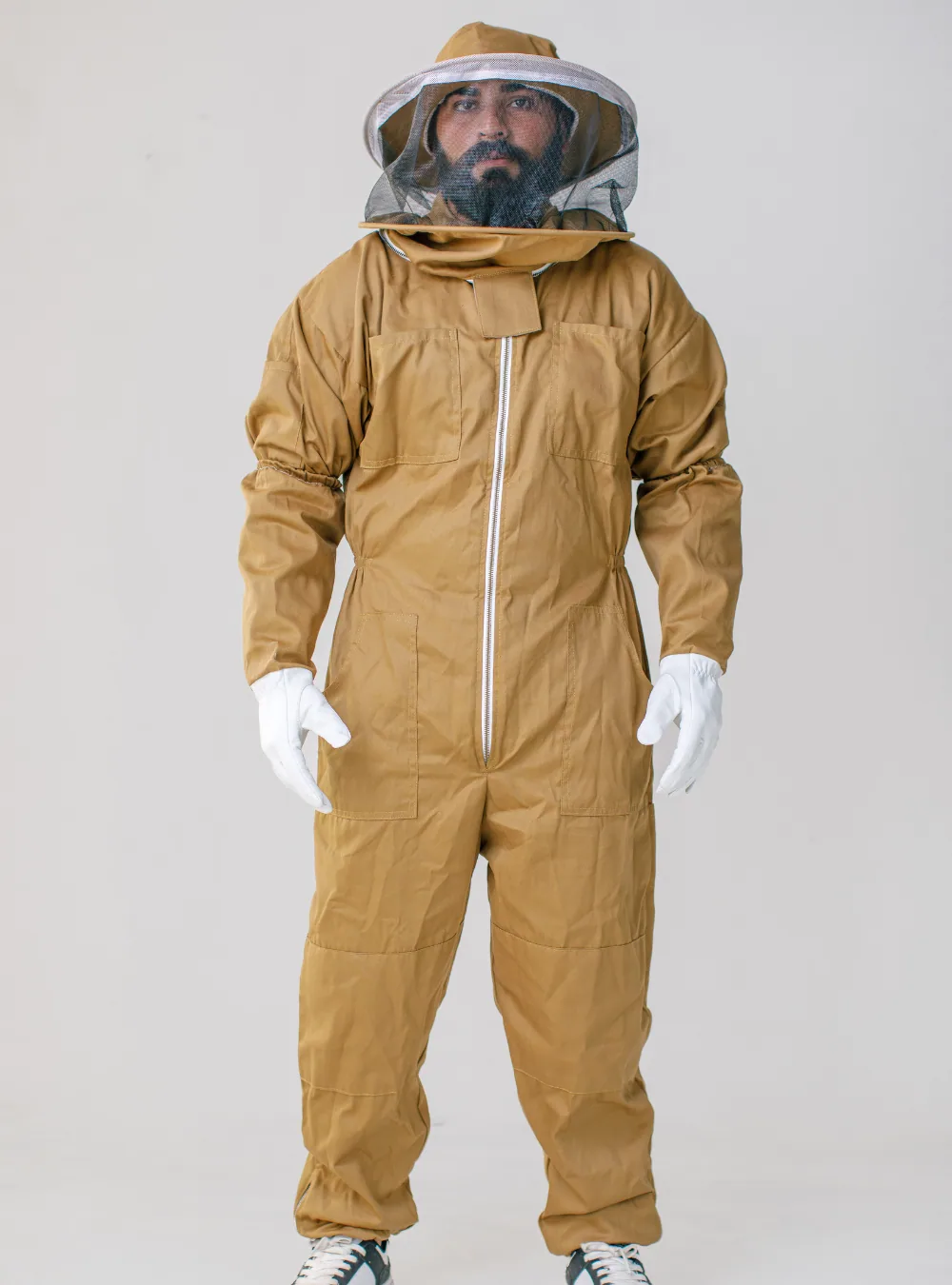
White and pale pastels show propolis plainly. Khaki, cream and sand hide it, which is why they look presentable for longer in identical use — not because they stay cleaner. If staining genuinely bothers you, that is a decision for the next purchase rather than a problem to scrub at. Colour in hot climates and pink and pastels both cover the trade.
It matters most where customers see you. Removal work is the case where a presentable suit is money, and keeping one clean suit for quoting visits is the practical answer.
Keeping propolis off a bee suit in the first place
- Scrape the hive tool rather than wiping it on your leg — and on your trouser leg least of all. This is where most of it arrives.
- Keep a cloth in a pocket for the tool and your gloves.
- Put frames on a stand, not against your thigh.
- Deal with it the same day, while it is fresh and before it has been warmed and pressed in.
When a stain is telling you something else
A propolis mark is cosmetic and does not weaken anything. But a suit stiff with it over a large area is worth a closer look, because resin in a ventilated panel can hold the layers together — and a panel that has lost its spring has lost its protection whatever colour it is.
Press the fabric between finger and thumb. Springy is fine, however ugly. Flat is not, and that is the fault that ends a suit.
For guidance on apiary hygiene more broadly, Penn State Extension's beekeeping resources and the University of Georgia Bee Program are the right sort of source. Our cotton suits come in colours that hide it better than white does.