
Bee suit for swarm collection
A swarm is the calmest you will ever meet a colony — and you will be up a ladder, under a hedge, or reaching overhead. The suit choice follows the position, not the temper.
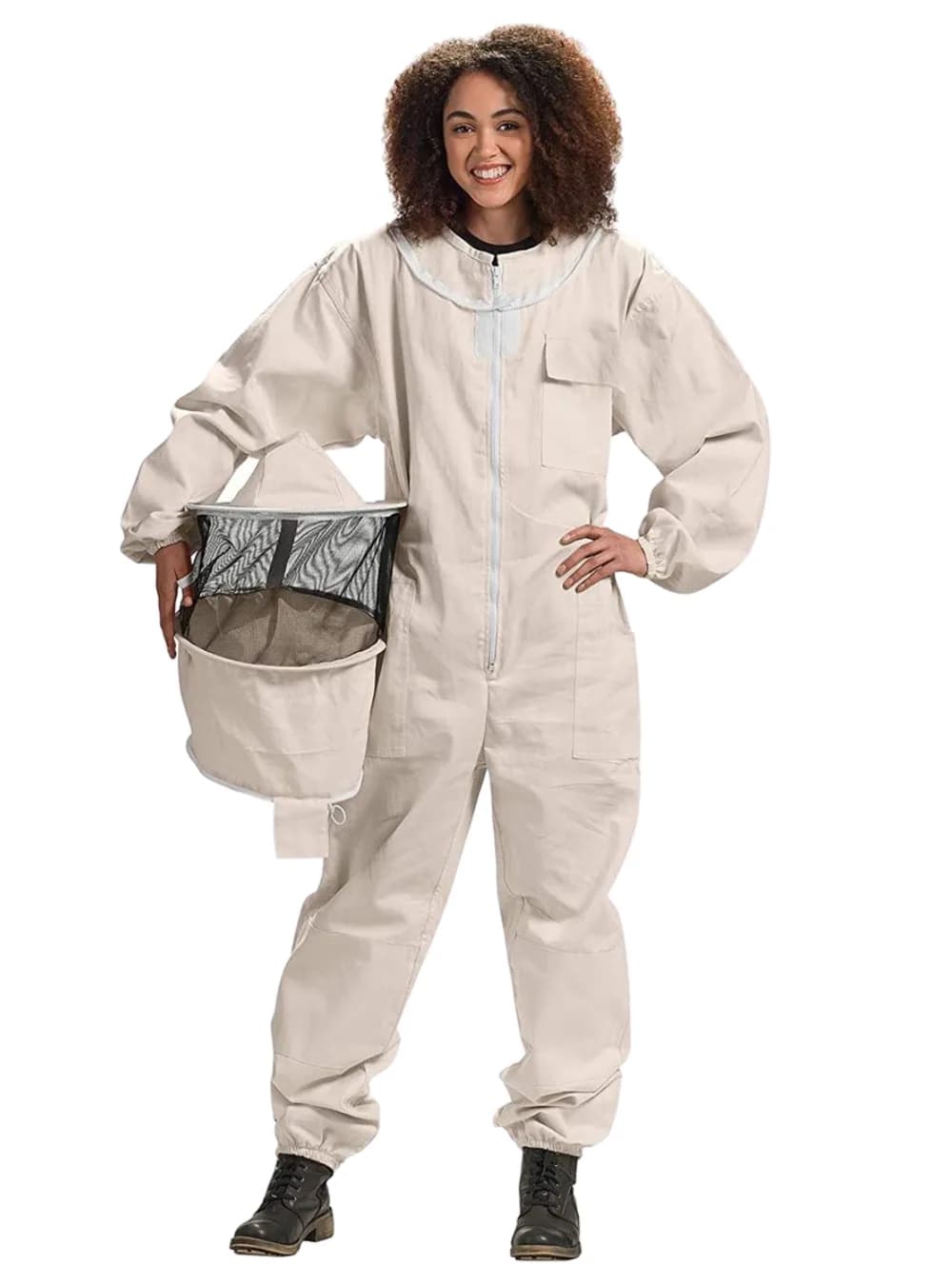
A bee suit for swarm collection is chosen for movement rather than for sting resistance. A swarm has no stores and no brood to defend and is usually docile, so the protection you need is modest — but you will be up a ladder, under a hedge or reaching overhead, which is where sleeves ride up and anything loose catches.
Why a swarm is different
Unlike wasps, a swarm is a colony between homes. It has nothing to defend, every bee is full of honey, and it is typically the calmest you will encounter one.
That is not a reason to go without a veil. It is a reason to stop choosing your suit as though you were opening a defensive hive in August — the sting load is low and the physical demands are high, which reverses the usual priorities.
It is also not universal. A swarm that has been out for days, is wet, or has started drawing comb is a different proposition, and so is one in a difficult position where you cannot be gentle.
What swarm collection asks of a suit
| Demand | Why |
|---|---|
| Reach overhead without the sleeve riding up | Swarms are usually above you |
| Nothing loose or dangling | Ladder rungs, branches, fences |
| Light enough to move in | You will be climbing and carrying |
| Quick to get into | Swarm calls are urgent and awkwardly timed |
| Good visibility looking up | The opposite of an inspection, and harder |
Note that sting resistance is not on the list. The mechanism is the same as always; the load is simply lower.
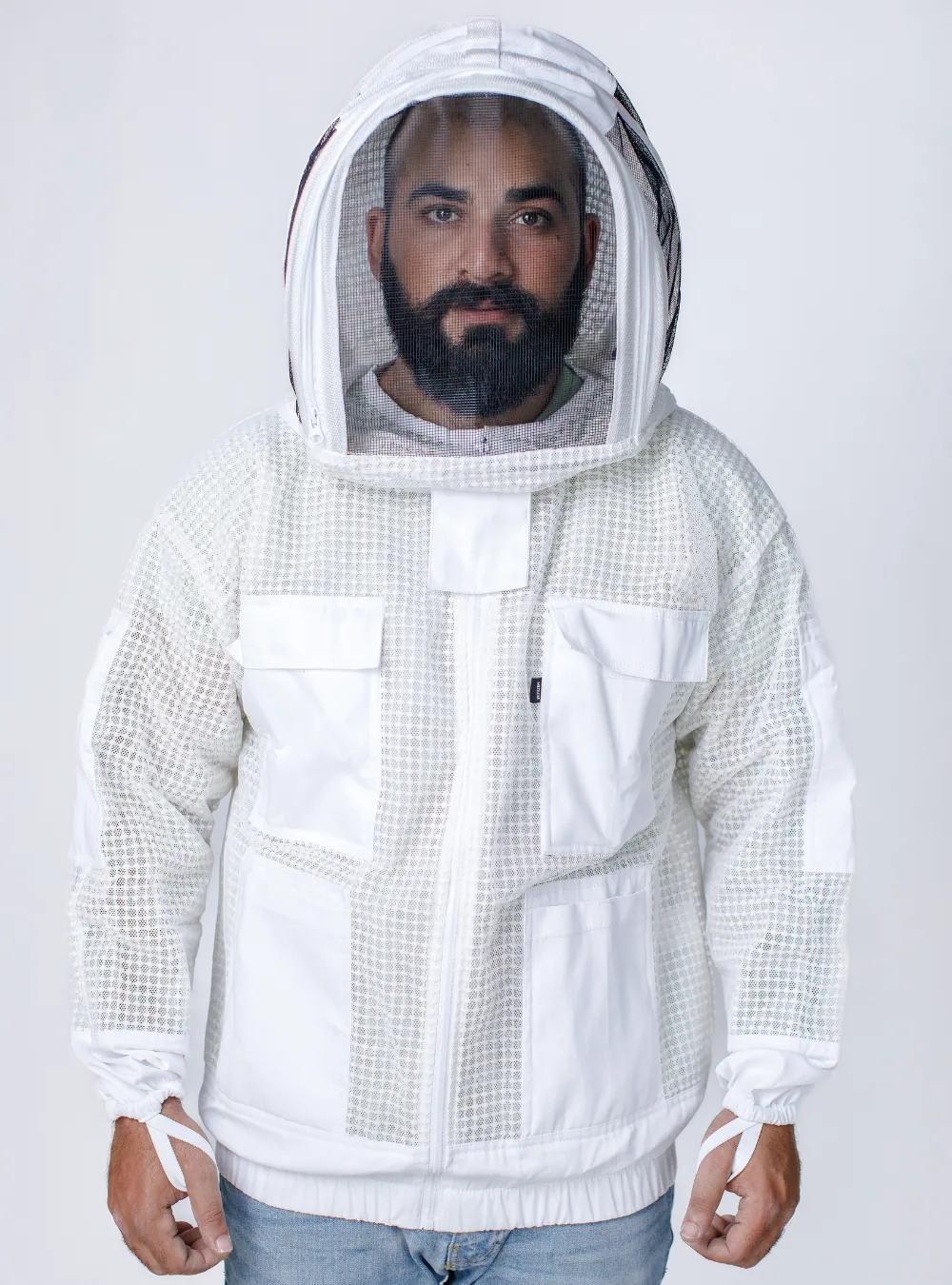
Jacket or full suit?
A jacket for most swarms. It is faster to get into, cooler, and lets you climb without a coverall's bulk behind the knee.
A full suit earns its place if you will be kneeling, crawling under something, or working in brambles. The deciding question is what position you will be in rather than how the bees will behave.
What you should not do is reach for the heavy removal suit by default. Removal work is a different job: sustained sting load, abrasion, confined spaces. Wearing that kit for a swarm on a fence post wears it out on easy work.
Swarm collection at height
This is where the real risk is, and it is not stings.
- Tuck or remove anything that dangles before you climb. Zip pulls, straps, ties. A snag at the top of a ladder is a fall.
- Check you can see your own feet through the veil, on the ground, before going up.
- Do not rely on the suit for grip. Ventilated mesh is slippery against a ladder stile.
- A suit that is too large bunches behind the knee, which on a ladder is a trip rather than an annoyance.
- Have somebody foot the ladder if you possibly can.
None of that is about bees, and all of it is more likely to hurt you than the swarm is.
Swarm collection means looking up through the veil
Swarm collection puts a veil in an unusual position: you are looking up rather than down, often into bright sky, with bees above you.
That changes two things. Glare is worse, so a thin peaked cap under the veil earns its place — and a dark face panel matters, because black mesh is what you can see through against a bright background.
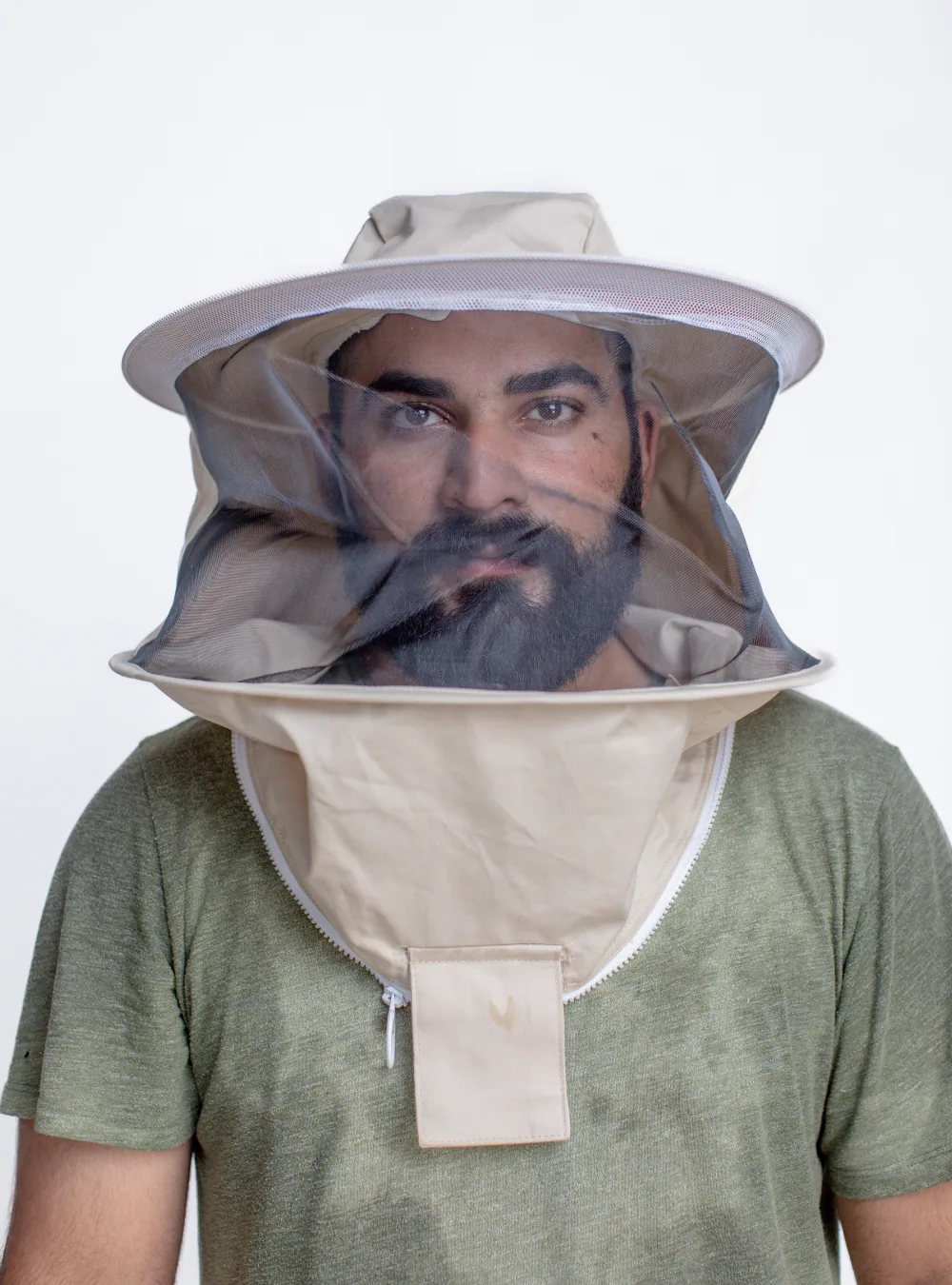
Standoff at the crown and shoulders matters more than usual too, since that is where bees will land. A round veil is the more forgiving shape here, though a fencing veil with a cap is perfectly workable — the fencing veil in detail.
Wrists and ankles, as always
Reaching overhead is the movement that travels a sleeve furthest, so the wrist is the opening to get right.
Thumb loops are worth more here than anywhere except removal work, because they anchor the cuff to your hand through a full extension. Gauntlet under the sleeve, never over — sealing wrists and ankles covers both.
Ankles matter less, unless you are standing in long grass or under a hedge, in which case they matter a great deal.
What matters more than the suit in swarm collection
Three things, honestly.
A box with a lid you can close one-handed. The single most useful item in swarm collection.
A sheet or a sack to wrap it, and secateurs for the branch.
Knowing when to walk away. A swarm thirty feet up a conifer, over a road, or on somebody's roof is not yours to collect. That judgement belongs with your local association, who will also tell you who does take those calls.
On swarm handling itself rather than clothing, Penn State Extension's beekeeping resources and the University of Georgia Bee Program are the right sort of source.
What to wear if the swarm is not calm
Most are. Some are not, and the signs are worth knowing before you are up a ladder.
A swarm that has been out for several days has used its stores and started drawing comb, which means it has something to defend and behaves far more like a colony. Wet, cold or repeatedly disturbed swarms are also sharper.
In those cases treat it as an inspection rather than a collection: full kit, cuffs checked, a veil with real standoff, and somebody with you. If it is high up as well, that is a combination worth declining.
Dressing for the drive
A practical detail that catches people out on their first few calls.
You will arrive in ordinary clothes, often in somebody's garden, with an audience. Dress away from the swarm and away from the car door — bees investigate a suit being put on, and a suit put on next to an open car means a bee in the car on the way home.
Put the veil on last and take it off first, well clear. And keep the box closed in the car rather than trusting a sheet.
Afterwards
Swarm calls are messy and often happen at short notice, so the kit comes home dirty and goes back in the car. Two habits save a suit: hang it to dry rather than leaving it in a bag, and check the veil against the light — brambles and conifers snag mesh constantly.
Repairing a torn bee suit covers what is worth mending, and a snag found the same day is a repair rather than a hole.
Our jackets are the usual swarm garment, and veils are sold on their own so a spare lives in the car.