
Bee suit GSM: what the number means
GSM is grams per square metre — how heavy the cloth is, not how well it protects. It is the most quoted figure in beekeeping listings and one of the least useful.
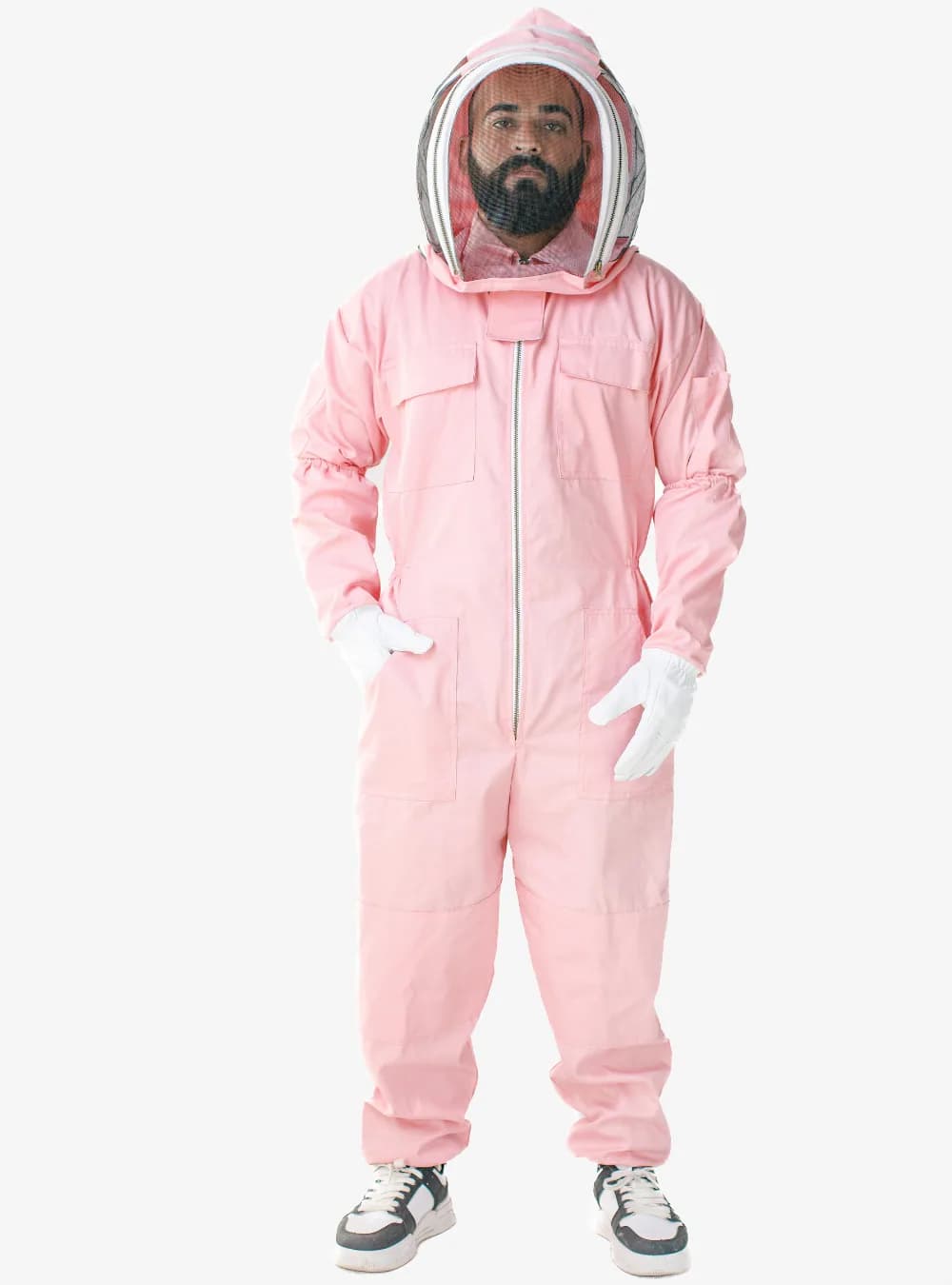
Bee suit GSM is grams per square metre — a measure of how heavy the cloth is, nothing more. A higher number means more material in the same area. It does not mean more protection, and on a ventilated suit it tells you almost nothing at all, which is why it is quoted far more often than it is useful.
What bee suit GSM actually measures
Take a square metre of the fabric, weigh it, and that is the GSM. A light shirting might be well under a hundred; heavy workwear canvas runs to several hundred. It is a real, standard, measurable property of a woven cloth.
What it captures is density of material. What it does not capture is how that material is arranged, how the garment is cut, or how far the cloth sits from your skin — which is the thing that actually stops a sting.
Why bee suit GSM is a weak proxy
Three reasons, and the third is the one that matters most.
A sting is defeated by distance, not mass. A bee's sting reaches a few millimetres. Loose cloth beats heavy cloth pulled tight, every time, whatever either weighs.
Heavier cloth is hotter. And a suit you are too hot to keep closed protects you from nothing. Weight is a cost as well as a feature.
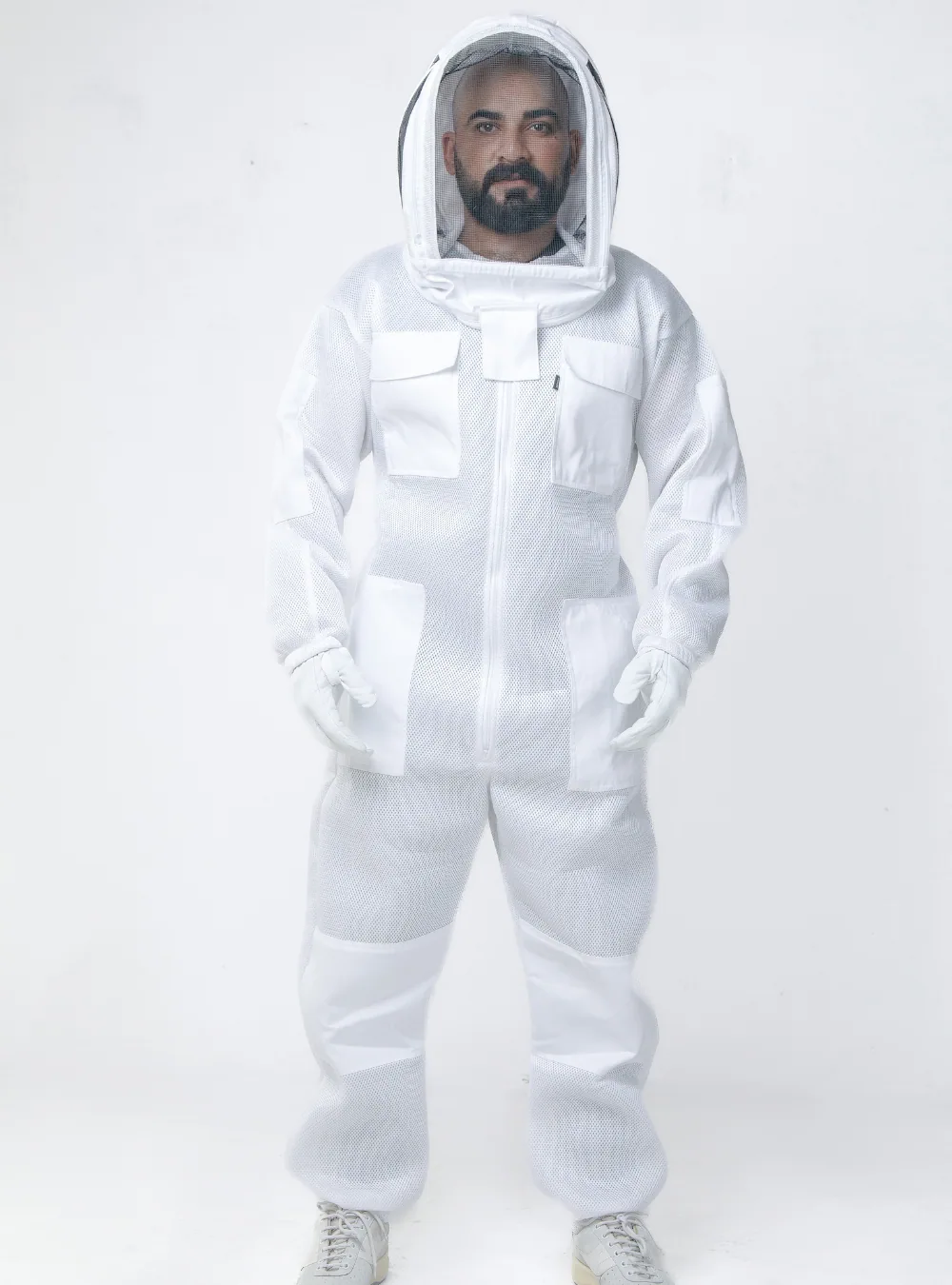
On a ventilated suit it is close to meaningless. The protection there is the bonded gap between layers, not the weight of mesh. Two suits with identical GSM can have completely different standoff, and standoff is the whole mechanism — see three-layer versus two-layer mesh.
Where it is genuinely useful
Comparing two woven suits of the same construction from the same maker — and even then weave matters more than weight. There, a higher GSM does mean a heavier, usually harder-wearing cloth, and the comparison is fair because everything else is held constant.
It is also a reasonable sanity check at the bottom end. Very light woven cloth in a full suit is a signal worth noticing, because there is less margin where the garment pulls tight.
What it cannot do is compare across constructions. A poly-cotton GSM against a ventilated mesh GSM is two different measurements wearing the same name.
We do not publish ours
Worth saying plainly. Our fabric records carry a field for GSM and it is empty, because nobody has measured our cloth to a standard we would be willing to print. Quoting a figure we had not measured would be easy and would be worth nothing to you.
That is the same reason the size guide does not print a chest measurement for every size: the grading sheet it would come from does not exist in a form we trust. If that changes, the number goes up; until then, the honest answer is that we do not have one.
GSM on veils and gloves
You will occasionally see it quoted for both, and it means less again.
A veil is judged on how well you can see through it and how far it stands off your face. Weight tells you neither — a heavier mesh may simply be coarser, which is worse to work behind. Mesh colour and weave decide visibility; grams do not.
Gloves are judged on fit and dexterity. Leather thickness is sometimes quoted in millimetres, which is at least measuring the right thing, but a thinner glove that fits beats a thicker one that slides — gloves sizing covers why.
Where the number comes from
Worth knowing, because it explains why figures vary between suppliers for cloth that looks identical.
GSM is measured on the fabric, not the garment. A supplier quoting bee suit GSM is usually passing on what their mill told them, which may be for the base cloth before any coating, bonding or finishing. Two suits with the same quoted figure can therefore have quite different finished weights.
It is also measured dry and unused. A suit that has been washed twenty times and stiffened with propolis weighs more and protects no better.
What to ask instead
- How many bonded layers? On ventilated construction this is the question GSM is standing in for, and it has a real answer.
- Does the mesh spring back under a thumb? You can test this in a shop. Springy is working; flat is not.
- How is it cut? Sleeve length, rise and shoulder decide whether the fabric is held away from you at all — how a suit should fit.
- Can the veil and cuffs be replaced? It decides the working life more than any fabric property — and checking them regularly decides whether you notice in time.
The numbers worth more than GSM
| Figure | Worth knowing? |
|---|---|
| Number of bonded layers | Yes — the real question on a ventilated suit |
| Maximum wash temperature | Yes. Heat is what ends suits |
| Sleeve and inseam for your size | Yes, and often unpublished. Ask |
| GSM, within one construction and maker | Mildly |
| GSM, across constructions | No |
| "Sting-proof" ratings | No. There is no standard test behind them |
If a listing leads with bee suit GSM
It is not a bad sign on its own — plenty of honest suppliers publish it because buyers ask. It is a bad sign when it is the only specification offered, because the things that decide whether a suit protects you are all missing.
Ask the four questions above. A supplier who answers them is one worth buying from, whatever their bee suit GSM happens to be.
For what the cloth actually is rather than what it weighs, bee suit fabric covers the three materials you will meet. Extension services treat coverage and fit as the things that matter rather than cloth weight — Penn State's beekeeping basics and the University of Georgia Bee Program are a useful check on any specification list.