
What to do when your bee suit arrives
Half an hour, indoors, before you wear it anywhere. This is the only window in which a fault is the supplier's problem rather than yours.
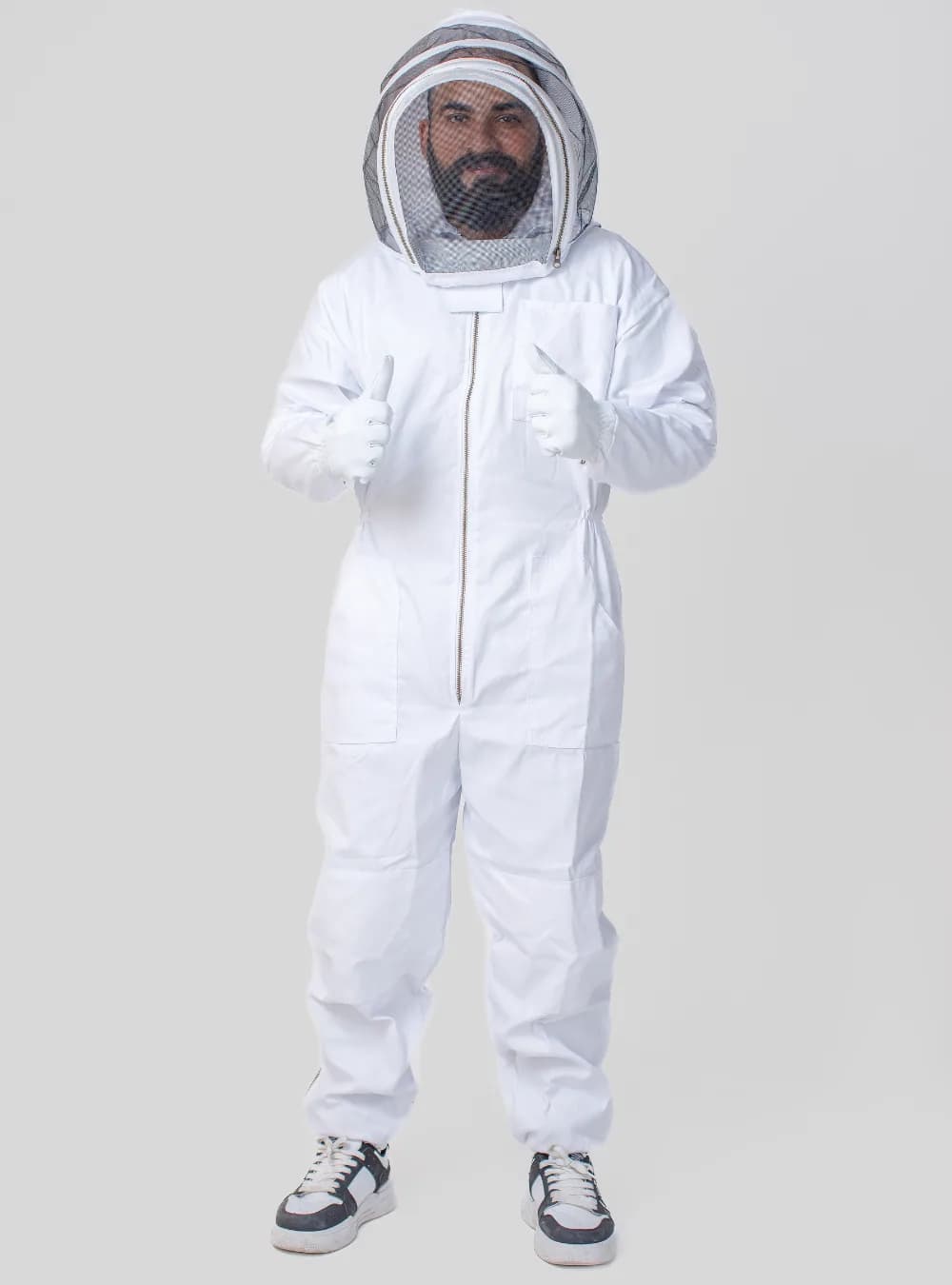
When your bee suit arrives, spend half an hour on it indoors before wearing it anywhere. This is the only period in which a fault or a bad fit is the supplier's problem rather than yours, and almost everything worth finding can be found in a clean room in thirty minutes.
When your bee suit arrives, check it before wearing it outside
A suit worn in an apiary is no longer returnable in most places, and propolis arrives on the first visit. So the order matters: check, try, decide, and only then go out in it.
It is also the moment you still have the packaging, the order number and the supplier's attention. A fault reported in week one is handled very differently from one reported in month three — what to check in a warranty covers why a return window is worth more than a long guarantee.
The ten-minute check when your bee suit arrives
- Check it is what you ordered — size, colour, veil shape, and that any separate items are in the box.
- Run every zip, end to end, twice. Especially the hood, which runs round a curve and is the component most likely to fail.
- Hold the veil mesh up to the light. Look for pinholes and snags, particularly at the crown and where the mesh meets the collar.
- Stretch each cuff and ankle, then let go. It should snap back and grip.
- Look along every seam, inside and out, for skipped stitching or loose thread ends.
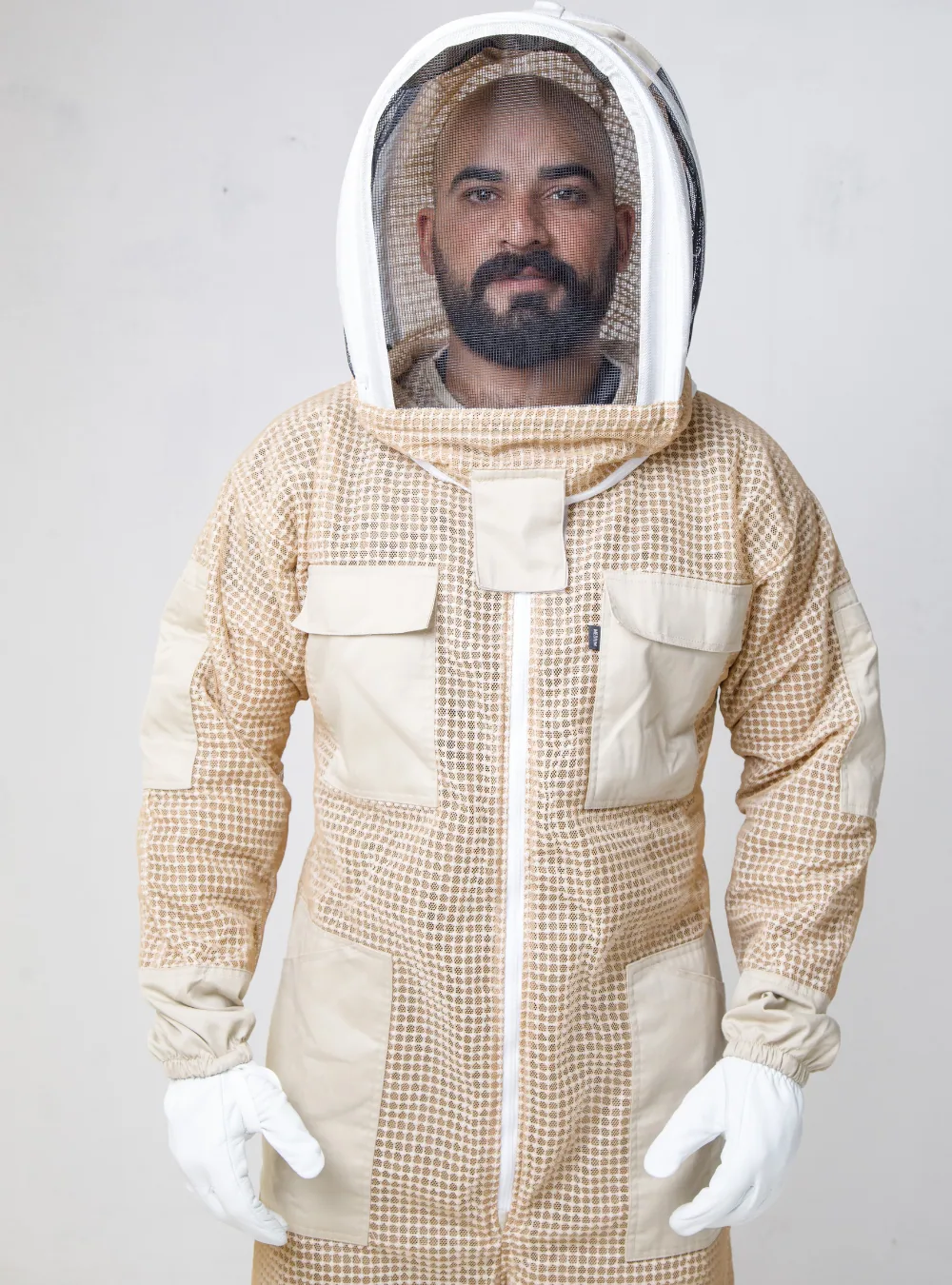
- Press the fabric between finger and thumb on a ventilated suit. It should feel springy and push back — that gap is what stops a sting.
The twenty-minute fit test
Put it on over the layer you will actually wear — one thin long-sleeved top, not bare skin and not a fleece. Then move in it, because a suit that fits standing still is not the same as one that fits working.
- Zip it fully. It should close without pulling anywhere.
- Find the shoulder seam. It should sit on the point of your shoulder, not down your arm.
- Reach forward, both arms, as if lifting a full frame. The cuffs should stay over your gloves.
- Crouch all the way down. The ankles should stay over your boots and nothing should pull across your thighs.
- Bend forward as if over an open box. On a jacket, nothing should show at your back.
- Look down at your own boots. The mesh should keep a visible gap from your nose.
That is how a bee suit should fit, compressed into one session. Anything that fails is a reason to exchange it rather than to hope.
What counts as a fault when your bee suit arrives
| Found | Fault, or not? |
|---|---|
| Skipped or broken stitching | Fault. Report it |
| A zip that catches or will not start | Fault |
| A hole or thin patch in the veil mesh | Fault |
| Mesh that squashes flat and stays flat | Fault on a suit sold as ventilated |
| Loose thread ends | Not a fault. Trim them |
| Creases from packing | Not a fault. Hang it |
| A smell of new fabric | Not a fault. Air it — see below |
| Sleeves too short for you | Not a fault, but a reason to exchange |
That last row matters. A suit that does not fit is not defective, and it is still the wrong suit — and the window to say so is now.
Air it when your bee suit arrives
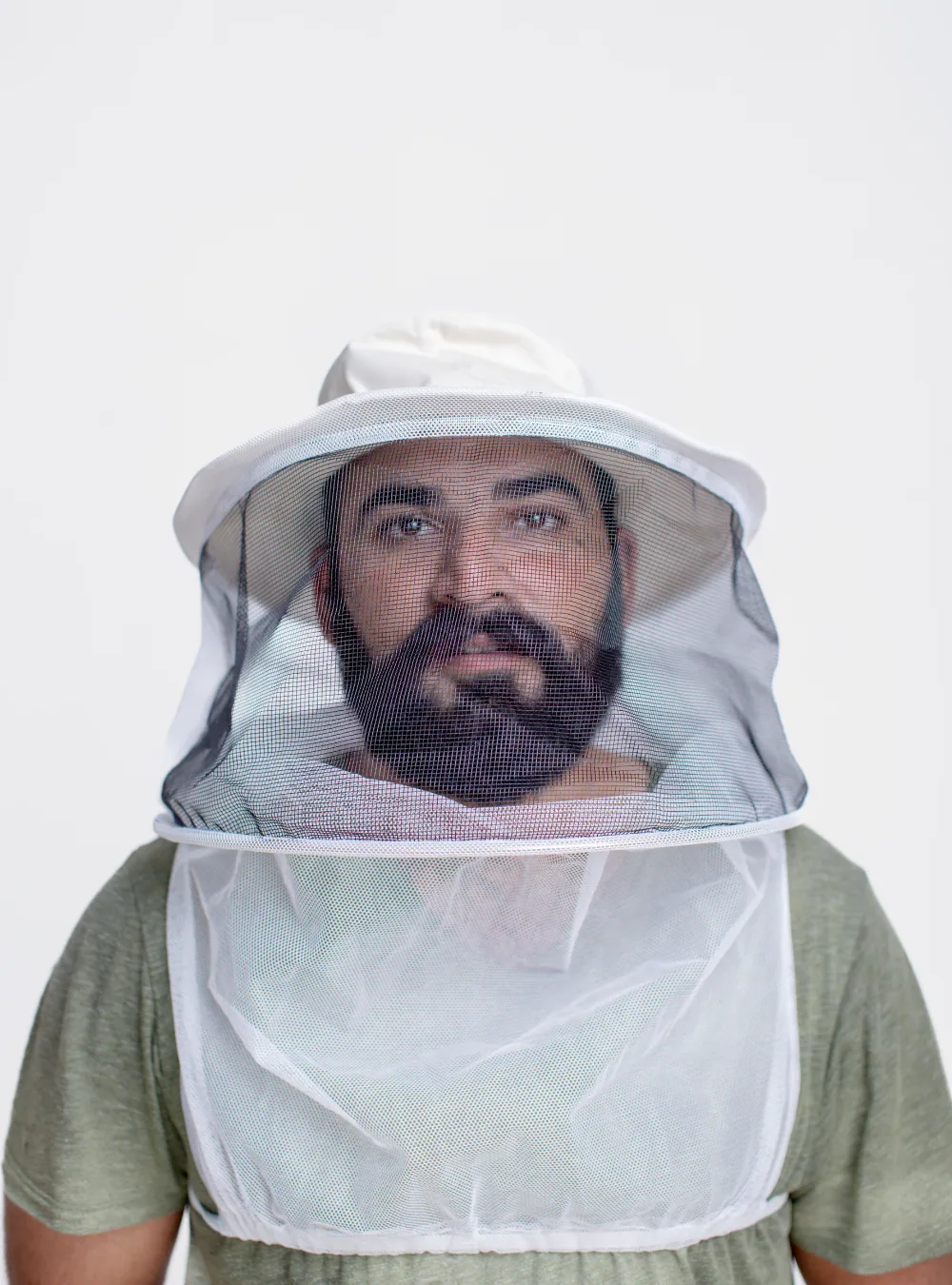
Air it as you would a suit that has been stung in. New fabric has a smell — of manufacture, of packaging, sometimes of a shipping container. You are about to stand next to an animal that navigates by smell.
Hang it outdoors in the shade for a day, or two if it is strong. Do not wash it unless the smell persists, and if you do, wash it cool with unscented detergent and no softener — washing a bee suit covers doing it without damage.
If something is wrong when your bee suit arrives
Photograph it immediately, in daylight, with something for scale, and take one of the whole garment as well as the fault. A close-up of a split seam with no context is hard for anyone to assess.
Then say when and what: "found on arrival, before wearing" is the strongest thing you can write, and it is only true once. Keep the packaging until it is settled.
What counts as a defect and what gets called wear is worth knowing before you write — what to check in a warranty sets out the usual lines, and a fault found on arrival sits clearly on the right side of them.
When your made-to-measure bee suit arrives
A suit cut to your measurements cannot be resold, so it sits outside the statutory right to cancel in the UK and the EU. What replaces it is a fit guarantee: alterations or a recut rather than a refund.
That makes this half hour more important rather than less. Check the fit properly, and raise anything that is wrong straight away — a fit guarantee is most useful when the suit has not been worn in an apiary. Whether a measured suit is worth it covers what you are trading for the cut.
Two things to do while you remember
Write the measurements down. The ones you ordered by, with the date and the size that worked. In two years you will be replacing it and you will not remember.
Find out whether spare parts exist. Can you buy a replacement veil? Cuffs? Ask now, while you are in contact with the supplier, because it decides the suit's working life — replacing a bee suit veil covers why it is the question that matters.
Then, before the first visit
Run the thirty-second pre-inspection checklist — it is the same checks, shortened, and doing it once on a new suit builds the habit. Practise the veil zip until you can work it in gloves without looking.
If the suit is for a child, they must be able to open and close the veil themselves before they wear it anywhere near a hive. The children's buying guide covers the rest.
For a protective-kit standard to judge a new suit against, with nothing to sell, see Penn State’s beekeeping basics and the University of Georgia Bee Program. Our returns and exchanges page sets out the window and how a made-to-measure suit differs, and the contact page reaches a person if something is wrong.