
Bee suit for spring vs summer
One suit, different layers, different visits. The suit you buy should be the summer one, because that is the season it has to survive.

Buy for summer and layer for spring. The spring vs summer question is not really about two suits — it is about one suit worn differently, and the suit worth owning is the one that works in July, because a cool-weather suit is unwearable in heat while a summer suit takes a layer underneath.
Spring vs summer: why summer decides the purchase
You can add warmth under a suit. You cannot remove it — which is why the money goes on the summer one.
In April a ventilated suit is cold, and a thin layer underneath fixes it entirely. In July a heavy woven suit is unbearable, and nothing fixes that. So you stop closing it properly, or you stop going. Either way the suit protects you from nothing.
Own one suit? Own the summer one. Ventilated versus cotton is the decision. Weight the answer by your hottest month rather than your average one.
What changes between spring vs summer
| Spring | Summer | |
|---|---|---|
| Underneath | Two thin layers | One thin layer |
| Gloves | Leather or goatskin — hands go numb in nitrile | Whatever you prefer |
| Visit length | Minutes. Open, look, close | As long as you can stand |
| Time of day | The warmest part | First light |
| Colony mood | Usually calm | Defensive by late summer |
| What tests the suit | Almost nothing | Everything |
That last row is the point. A suit barely gets tested in spring, so a spring-only judgement of it means little — most stings happen in late summer, when colonies are largest and have honey to defend.
Spring vs summer: layer for spring, do not upsize
The temptation is a bigger suit with room for a jumper, and it is the wrong move.
Slack across the chest protects you. Slack at the cuffs, ankles and collar is a gap. Buy two sizes up and you get the second kind. Bulk under a fitted garment is not warmth either: compression kills insulation, so a thin wool layer beats a thick fleece.
Cold weather inspections covers the early-season case in full, including why hands rather than bodies are the real problem.
Spring vs summer: in summer the suit is the decision
Here construction does the work and nothing else comes close.
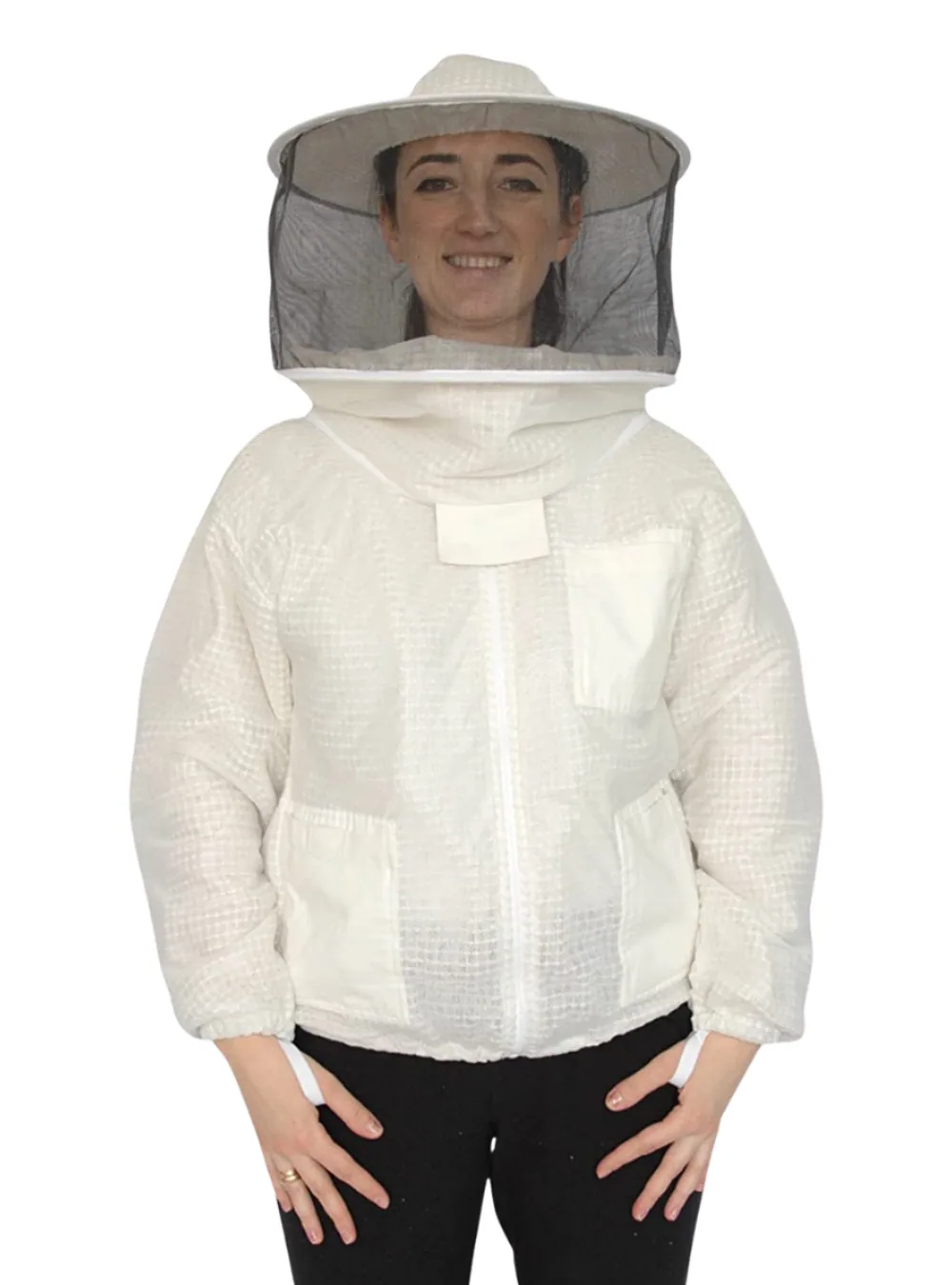
Bonded layers hold a gap, so air moves through it whenever you do. That same gap stops a sting under pressure. Colour helps a little; time of day helps a lot. Neither replaces the construction — colour in hot climates ranks them honestly.
If your summers are humid rather than merely hot, the advice changes again, because sweat cannot evaporate — beekeeping clothing for humid climates covers it.
If you own two suits
Plenty of beekeepers end up here, and it is a reasonable place to be.
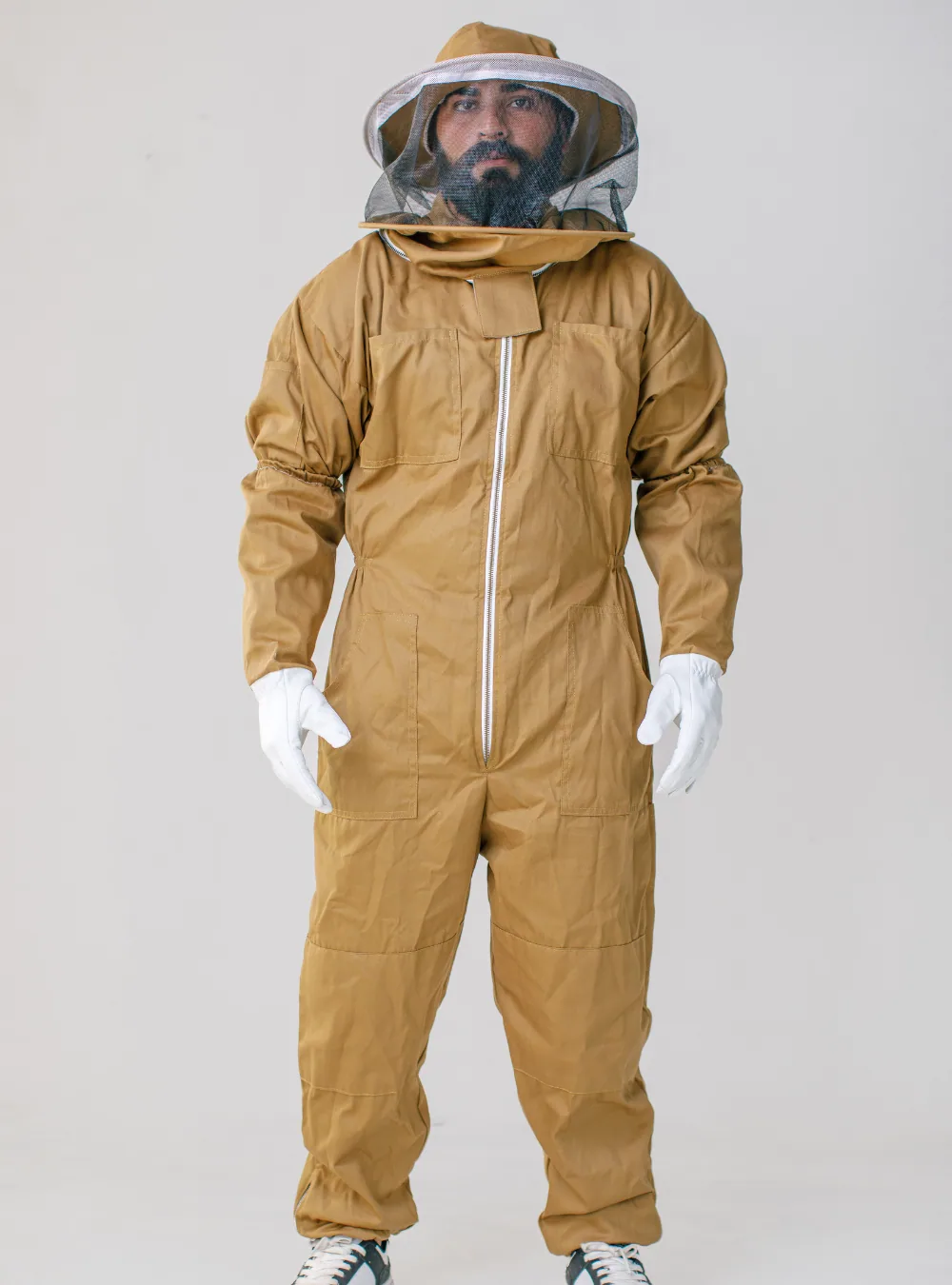
Keep a woven poly-cotton suit for early and late season, when it is cold and visits are short. Keep a ventilated one for the months that matter. The woven suit then lasts years, because it does so little work.
A second suit buys redundancy too, which matters more than the seasonal split. You repair a damaged suit rather than wearing it damaged, and you can wash a heavily stung one properly before the next visit — which affects how the colony meets you.
The kit routine across spring vs summer
- Before the first spring visit. Stretch every cuff, run every zip, hold the veil to the light. Winter storage damage shows up here — the pre-inspection checks.
- Before the late-summer visits. The same checks, because this is when the suit is actually tested.
- At the end of the season. Wash, dry fully, store dark — storing a suit over winter, and the best time to find a fault because you have months to fix it.
Autumn, which nobody plans for
Treated as an afterthought and it is the hardest part of the year for a suit.
Colonies are at their most defensive and wasps are robbing. The weather is still warm enough that you want the ventilated suit. So you are in the lightest construction at the point of highest sting load, which is why September surprises so many beekeepers.
Two things help. Do the kit checks properly before the autumn visits rather than only in spring, and wear the layer underneath that you have been skipping since June — what to wear underneath matters most when the colony is least patient.
Winter, for the suit
The suit is not being worn, which is when most of the damage happens.
Ultraviolet and damp do more to a stored suit over six months than a season of inspections does. Wash it, dry it completely, hang it in the dark indoors — storing a suit over winter covers it, and the check before storage is the most valuable of the year because a fault found in October has months to be fixed.
What not to do
Do not buy a heavier suit for spring. You will own it in July too.
Do not judge a suit in April. It will feel fine; everything does when the colony is calm and you are not sweating.
Do not relax the kit as the season warms. The temptation to drop the gloves or leave the hood half-zipped grows exactly as colonies get more defensive, which is precisely backwards.
For guidance on seasonal colony management rather than clothing, Penn State Extension's beekeeping resources and the University of Georgia Bee Program are the right sort of source. Our ventilated suits and cotton suits are the two halves of this.