
Why bee suits have so many pockets
Mostly because buyers like them. A pocket on a bee suit is a hole in the one garment whose job is to have no holes — so the good ones are placed carefully.
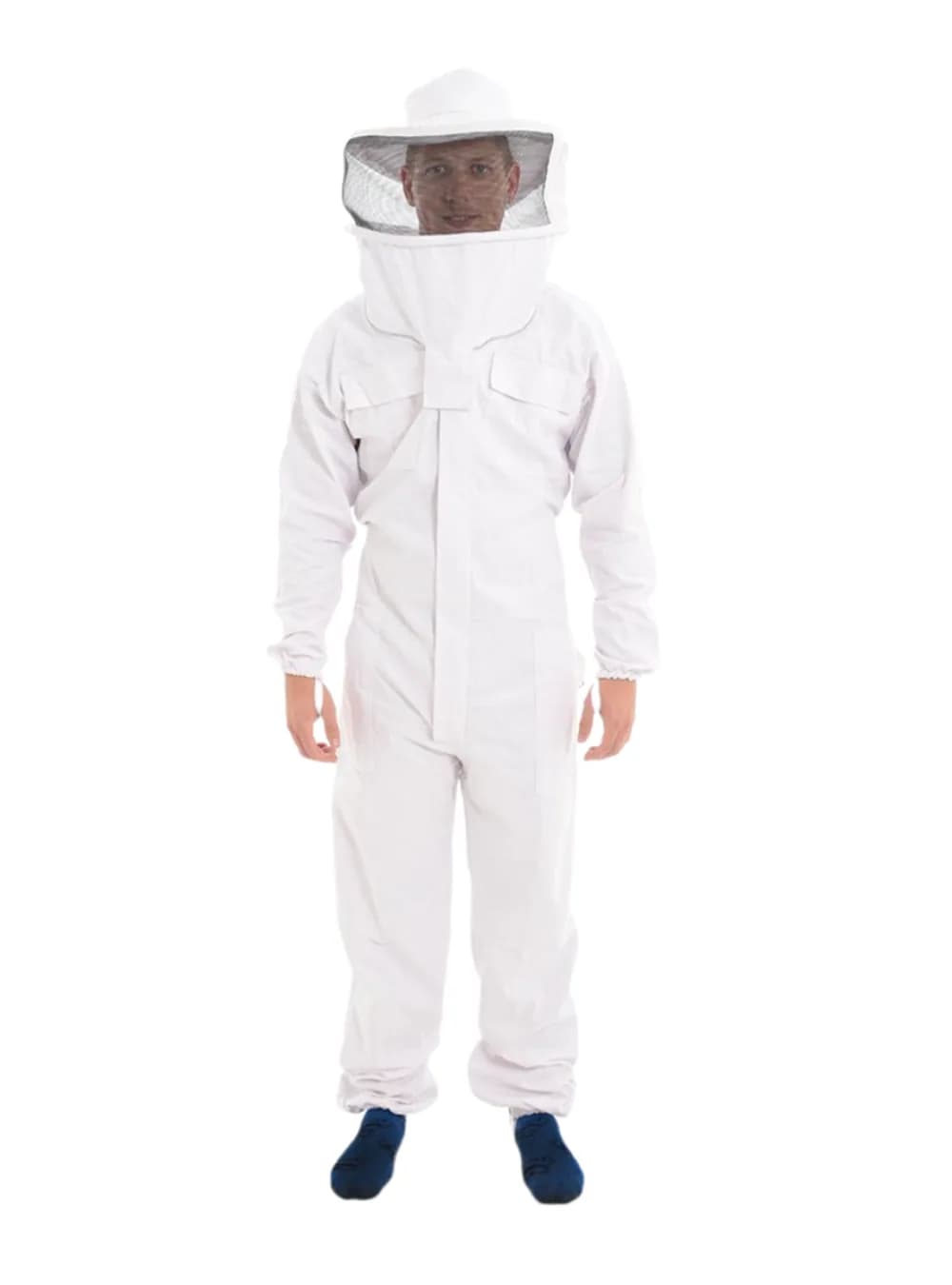
Bee suit pockets exist because buyers compare them, not because beekeepers need many. A pocket is a seam, a flap and often a hole in the one garment whose whole job is not to have holes — so the question worth asking is not how many a suit has but where they are and how they close.
What bee suit pockets actually carry
Less than the pocket count suggests. In practice, four things.
- A hive tool. The one item genuinely worth a pocket, and the one most often lost in grass.
- A queen cage or clip, seasonally.
- A phone, which most people want reachable without taking the suit off.
- A cloth, for the tool and sticky gloves.
Everything else lives in the bag or on the hive stand. A suit with six pockets is carrying four of them empty.
Why a pocket is a compromise
Three ways it works against the garment.
It is stitching through the protective layer. On woven cloth that is a minor weak point. On a bonded ventilated suit it is worse — stitching compresses the layers locally, and the gap between them is the protection.
It catches. On hive furniture, on nails in a loft, on a ladder rung. For removal work that is a real hazard rather than an annoyance.
It collects. Wax, propolis and grit end up in open pockets, and a pocketful of propolis transfers to everything it touches.
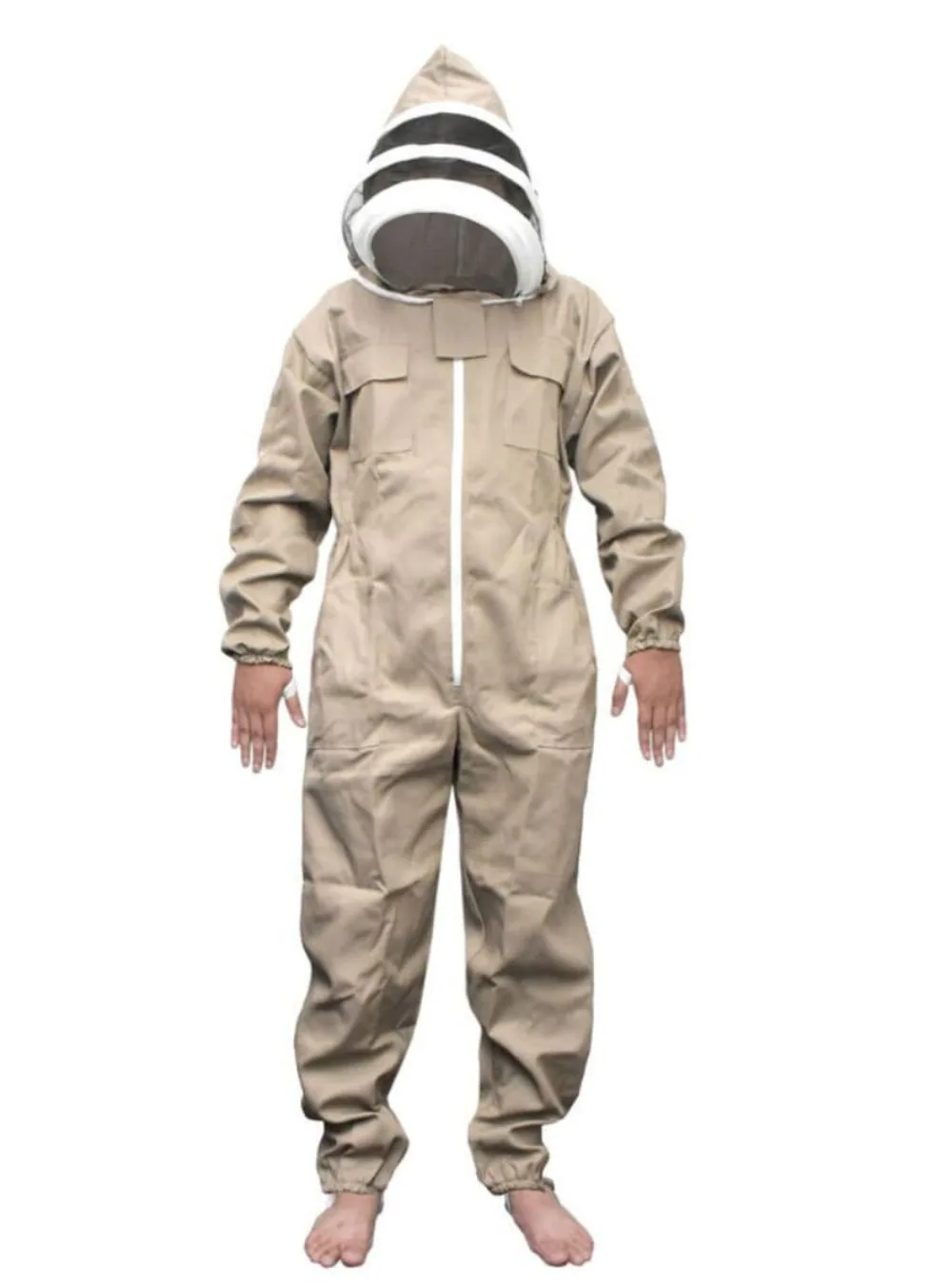
Where bee suit pockets are worth having
| Placement | Verdict |
|---|---|
| Chest, with a flap | The best. Reachable, out of the way when you kneel, nothing falls out when you bend |
| Thigh, with a flap | Good for a hive tool. Reachable with gloves on |
| Internal, inside the front | Good for a phone. No external seam to catch |
| Open-topped hip | Poor. Everything falls out when you crouch |
| Rear | Pointless. You cannot reach it and you sit on it |
| Sleeve | Awkward and it adds bulk where the cuff needs to seat |
The pattern: a flap matters more than the pocket does. An open pocket on a garment worn by somebody who spends the day bending over is a pocket that empties itself.
Pockets on a ventilated suit
Worth a separate note, because the trade is different.
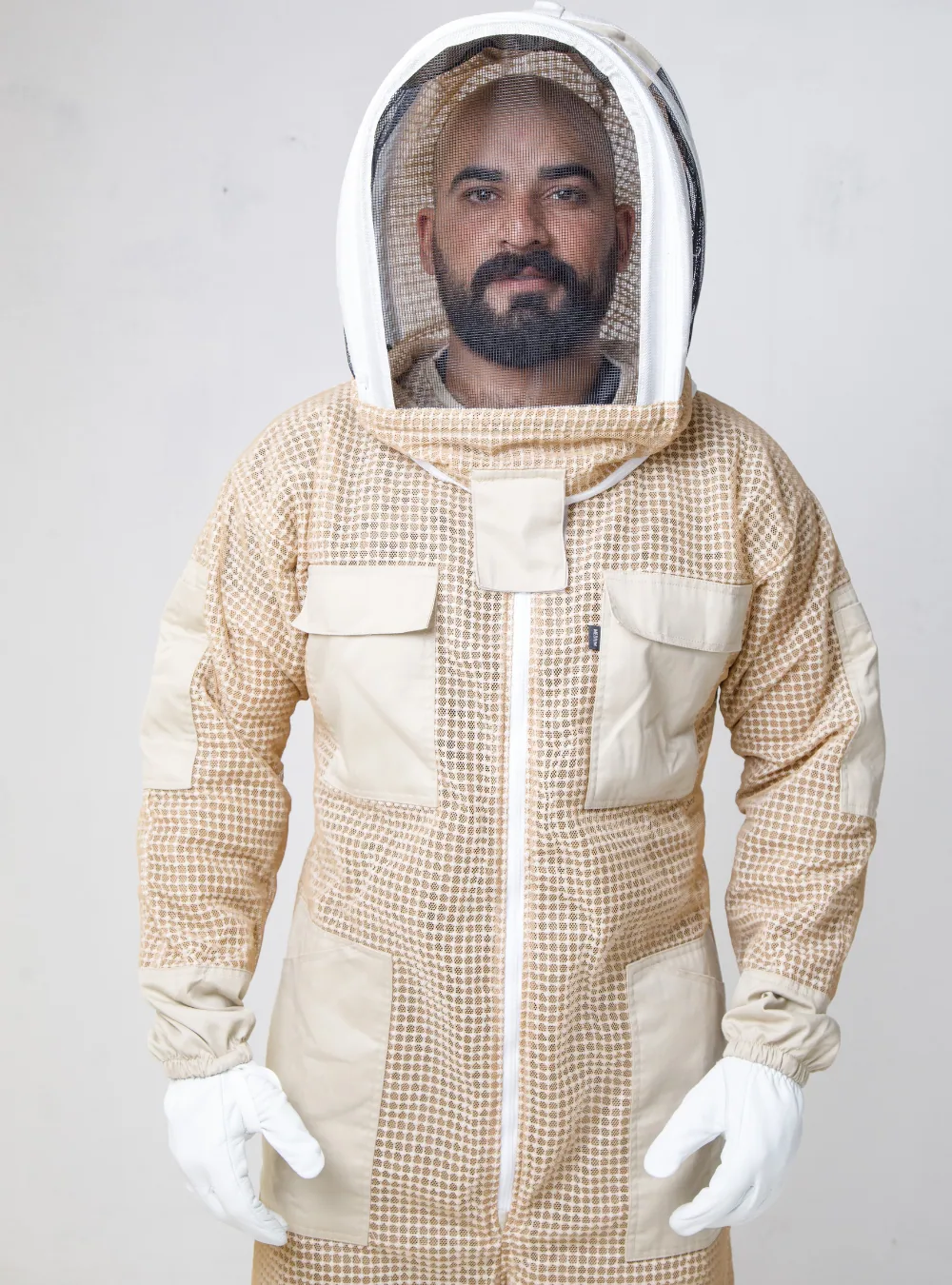
A pocket on bonded mesh is usually built as a patch of solid fabric over the mesh, which means it is also a patch with no airflow. Several of them on the front of a suit undo some of the ventilation you paid for.
Good ventilated suits keep them few and place them where airflow matters least. If you are comparing two and one has noticeably more, that is not a feature — see what bee suit fabric is doing.
What a pocket costs on different suits
| Suit type | What a pocket costs |
|---|---|
| Woven cotton or poly-cotton | Little. Stitching through one layer of cloth |
| Bonded ventilated mesh | More. The stitching compresses the layers locally, and the patch blocks airflow |
| Lightweight ripstop | Moderate. Weight, in a garment chosen for being light |
That middle row is why good ventilated suits have fewer bee suit pockets than woven ones, and why a ventilated suit covered in them is a suit designed for a listing rather than for an apiary.
The pocket that is actually missing
Nobody puts one where it would help most: high on the chest, inside, big enough for a phone, with a flap.
A phone is the one thing most beekeepers want reachable without taking the suit off — for a photograph of a frame, for a timer, or because they are working alone. External pockets are the wrong place for it, since it falls out when you bend, and a trouser pocket is unreachable through a coverall.
If you are buying and you care about this, check for an internal chest pocket specifically. It is rarer than it should be.
If your suit has too few bee suit pockets
Most of the answer is not a pocket at all.
A hive tool holster on a belt is better than any suit pocket: it is reachable, it does not put stitching through the suit, and the tool goes back in the same place every time, which is how you stop losing it.
A small bag or bucket at the hive takes everything else. The habit of putting things down in one place beats carrying them.
What to do if yours has too many
Nothing, mostly. Empty pockets do no harm beyond the stitching that is already there.
Two habits help. Check them before washing — a hive tool left in a pocket will damage a veil in the same drum, and washing a bee suit is where more suits are ruined than in the apiary. And empty them before storage, because wax and propolis left in a pocket for a winter set permanently.
Judging bee suit pockets when buying
- Count the flaps, not the pockets.
- Reach for each one wearing gloves. If you cannot open it, it is decoration.
- On a ventilated suit, prefer fewer.
- Check nothing dangles. A loose flap is something to catch on a ladder.
- Do not pay extra for them. It is the easiest feature to add and the least likely to matter.
Our cotton suits carry chest pockets where they cost least, and the ventilated suits keep them deliberately few. For what a kit actually needs to do, Penn State's beekeeping basics and the University of Georgia Bee Program are the right sort of source.