
Wholesale bee suits for clubs
Buying suits for a club, a training course or a school means solving a problem a single purchase does not have: fitting people you have not met yet.

Buying wholesale bee suits for clubs, training courses and schools is a different problem from buying for yourself: you are fitting people you have not met. What decides whether it works is the size spread you order and the closures you specify — not the price per suit. A cheap set nobody can wear costs more than a careful one.
Four things to work out before quoting wholesale bee suits
Any supplier can price a box of suits. What they cannot do is guess these, and getting them wrong is what leaves a club with a cupboard of unusable mediums.
- Who wears them, and how often. A teaching set worn by a different person every week needs to survive being put on badly. A set for named members can be fitted properly once and will last years longer.
- Whether sizes are shared or assigned. Shared sets need a wider spread and need washing between users. Assigned suits need fewer sizes and get looked after.
- Climate and season. A course that runs in July has a different answer from one that runs in April. See ventilated versus cotton.
- Who launders them. This decides the fabric more than anything else on the list, and it is the question most clubs answer after they have bought.
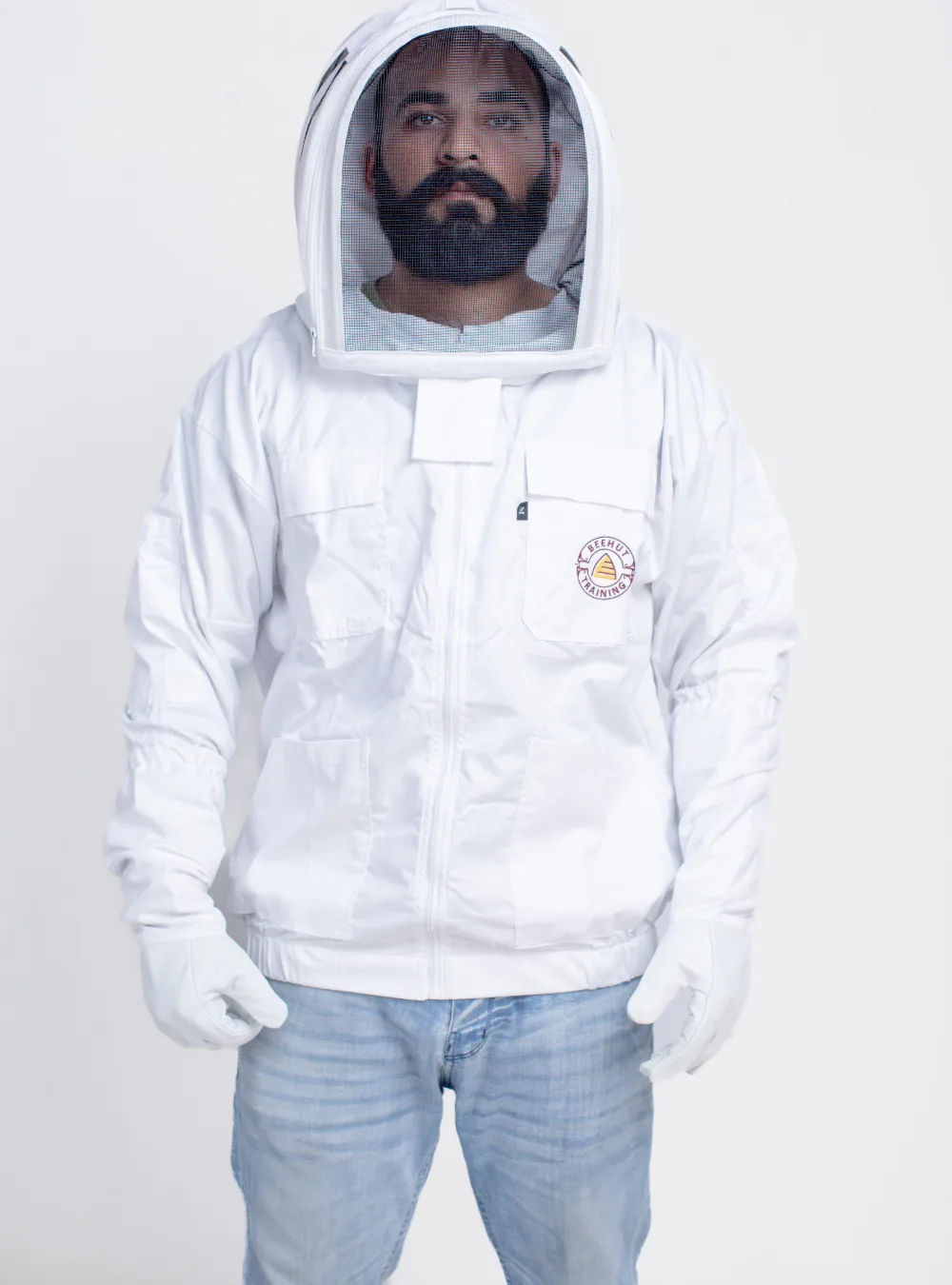
The size spread that actually works
The instinct when ordering wholesale bee suits for clubs is a bell curve centred on medium. For a shared set that is wrong, because a suit nobody can close is worth nothing while a suit that is slightly large still works perfectly well.
Two rules that hold for teaching sets:
- Over-order the large end. A large person cannot wear a medium; a medium person can wear a large. The risk is asymmetric, so lean the stock that way rather than centring it.
- Buy at least one of everything you might need. One suit at each extreme of the range costs little and is the difference between a member attending a session and going home. A club that has turned somebody away once does not forget it.
Expect one or two members the chart cannot fit — usually someone very tall, for whom sleeve and inseam are the problem rather than chest. For assigned suits, measure people instead of guessing. How to measure for a bee suit is a page you can hand to a member, and a whole set can be collected in an evening with a tape and a list. The two that get taken wrong are sleeve, which should be measured with the arm bent, and inseam, which should be measured in boots.
Wholesale bee suits: jackets or full coveralls?
Choosing a jacket is the checklist to apply. For a teaching set, jackets stretch further. One jacket fits a wider range of bodies than one coverall does, because the legs are the dimension that varies most and a jacket does not have them. Members bring their own trousers and boots, which also solves the laundry problem for half the garment.
Full suits are better where the group includes children, where the ground is rough, or where people will be kneeling — the same split a family kitting itself out ends up making. Bee suit versus bee jacket is the comparison in full. A mixed set — mostly jackets, a few full suits in the sizes children and shorter adults need — is what most teaching apiaries end up with.
Specify the closures on wholesale bee suits, not just the size
With a shared set, the garment is being put on by someone who has never worn one. Everything that can be got wrong will be. So:
- Elasticated cuffs and ankles rather than adjustable ones. There is nothing to set wrong, and nothing to leave undone.
- Veils that zip to the collar rather than hat-and-veil arrangements that have to be seated correctly. A fencing veil is one action; a round veil is four.
- Thumb loops, where they are offered. They are the only reliable fix for a cuff riding up, and a beginner reaching into a box is exactly when it happens.
- One zip rather than two, if the choice exists. Every fastening is a thing to check before a session.
Every one of those removes a decision from a beginner, and a beginner stung at a first session is the thing that stops them coming back. That is the real cost you are managing.
Gloves, and why they need their own thought
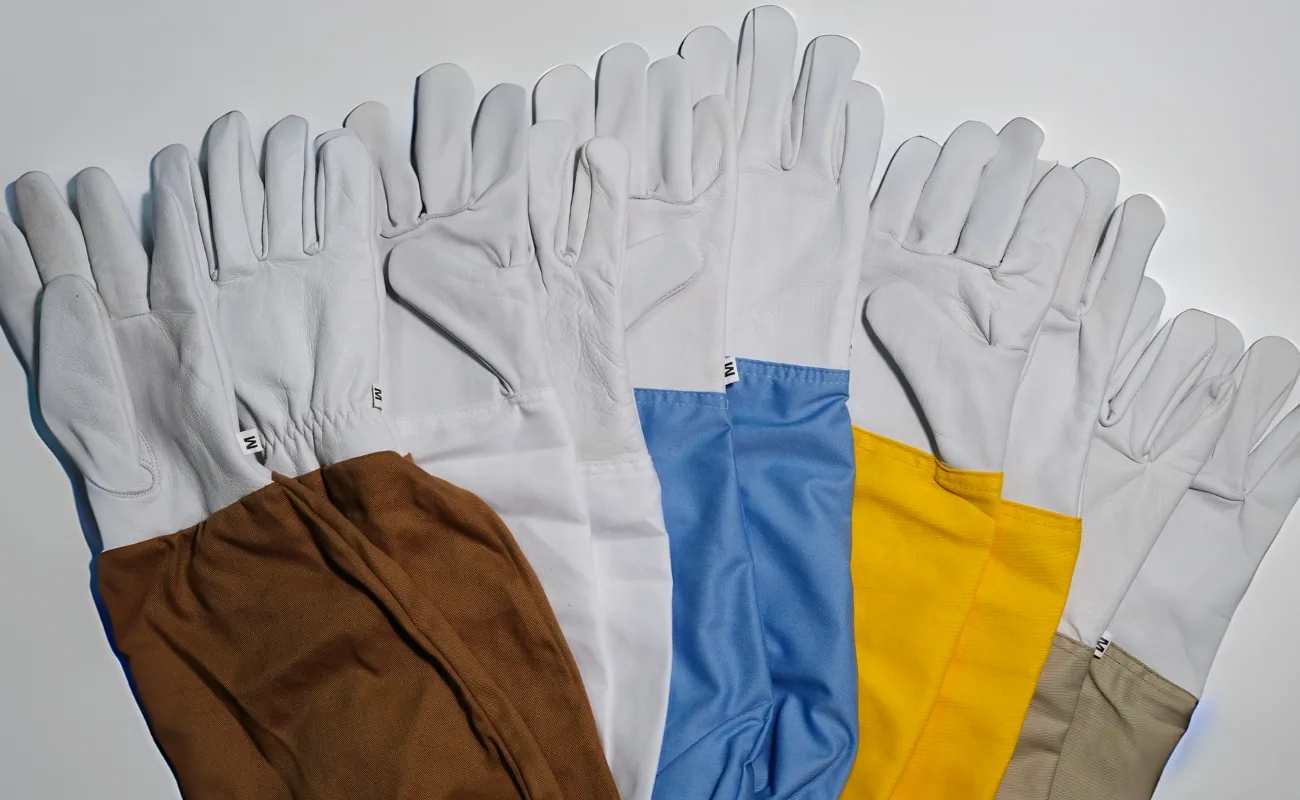
Gloves are where shared sets usually fall down. Oversized gloves make hands clumsy, clumsy hands crush bees, and crushed bees make a defensive colony — so a box of large gloves actively makes your teaching sessions worse.
Buy a proper range of sizes — gloves sizing has the measuring method — expect to replace them more often than the suits, and plan for hygiene: gloves are the one item that is awkward to share. Some clubs settle this by buying the cheaper disposable option for visitors and keeping a few good pairs for regulars. Nitrile versus leather sets out the trade.
Practical things worth putting in the order
- A checklist on the cupboard door. The five pre-inspection checks are the handover procedure for a shared set.
- Labels. Names or numbers written on a tape inside the collar. A shared set without labels becomes a jumble within two sessions, and then nobody can find their size.
- A spare veil or two. The veil is the part that gets damaged, and a torn veil takes a whole suit out of service. Check before you buy that veils can be ordered separately at all — it tells you more than a warranty length does.
- Two or three spare pairs of cuffs or over-sleeves if your supplier offers them. Elastic goes slack long before fabric wears out.
- Something to keep them in. See below — this is the part clubs regret.
Laundering and storing wholesale bee suits
A shared set needs washing between users, which means it needs to dry between sessions, which means you need more suits than people if your sessions are close together. Work that out before ordering rather than after.
Storage matters more than it sounds, and storing a suit properly applies to twenty as much as to one. Suits left in a pile go mouldy; suits hung in a sunny window degrade, because ultraviolet attacks mesh and elastic faster than use does. A dark, dry, ventilated cupboard with hooks — one per labelled suit — is the arrangement that keeps a set usable for years. A plastic crate in a shed is the one that does not.
Replacing wholesale bee suits over time
Buying twenty suits in one year means replacing twenty suits in one year. If you can, buy in two or three waves instead, so your replacement cost is spread and you are never rebuilding the whole set at once.
It also lets you learn. The sizes that wear out first tell you which sizes your members actually are, and the second order can be shaped by that rather than by a guess.
If you are putting a syllabus together as well as a kit list, extension services publish course material you can build on rather than write from scratch — Penn State Extension's beekeeping resources and Cornell's Pollinator Network are two places to look.
Asking us about wholesale bee suits for clubs
If you are writing a kit list for members, what beekeepers wear is the page to hand them. Our wholesale page carries the trade enquiry form.
Tell us the group size, the season you teach in, whether the suits are shared or assigned, and whether children are involved — those four answers are enough for us to come back with a size spread rather than just a figure.
Clubs that assign suits to named members often mix the two: stock sizes for most people and a made-to-measure suit for the one or two the chart cannot fit. That is usually cheaper than widening the whole order to catch them, and whether a measured suit is worth it explains when it applies. If your group includes children, the children's buying guide covers what changes.