
Buying guides7 min read
Fencing Veil vs Round Veil: Which Should You Wear?
A fencing veil turns with your head. A round veil stays where it is while your head turns inside it. That one difference decides vision, heat and where each design lets you down.

The fencing veil vs round veil choice comes down to how you want the mesh held away from your face. A fencing veil is a self-supporting hood that zips to the suit and moves with your head. A round veil hangs from the brim of a wide hat and stays put while your head turns inside it. Fencing veils give better vision and pack smaller. Round veils give more standoff and better airflow. Most beekeepers today choose fencing.
Key Takeaways
- A fencing veil moves with you. Look up, look down, lean into a hive — the mesh stays the same distance from your face.
- A round veil stays where it is. Turn your head sharply and your face can meet the mesh. The hat brim is what holds it off.
- Round veils are cooler. The gap between hat and shoulders is an air path a fencing veil does not have.
- Fencing veils see better. No brim across your eyeline when you look up into a swarm or a tree.
- Both fail the same way: contact. A veil pressed against skin is a veil that is not protecting you.
How each one works

A veil has one job: hold fine mesh far enough from your face that a sting cannot reach through it. The two designs solve that differently.
A fencing veil takes its shape from stiffened ribs sewn into the hood — the same principle as a fencing mask, which is where the name comes from. The structure holds the mesh out on its own. It zips directly to the collar of a suit or jacket and sits on your head, so when you turn, it turns.
A round veil takes its shape from a hat. A wide, stiff brim holds a cylinder of mesh out at the edge, and the mesh drops from the brim to your shoulders, where it is drawn in by a drawstring or zipped to a suit. The hat is the structure. Your head moves independently inside it.
Fencing veil vs round veil, side by side
| Fencing veil | Round veil | |
|---|---|---|
| What holds the mesh out | Stiffened ribs in the hood | The brim of a hat |
| Movement | Turns with your head | Stays put; head turns inside |
| Standoff from face | Moderate, consistent | Greater, but variable |
| Upward vision | Excellent — no brim | Restricted by the brim |
| Airflow | Good | Better |
| Sun protection | Little | Good — the brim shades you |
| Packing | Folds flat | Bulky; the hat must keep its shape |
| Works with a hood down | Yes | No |
| Typical cost | Higher | Lower |
Where a fencing veil wins
Vision upward. Collecting a swarm from a branch, checking a bait hive, watching bees orient — with a round veil you are looking through a brim. With a fencing veil you simply look up.
Consistency. Because the hood moves with you, the distance from mesh to face does not change when you turn quickly. That predictability is why most commercial beekeepers use them.
It folds away. The hood drops back behind your shoulders between hives instead of being carried. A fencing veil packs flat in a bag; a hat does not.
It integrates. Zipped to the suit collar, there is no gap to seal at the neck — the commonest place a bee gets in.
Our ultralight fencing veil is $50, and it comes attached on suits like the WhiteGuard fencing suit from $90.
Where a round veil wins
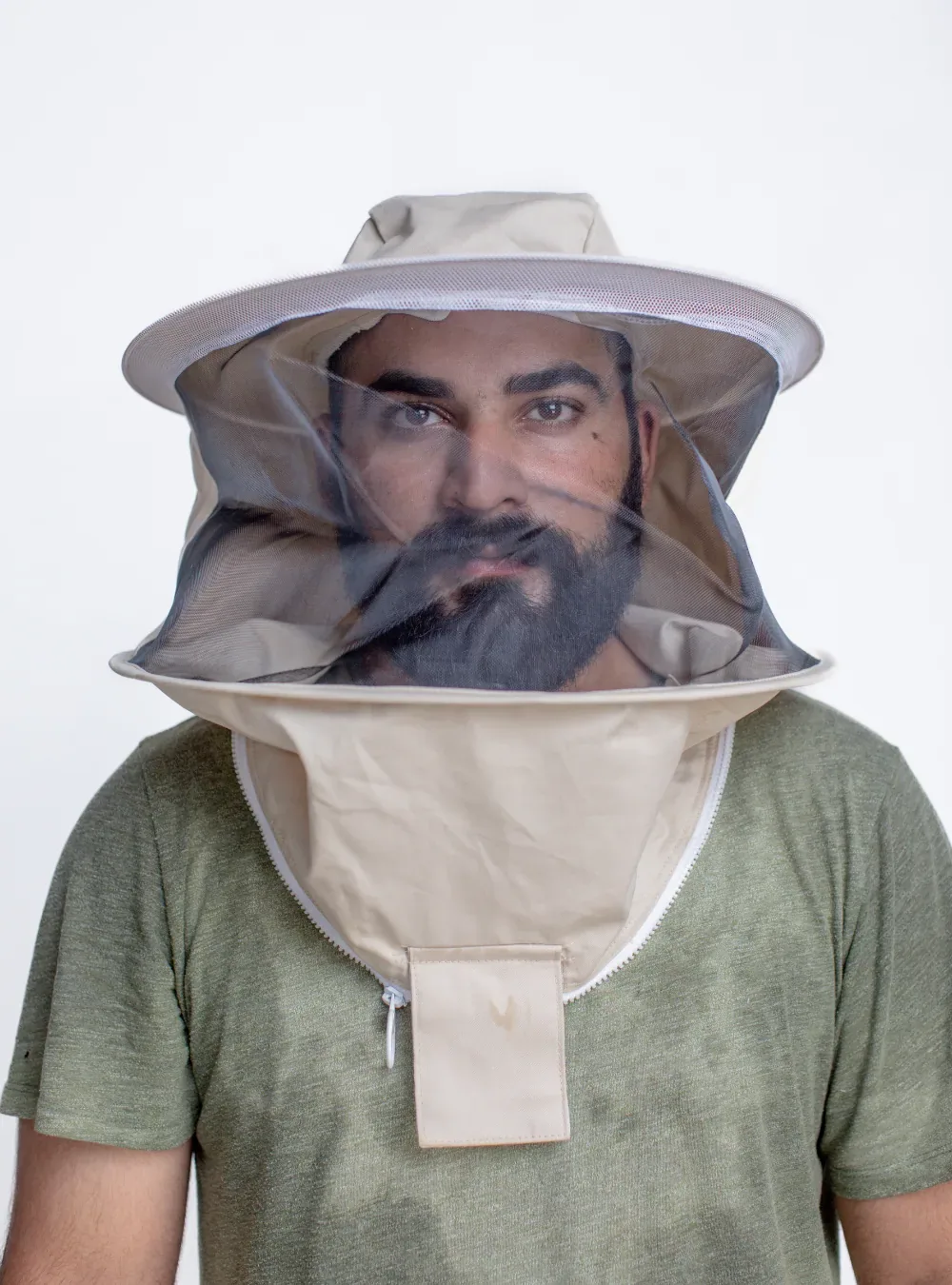
Heat. The gap between the brim and your shoulders is an open air path. On a still, hot day a round veil is noticeably cooler than a hood zipped close to your head.
Standoff. At its widest, the brim holds mesh further from your face than a fencing hood does. More margin, when you are standing still.
Sun. The brim shades your face and neck. If you work long days in open sun, that is a real benefit a fencing veil cannot offer.
Price. Round veils are simpler to make. Ours start at $20 — see the veils and hats collection.
Glasses. Some people who wear glasses find the extra face clearance easier.
The mistake both designs punish
Neither veil protects where it touches you.
Mesh pressed flat against your cheek, your forehead or the back of your neck is mesh a sting can reach through, and bees find those places with an accuracy that feels personal. The failure is the same one that catches people in a badly fitted suit: protection is a gap, and contact closes it.
With a fencing veil, the risk is the back of the head when you tip your chin down hard, and the forehead if the hood is too small.
With a round veil, the risk is the face when you turn your head quickly and the mesh does not follow, and the shoulders if the drawstring is loose enough to let the mesh drape onto them.
The fix for both is the same: buy one with room in it, and check the seal at the neck before you open a hive.
Texas A&M AgriLife Extension adds a trick worth knowing: wearing a cap under a hooded veil keeps the front of the mesh off your face, and a headband stops sweat and keeps your ears away from the sides. Two pieces of kit you almost certainly already own, removing the commonest sting points on your head.
That same guidance is blunt about the limits of a veil: it protects the face, head and neck only, and there is still a chance bees get inside it. Which brings us to the next part.
What to check before you buy
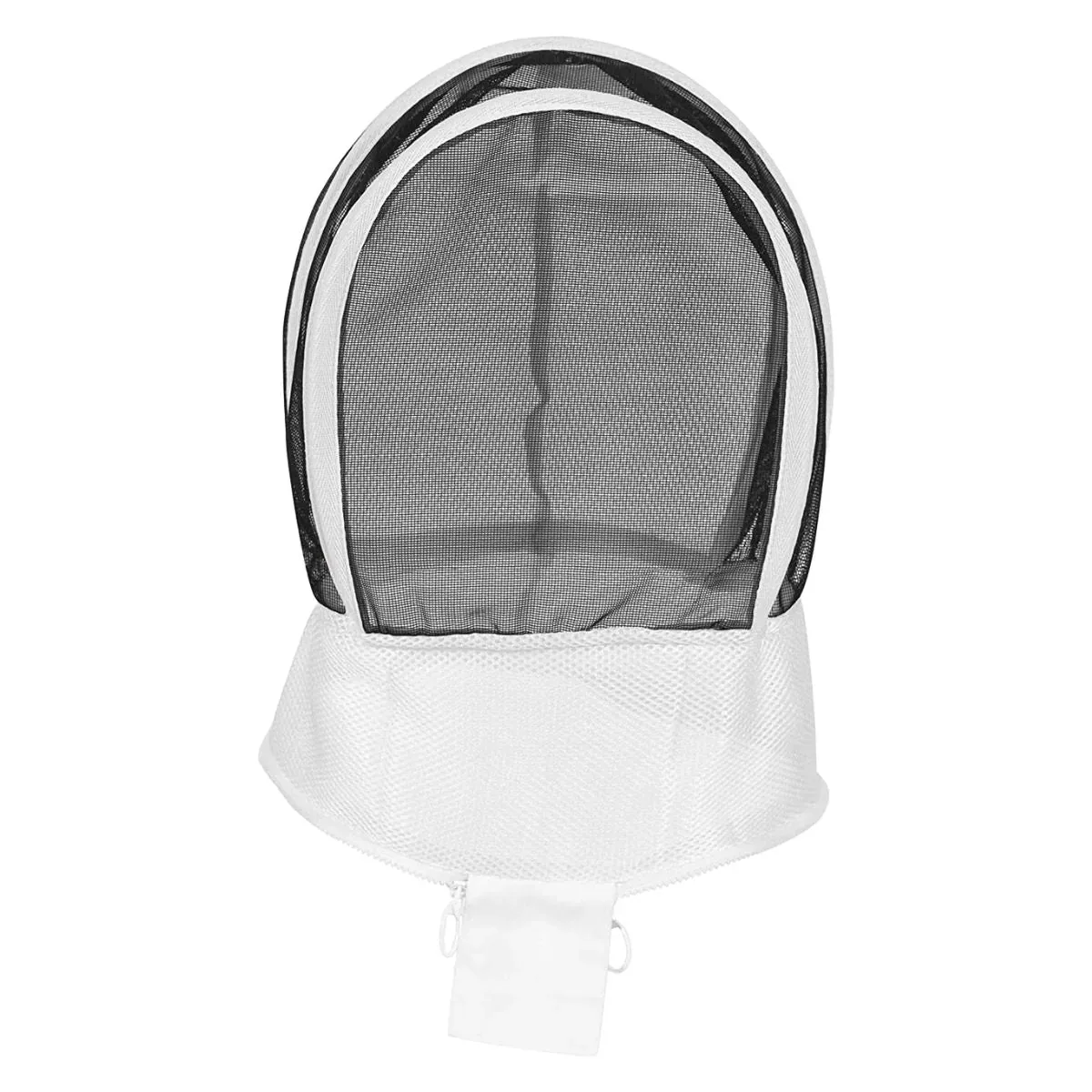
The mesh in front of your eyes. Black mesh at the face is not decoration — it cuts glare and gives far better contrast than white. A veil with white mesh across the eyeline is harder to see through in bright sun.
The zip. Most bee-in-the-veil incidents start at a zip that does not close fully at the collar, or at a flap that does not cover the zip's end. Check there is a fabric guard over the closure.
Rib stiffness on a fencing veil. Squeeze the hood inward. It should push back. A soft hood collapses onto your face in wind.
Brim stiffness on a round veil. Same test at the brim. A brim that folds is a veil that touches you.
Whether it is detachable. A veil that zips off is a veil you can replace when the mesh tears — and mesh tears long before a suit does.
How each one attaches to a suit
The join between veil and suit is where most problems start, and the two designs join differently.
A fencing veil zips to a collar that runs around the neck of the suit, usually with a fabric flap that covers the zip's ends. Done up properly there is no opening at all. The things to check are that the zip runs all the way round rather than stopping short, and that the hood can be thrown back without unzipping it — that is what lets you cool off between hives without exposing your neck.
A round veil attaches in one of two ways. Better suits zip it to a collar in the same way as a fencing veil. Standalone veils close at the shoulders with a drawstring, and sometimes with tapes that pass under the arms and tie at the back. Those tapes are not optional decoration — without them the mesh lifts at the shoulders when you bend forward, and that is the gap bees find.
If you are buying a veil to wear with a suit you already own, check the collar before ordering. Veil zips are not standardised between makers, and a veil that does not match your suit's zip is a veil you will end up wearing with a drawstring.
If a bee gets inside
It happens to everyone eventually, and panic is what turns it into a sting.
Walk away from the hive first. Get distance before you do anything else, because the alarm pheromone on your veil is what brought the bee there. Then, well clear, lift the veil away from your face rather than pulling it off over your head — dragging mesh across your face is how a trapped bee ends up pressed against skin. Most of the time the bee leaves on its own once light and space open up.
Which should you buy
Buy a fencing veil if you want one veil for most work, you look upward often, you move between hives a lot, or you want it attached to the suit with no neck gap to think about. This suits most beekeepers.
Buy a round veil if you work in sustained heat and sun, you want maximum clearance from your face, you wear glasses and find hoods tight, or you are buying a second veil on a budget.
Buy both if you keep bees seriously. They cost less than a suit, and having the right one for the day is worth more than the difference.
Still choosing a suit? Start with ventilated vs cotton, or compare full suits and jackets.
Common questions
What is a fencing veil?
A self-supporting hood with stiffened ribs that hold fine mesh away from your face, zipped directly to the collar of a suit or jacket. The name comes from fencing masks, which keep their shape the same way. It turns with your head rather than staying still around it.
Is a fencing veil or round veil better?
A fencing veil for most beekeepers: better upward vision, consistent standoff, and it packs flat. Choose a round veil if you work in sustained heat and sun, where the open gap between brim and shoulders is cooler and the brim shades your face.
Can a bee sting through a veil?
Only where the mesh is touching you. Both designs work by holding mesh away from skin, so a veil pressed against your cheek, forehead or neck is no longer protecting that spot. Buy a veil with room in it and check the neck closure before opening a hive.
Why is beekeeping veil mesh black at the front?
Black mesh cuts glare and gives much better contrast than white, so you see through it more clearly, particularly in bright sun. A veil with white mesh across the eyeline is noticeably harder to see through.
Can you wear a round veil without a suit?
Yes. Round veils are commonly worn over ordinary clothing with the mesh drawn in at the shoulders, which is why they are popular for quick jobs. The trade is that the seal at your shoulders is less reliable than a veil zipped to a suit collar.
Are beekeeping veils replaceable?
On most suits, yes, and it is worth checking before you buy. Veil mesh tears long before a suit wears out, so a veil that zips off can be replaced for a fraction of the cost of a new suit.
Written by Alex, Bee suit maker, BEESUITWEAR · United States.
Writes about protective clothing from the workshop where the suits are made.